Slurs were daubed on the walls and windows of independent MP Alex Greenwich's Surry Hills office. NSW Police are reviewing CCTV as the attack adds to concern over threats against politicians.
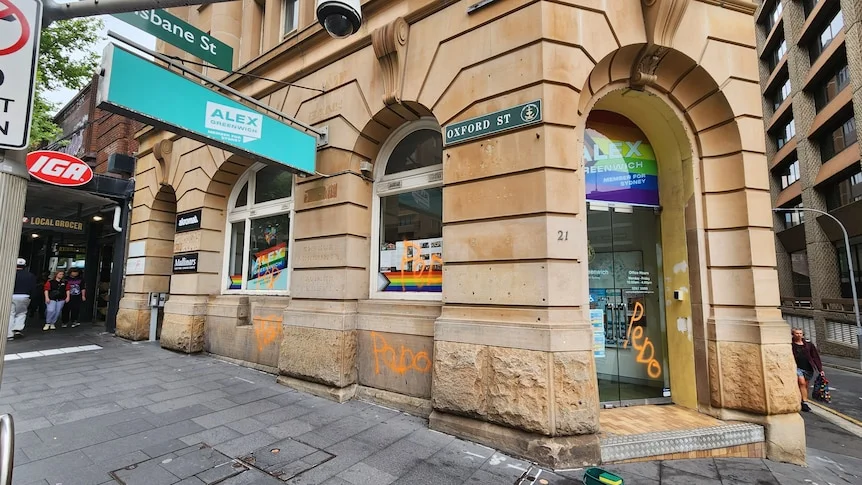
What happened on Oxford Street
Homophobic slurs were sprayed across the outside walls and windows of independent MP Alex Greenwich's electorate office on Oxford Street in Surry Hills. Police received reports of the attack at about noon on Sunday, and NSW Police are now investigating. Graffiti on an office that sits on a public street is an unusually visible form of targeting, because anyone walking past can read it before it's cleaned off.
Greenwich told the ABC that the vandalism stood apart from anything he has faced before. He has received written threats, phone abuse and a steady stream of social media hostility over his career. "I've got lots of written threats, phone abuse, social media, but never anything like this," he said. That's an important distinction. Abuse aimed at a politician's inbox or phone is often treated as an occupational hazard, but paint on a physical building is different. It targets a workplace and the people who staff it, not only the person whose name is on the ballot. (and this is the part most people overlook) The staff who answer the phones and unlock the door each morning never signed up for that exposure.
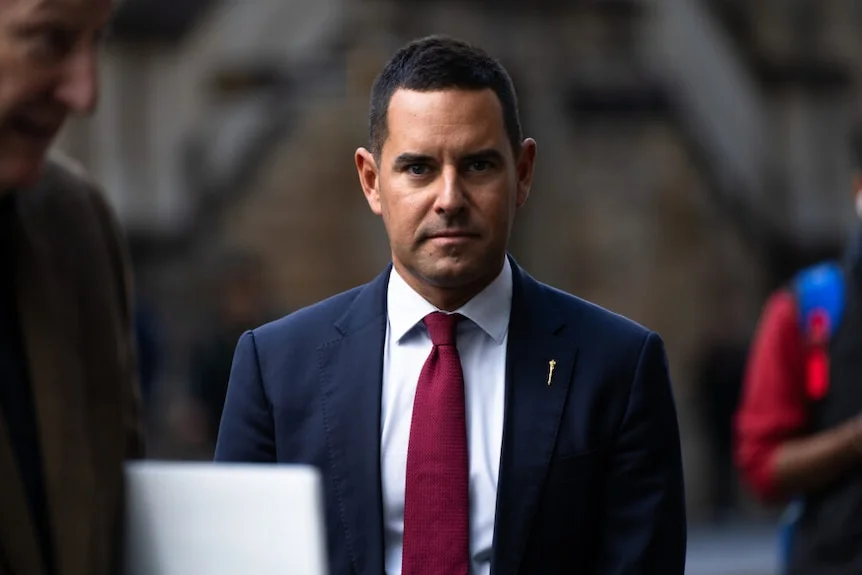
Alex Greenwich says he has never experienced this level of attack before. (ABC News: Keana Naughton)
The timing and the message
In a social media post, Greenwich said the incident was "deeply distressing" for his staff and for him. He pointed to the timing, writing that "no-one should face this kind of hatred in their workplace, especially on the 9th anniversary of Australia's marriage equality YES vote." The date is the detail that gives the attack its symbolic weight. Anniversaries of contested public votes tend to draw commentary from every side, and an act of abuse landing on one is usually read as a message about the cause, not just about the individual. Greenwich's framing puts the workplace at the centre, which shifts the story from one politician to the people who work in his office.
He also struck a defiant note. "If the intention was to intimidate me, it has had the opposite effect. I'm more determined than ever to make Sydney and NSW safer, fairer and more equal for our community." That's the line most politicians reach for after an attack, and it's a fair one to say. Defiance and fear don't cancel each other out, though. Here's the thing: a statement of resolve doesn't clean a graffitied wall or make a staffer feel safer when they walk in on Monday morning.
The incident has been condemned as "vile". (Supplied)
Police and the CCTV question
Police have established a crime scene, and investigators are reviewing CCTV footage while making inquiries to identify those involved. That footage is the most obvious lead, and whether it produces names quickly will shape how the case is perceived. In cases like this, the first days often determine whether the public sees an active investigation or a stalled one, even when detectives are working steadily behind the scenes. If you're following the case, pay attention to what police release and when. Silence can be routine, but it reads poorly when a community is waiting for answers.
Politicians speak out
Allegra Spender, the federal member for Wentworth, described the incident as "vile" and said she was "disgusted and appalled". "There is no place for homophobia or hate in our community, and certainly not in Australian politics," she said. Condemnation from colleagues is the expected first response, and it matters more than it sounds. When a sitting member publicly draws a line, it signals to staff, volunteers and constituents that the attack is being treated as an attack, not as a political stunt or a fringe incident.
"Words matter, and this kind of attack is designed to intimidate and harm." She added that her electorate was "sending you all our love and support". That's a point worth dwelling on. Spray paint is a crude tool, but its purpose is the same as a threatening letter: to make a person feel watched, unwelcome and unsafe where they work. Language that treats graffiti as "just words" misses that, and Spender's framing pushes back on it.
Violence against politicians is back in focus
The vandalism lands amid heightened attention to threats against politicians, following the car attack on Victorian Independent MP Helen Haines, which led to both of her legs being amputated. That's a grim reference point, and it's worth being precise about what the comparison does and doesn't mean. A spray-painted wall and a car attack sit at very different points on the severity scale. What they share is a target: people in public office who are easy to find and easy to name.
NSW MP Jodie Harrison told the ABC last month that the attack on Haines brought back memories of nine years ago, when two envelopes containing death threats were slipped under her door. "It made me feel physically sick," she said. Harrison's account is a reminder that threats don't disappear when the news cycle moves on. For the person who receives them, the memory tends to stick around far longer than the coverage does.
Harrison also pointed to a structural problem. "One of the downsides of public life is that people who might not like us know that we can actually easily be found, because we're public people." She isn't describing a fringe grievance. She's describing the basic bargain of public office: the transparency and accessibility that define the job also make the people in it easy to locate. Electorate offices, public addresses and published contact details all serve democratic purposes, and all of them can be used against the people they're meant to serve.
AFP Commissioner Krissy Barrett has made a similar connection. Speaking on the ABC's Insider program, she said there was a direct link between inflammatory political discourse and threats against parliamentarians. "It does have a direct correlation to what we see in terms of threats and abuse, and sometimes it's very immediate," she said. That's a notable statement from a senior police official, and it moves the conversation from individual bad actors to the tone of public debate itself.
Barrett went further: "I would challenge any Australian to read some of these threats and some of the abuse that is reported to us from federal parliamentarians and for anyone to argue that that is free speech or political discourse." I'd argue her remarks matter more than the graffiti itself. Police rarely take such a direct position on political rhetoric, and the claim is pointed enough that it will invite pushback from people who see heated debate as a core democratic right. That debate is worth having, and it's one the public should watch closely.
What this means going forward
The incident on Oxford Street is unlikely to be the last of its kind, and that's the uncomfortable part. Threats against politicians aren't new, and the pattern here, with abuse escalating from inboxes to phones to physical property, is one that similar episodes have shown before. The open question is whether this becomes a single headline or a point the public and parliament keep returning to. Based on the reactions so far, from Greenwich, Spender, Harrison and Barrett, the issue has at least reached the people who can keep it on the agenda.
If you're working in this space, whether as a staffer, a candidate or a volunteer, the takeaway isn't complicated. Electorate offices are workplaces, and the people in them deserve the same attention to safety as anyone else in a public-facing job. Keeping a clear record of incidents, talking openly with staff about what they've seen and knowing who to call are the kinds of basic steps that reduce the chance of a bad day turning into a worse one. None of that solves the underlying problem of hostile rhetoric, but it's the part you can control.
Anyone with information about the Surry Hills incident is urged to contact Crime Stoppers on 1800 333 000 or the Surry Hills Police Area Command. Even small details, such as a person seen near the office or a vehicle parked nearby at the time, can help investigators piece together what happened.
Discussion
Sign in to join the discussion.