A Tasmanian teen reported online grooming by a family acquaintance, then was shut out of the meetings that followed. Advocates say that's common.

Content warning: This story describes online grooming and sexual coercion.
Nari frowned at her phone when a video call buzzed in. She was halfway through a text to a man she knew as Ray, telling him it wasn't a good time to talk. He called anyway.
When she answered, Ray was shirtless on his couch. The two had met years earlier, when Nari visited her parents' home country, and had stayed in touch on Facebook, messaging regularly. She was a teenager at the time, and she'd been struggling at home.
Ray was older, and he was calm. He listened in a way her parents didn't, and he called her "sweetie," "beautiful" and "darling." He promised to teach her to drive the next time she visited. For a lonely kid, that felt like being understood.
The video call felt wrong almost immediately. Something in the way he was sitting, and in his expression, set off alarms. When she asked where his wife and children were, he said they were away. Then he walked into his bedroom and told her he was alone and had nobody to sleep with.
He asked her to come and sleep with him. She said no. He pressed her to undress on camera and wrap herself in a blanket. She refused again. When he asked her to lift her top, she was anxious about saying no a third time, and she pulled it up just enough to show a sliver of stomach. Then she invented an excuse, saying her dad was calling for her, and ended the call.

She asked for help, and was sent to school
That night, Nari called a support helpline. She had spoken to the same service before. The counsellor already knew she was afraid of her father, and that telling either parent about Ray would not go well.
The counsellor suggested she talk to someone at school. So the next day she reported what had happened to a school psychologist.
What followed is the part that stays with you. A meeting was arranged between the psychologist, Nari's teacher and a child safety officer to decide what happened next. Nari wasn't invited. The people making decisions about her life were in the room, and she wasn't.
"I was absolutely petrified of what was going to happen," she said.
She remembers sitting in class, crying and thinking the same thing over and over: her parents were going to find out. By the time she got home, they had. They were angry. They took her phone and kept her home from school the next day.
For Nari, the result was isolation and confusion. She had told an adult the truth, and the adult response had cut her off from her own support network at the moment she needed it most.
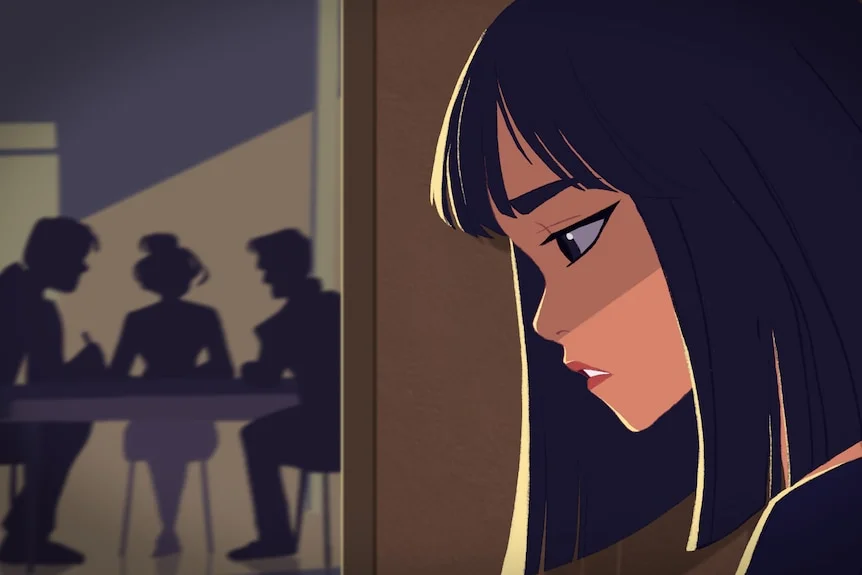
Protecting a victim or involving her?
Nari's experience is far from unusual, and it's exactly what sexual assault support workers are trying to change. The instinct to shield a young person is understandable. The trouble is that it often backfires.
Kathryn Fordyce, chief executive of the sexual assault support service Laurel House, says well-meaning adults often try to protect young victim-survivors by keeping them out of the process. In her view, that frequently does more harm than good.
"They already feel like their power and their control in a situation has been taken by someone who's chosen to harm them," she said.
Fordyce argues the opposite approach works better. "By giving them information and having them involved in decision making, it actually is protective for them. You're giving them education to help keep themselves safe."
She also raised a harder point. Victim-survivors from diverse backgrounds, including migrant families like Nari's, often struggle even more to be heard. Fordyce put it bluntly: "We probably do it better as a broad community when victim-survivors are white, articulate, relatively privileged young people. We're willing to listen and seek the views of the ones who are, in inverted commas, easier to engage with."
Those who are disabled, who face communication barriers, who come from culturally diverse backgrounds, who have contact with the youth justice system, or who are Aboriginal, are the groups most likely to be overlooked, she said.
Turning a bad experience into a voice
Nari is now one of 24 advocates sharing their stories through Laurel House's Lived Experience Engagement Program, or LEEP. The program connects people with lived experience of sexual harm with organisations that want to learn from them. Advocates come from varied backgrounds and are paid for their time.
This year, Nari spoke at a national conference on family violence, alongside two other victim-survivor advocates. She describes the experience as intense, interesting and meaningful.
"The number of people who approached me and thanked me for sharing my story or empathised with me … it was a really meaningful experience," she said.
She says telling her story as a teenager, without adults filtering it, was empowering. Her advice to young people in similar situations is direct: "Your story finishes when you want it to finish and it ends on your own terms, not the system's and certainly not on the perpetrator's terms. Your terms."
Her story points to a gap that's easy to miss. Reporting abuse is only the first step. If the adults who receive that report treat the young person as a problem to manage rather than a participant to include, the system can end up repeating the harm in a different form. Advocates like Fordyce want that to change, and for teenagers like Nari, being in the room where decisions are made may matter as much as anything else.
Names have been changed to protect privacy.
Discussion
Sign in to join the discussion.