Australia's super pool is near $5 trillion, yet size isn't adequacy: most retirees still rely on the age pension, and the risk sits with individuals.

 Five trillion dollars is hard to picture, so start with the per-person figure. Spread across a population of 28 million, Australians' superannuation works out to about $178,571 each. That average hides enormous spread, and the total is a moving target. Data lags and market swings mean nobody can say precisely when the pool crossed the line, only that it's about to, if it hasn't already.
Written out, it's $5,000,000,000,000. Put another way, it equals roughly 20 months of everything the country produces in a year. That's a very large emergency fund. And the pool is still growing. Over the coming decades, Australia's private retirement savings are expected to overtake Canada and the United Kingdom, making it the second-largest pool in the world after the United States.
Size isn't the same as adequacy, though. So how well is the system serving the people paying into it? And will you, personally, have enough to stop working?
A system that hands you the bill, not the bottom line
Few questions in Australian personal finance generate more anxiety than "how much do I need to retire?" The system is built in a way that makes the answer hard to reach. Australia runs a "defined contribution" model rather than a "defined benefit" one. The distinction matters. Under the first, you know what goes in: 12 per cent of your earnings, every year. What comes out at the end is anyone's guess. Defined benefit schemes promise a payout, and the employer carries the risk of falling short. Here, that risk sits with you. It's also a bit of a historical oddity. A Labor government introduced the Superannuation Guarantee in 1992, and it pushed the job of securing a comfortable retirement onto individuals, with the money managed by non-government funds. Since then, the size of your eventual nest egg has been tied closely to how you've fared in the workforce. Low-skilled workers and people who stepped out of paid work for caring responsibilities, most of them women, started from behind and mostly stayed there. Super was sold as one of three pillars supporting retirement income: the age pension, super, and private savings outside super. But there's a fourth pillar nobody wrote down. Housing has quietly carried much of the load. For generations, owning your home has been close to a precondition for a comfortable retirement, because the age pension is generous enough to cover basic living costs, not much more.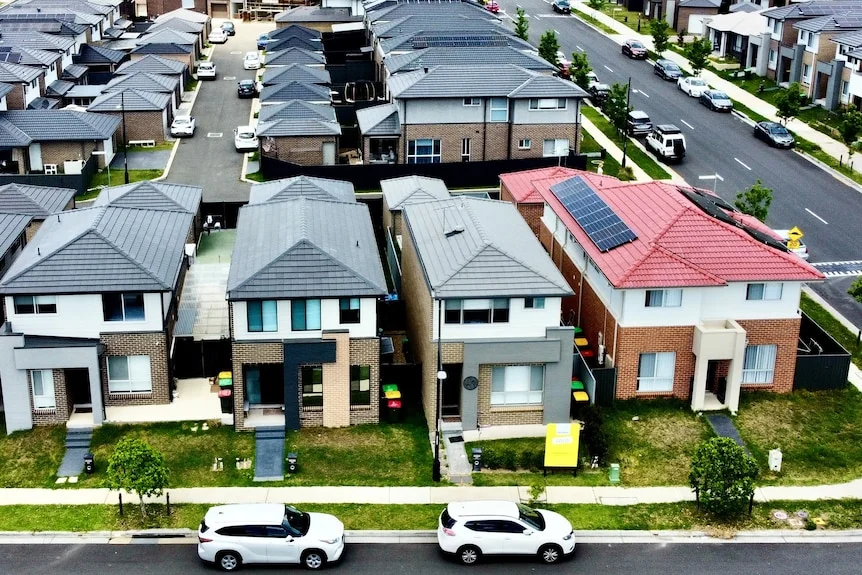 Here's the thing that stands out. Super was never really designed to replace the age pension. Most people assume it was, but the reality is starker: two-thirds of retirees today still draw a full or part age pension on top of whatever super they hold. And the tax settings that made super attractive have a cost. Much of what the pension system has saved in the years since has been eaten up by the lower tax on super compared with wages.
The Howard government took the Labor scheme and expanded it, layering on generous tax breaks for contributions and scrapping tax on withdrawals in retirement. A flat 15 per cent contributions tax delivers its biggest savings to high earners, which means the benefits skew toward higher-income, largely white-collar workers. That's not a fringe reading. It's how the numbers fall out.
Policing the mega-funds
The people managing your retirement are increasingly a small group. Hundreds of billions of dollars now sit with a shrinking number of super funds, and the trend is heading in one direction. Here's the structural problem. Super funds aren't companies answerable to shareholders. They're trusts run by boards of trustees, which means the discipline that comes from the share market is largely absent. Instead, regulators have to keep watch to make sure these boards act in the best interests of members who are, to put it charitably, not very engaged. The trajectory is clear. A [Deloitte report](https://www.deloitte.com/au/en/our-thinking/featured-insights/12-trillion-force-reshaping-australian-economy.html) looking ahead to 2045 expects a $12 trillion asset pool controlled mainly by around 10 mega-funds. The report says those funds have "a fiduciary obligation to act in their members' best financial interests in order to help fund their retirement." That obligation is harder to police than it sounds. Regulators have flagged real risks: poor customer service, weak complaints handling, and delays of up to two years before insurance cover linked to super accounts pays out. Those aren't abstract concerns. They're the moments when members actually need the system to work. Proper scrutiny of how funds spend members' money matters a great deal here. Which brings us to the spending. APRA figures show Australia's top 10 mega-funds, where data is available, spent a combined $388 million on marketing in FY25. Their spending on helping members with complaints and feedback came to $45 million. You don't need to be a regulator to see the gap.
Financial firms of every stripe, from banks to insurers, have been drawn into a marketing arms race, and super funds are following suit. The justification is always the same: they need to "maintain market share" of members' attention. The trouble is that every dollar spent winning eyeballs is a dollar not spent on members. Everyone competes, and the members collectively pay for it.
Discussion
Sign in to join the discussion.