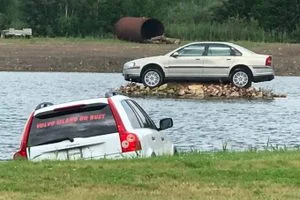
The Volvo Island in Ottawa has become a quirky tourist destination, featuring the original S80 and other oddly placed vehicles in the surround.
Origins of Volvo Island
In 2012, a local repair shop owner in Ottawa, Illinois, decided to tow a 2001 Volvo S80 to a secluded peninsula. Using an excavator, he crafted a small island just big enough for the car, initially planning to host a contest around its unusual placement. The contest never launched due to safety concerns about people attempting to navigate the 40-foot-deep lake for a closer view.
This peculiar story begins with a blend of automotive passion and community engagement. The Volvo's journey to the island wasn't just about placing a car in an unusual setting — it reflected a creative and playful spirit that often goes awry in large-scale urban planning. In many cases, art installations or quirky sculptures become landmarks because they elicit curiosity and engagement. However, the original intention of this island, which was sparking interest through a contest, fell victim to the challenges of safety and feasibility. It underscores the fine line between art and practicality, especially in remote communities.
A Tourist Attraction
Despite the lack of a contest, the Volvo has since become a beloved landmark for visitors in the Ottawa area. The quirky site has expanded to include more vehicles, such as suspended Volkswagen Beetles perched in trees, adding to the area's charm.
The transformation of Volvo Island into a tourist attraction illustrates how unexpected elements can redefine a location's identity. In an era where people crave uniqueness, this whimsical installation serves as a magnet for local and out-of-town visitors, including curious road-trippers and families looking for an unusual getaway. Such offbeat attractions are often driven by word-of-mouth and social media buzz, amplifying the charm of oddities in the midst of typical tourist sites. It's a reminder that what seems trivial can sometimes form the backbone of local culture and community pride.
The additional vehicles take it a step further. Suspended Volkswagen Beetles evoke a sense of nostalgia and playfulness, which can resonate deeply with visitors who grew up around those models. The mix of vintage automobiles and creativity allows the site to cater to a wide audience, from car enthusiasts to families looking to capture an Instagram moment. This combination amplifies its appeal, making it more than just a random car in a lake; it's a showcase of community spirit and imaginative artistry.
Access and Safety Measures
The site is now enclosed with barbed wire to ensure safety and discourage close encounters. However, photography is still encouraged, with visitors welcome to stop at the gate or along the roadside to capture this unique spectacle.
Addressing safety issues in such unconventional tourist attractions cannot be overlooked. Barbed wire might seem harsh, but it reflects a pragmatic response to potential hazards that can arise from unrestrained curiosity. After all, visitors might not fully grasp the dangers presented by a deep lake. Not too long ago, several incidents occurred at similar installations around the country, where eager explorers found themselves in precarious situations. It's critical that organizers strike a balance between allowing public engagement and protecting the well-being of visitors; that’s a challenge faced by many roadside attractions and art installations.
(And this is the part most people overlook.) While the barriers may deter close access, the decision to encourage photography aligns well with contemporary tourism trends. In today's image-centric world, allowing visitors to snap photos can lead to viral social media posts, bringing more attention and foot traffic to the location without opening up dangerous access points. This practice reinforces a growing trend where destinations must adapt to changing visitor behaviors while still prioritizing safety. It reflects the complex relationship between art, tourism, and local infrastructure: how do you draw crowds without compromising safety?
Implications and Future Outlook
This car-centric attraction raises fascinating questions about the broader implications for tourism in small towns. Volvo Island suggests that local innovation often comes from outside standard tourism models and can draw attention in ways traditional attractions can't. Communities can learn a lot from this case; it exemplifies the potential of embracing creativity, quirky ideas, and nonconventional attractions to boost local economies.
As localities seek ways to revitalize their economies, the unique appeal of sites like Volvo Island may inspire others to create whimsical attractions that draw in visitors. Communities around the country might find that their identity can be shaped through local art, humor, and creativity instead of only through history-based tourism. If you're working in this space, it might be time to think outside the (tourist) box and consider what unconventional elements might resonate deeply with visitors.
Of course, the future of such attractions also comes with challenges. Sustainability concerns about maintaining such unique displays, potential regulatory issues, and the ongoing need to ensure visitor safety can complicate things. Wondering what the next step might be for Volvo Island? That’s anyone’s guess, but one thing’s for sure: the conversation around curiosity-driven tourism is only just beginning.
Discussion
Sign in to join the discussion.