Komatsu will phase out its Moss Vale plant over six stages, shifting work elsewhere and putting local jobs and an estimated $20 million in annual spending at risk.

A planned closure with a regional price tag
Komatsu’s planned closure of its Moss Vale plant will remove about 265 jobs from the Southern Highlands by 2030, with effects likely to reach well beyond the factory gates. Local business leaders estimate the region could lose around $20 million a year in household spending if workers and their families leave. That estimate describes a possible consequence, not a guaranteed outcome: it depends on how many affected households relocate, and how quickly they do so.
The company plans to wind down the site in six phases. Work will move to Komatsu facilities in Rutherford, in the NSW Hunter Valley, and Rockhampton, in Central Queensland; some fabrication and machining will go to Australian suppliers. A staged transfer gives the company time to shift work, but it also means the local impact may build over several years rather than arrive as a single event.
The central question for the region is therefore larger than whether the plant’s jobs disappear. It’s also whether the work, skills and spending attached to those jobs can find a home nearby. That’s a difficult test for a community whose manufacturers and service businesses have built relationships around the site.
Work moves as the plant winds down
Komatsu executive Helen Gibson said the restructure is intended to simplify operations and respond to changes in the Australian market and customer requirements. She said employees were among the first to be informed and that there would be no immediate changes for them. That assurance addresses the near term, while the six-phase timetable leaves workers facing a longer period of uncertainty about where their roles will end up.
The Australian Manufacturing Workers’ Union says workers were blindsided by the announcement. Senior organiser Nathan Everson described a meeting with employees marked by “bewilderment and shocked faces,” adding that some workers were supporting colleagues distressed by the news. Such accounts point to the human strain that can accompany a long transition: people may have to weigh retraining, relocation and family decisions before the final closure date arrives.
After meeting Komatsu representatives at the site, the union said it had been told original equipment work would transition to China. Everson said the company considered fabrication and machining uncompetitive, leading to the decision to send that work offshore. Komatsu’s public plan also includes transferring work to its Australian sites and suppliers. The difference between the union’s account and the company’s stated destinations makes the detail of each work transfer important: “work” covers different activities, and the stated plan includes both domestic moves and an overseas transition reported by the union.
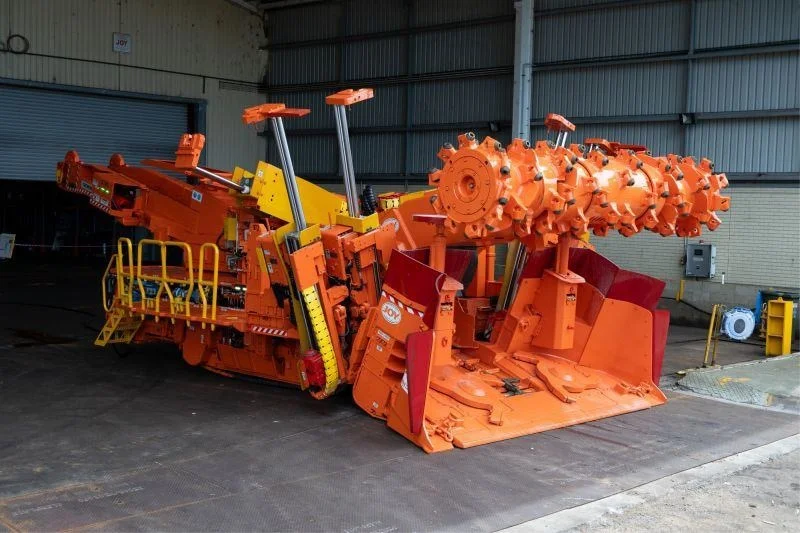
Rutherford will also lose some work under the restructure, Everson said, though the company’s announcement identifies it as one of the destinations for work leaving Moss Vale. That detail complicates any simple picture of jobs moving intact from one plant to another. A receiving site may gain some tasks while losing others, and the public information here doesn’t specify how those changes will affect staffing at Rutherford.
Regional costs extend beyond direct job losses
Business Southern Highlands chair Greg Welsh said the plant supports engineering firms, hydraulics businesses and component suppliers, as well as local shops. The potential departure of skilled, well-paid workers could affect those businesses and the wider community. Suppliers may face a different kind of pressure from retailers: their exposure depends on whether they can retain Komatsu work, find other customers or adapt their capabilities to different contracts.
“It’s much more than just a business because there’s kids in school, they’re uprooting whole families … it’s devastating,” Welsh said. His estimate of roughly $20 million in lost annual spending assumes workers and their families leave the area. If some remain, find other local jobs or commute to work elsewhere, the spending effect could be smaller; if households move, the effects may reach schools, shops and services as well as suppliers.
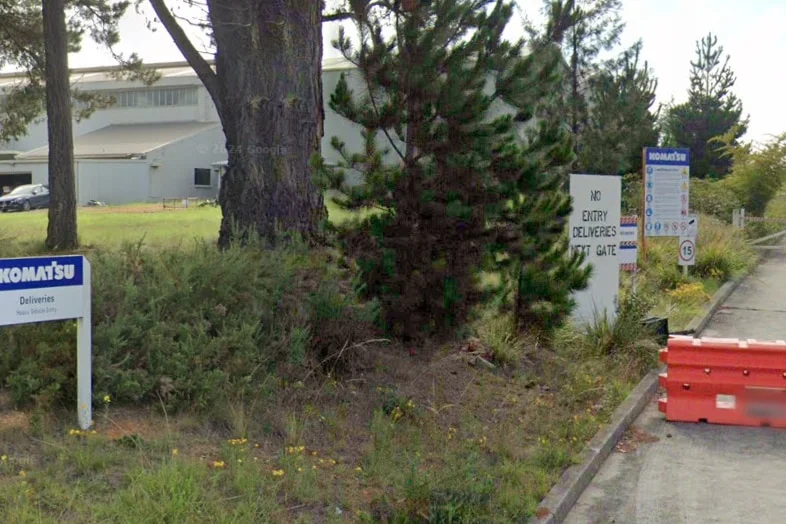
Everson said finding comparable work locally could be difficult and warned the closure would reduce skilled manufacturing employment in NSW. The point is not simply that workers need new jobs; manufacturing roles can draw on specialist experience that may not have a direct local equivalent. Retraining can help in some transitions, but it doesn’t by itself guarantee that a suitable job will be available in the same area.
State Domestic Manufacturing Minister Courtney Houssos said she was disappointed, had contacted the union and would monitor the effect of the planned job cuts. Federal Whitlam MP Carol Berry is due to meet Komatsu on Thursday to ask about the closure and worker support. Goulburn MP Wendy Tuckerman said contractors, suppliers and local businesses would also feel the effects, while Wingecarribee Mayor Erin Foley said the council would seek a meeting with the company and press for support for workers.
What the transition will test
The six-stage timetable gives the region time to respond, but the scale of the transition will depend on where workers and supplier work can land. It also creates a practical test for any support offered: can it connect employees with suitable roles and help local firms retain or replace work as each phase proceeds? The source material doesn’t set out the details of such support, so its effectiveness remains an open question.
This is more significant than it looks. A plant closure can reduce economic activity through several channels at once: direct wages, purchases from nearby businesses, and the demand created when households spend locally. Those effects won’t necessarily match the headline estimate, but they explain why job counts alone can understate the stakes for a regional community.
If you’re working in this space, watch the transfers as closely as the final closure date. The announcement identifies destinations for some work, while the union describes a separate move to China; the balance between those pathways will shape what remains for Australian workers and suppliers. And this is the part most people overlook: a supplier’s position can change even when the factory itself keeps buying components, if the work is reassigned or the requirements shift.
For Moss Vale, the transition will be measured in more than phases on a company timetable. It will be measured in whether workers can find comparable employment, whether suppliers can secure replacement contracts, and whether families choose to stay. The next meetings between the company, union, elected representatives and council may clarify the support available, but the lasting effect will depend on what happens to people and work on the ground.
Discussion
Sign in to join the discussion.