The VCAA is investigating a website breach and says it has no indication exam papers were accessed, despite a hacker’s claims.
Website breach raises questions during exam period
The breach of the Victorian Curriculum and Assessment Authority’s website has raised questions about exam security in the middle of Victoria’s assessment period. The VCAA says it has no indication that papers from exams already held were accessed, while a hacker claims to have obtained and circulated 2026 exam papers. Those statements describe different things: the authority is reporting what its investigation has established so far, while the alleged attacker is making claims that remain unverified.
The distinction matters for students, schools and anyone trying to assess whether an exam’s integrity has been affected. A compromised public website doesn’t, by itself, establish that systems holding assessment materials were reached. But claims involving exam papers and their distribution are serious enough that the authority’s assurances will be judged against the evidence it releases as the investigation proceeds.
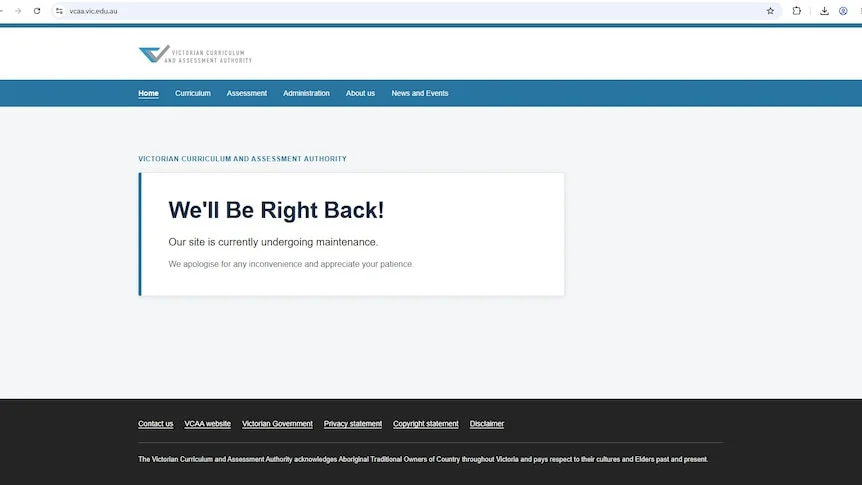
The VCAA confirmed the site was hacked on Wednesday, November 11. After first showing an error, its homepage displayed a “We’ll be right back” message saying the site was undergoing maintenance. The authority said it had begun a forensic investigation to establish the extent of the attack. That work is intended to determine what systems were affected and what information, if any, was accessed; the public information available so far doesn’t answer those questions.
A maintenance message tells visitors that a site isn’t operating normally. It says little on its own about how an intrusion happened or whether the issue extended beyond the pages seen by the public. In incidents like this, investigators typically need to examine system records and access patterns before they can describe the scope with confidence. Until that work produces findings, the visible disruption and the alleged theft of exam papers remain separate pieces of information.
Victorian exams are scheduled to continue through November 18. The VCAA’s assurance so far is limited: it says there is no indication that papers from Wednesday’s exams or previous weeks were accessed. That wording is narrower than a declaration that no exam materials were exposed. It reflects the authority’s current public position, while leaving the investigation to establish whether any other papers or systems were involved.
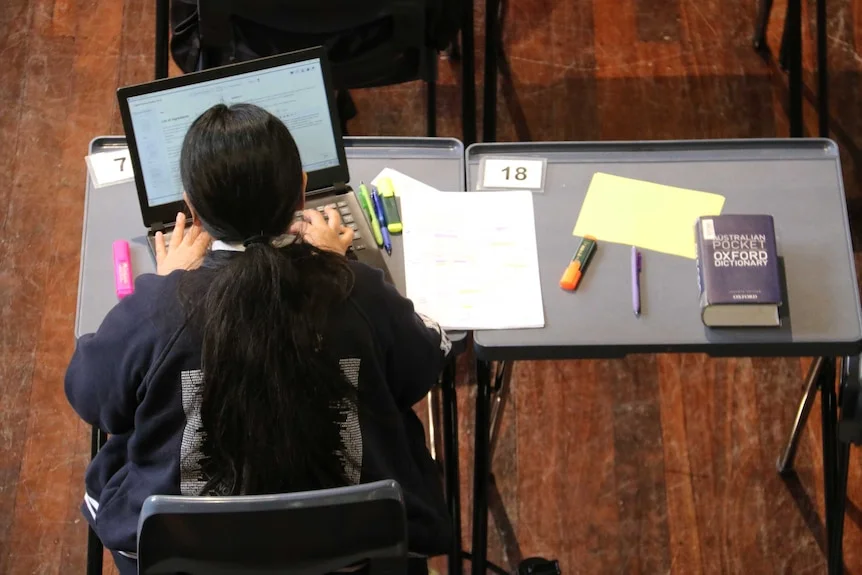
A hacker has claimed responsibility for the breach. (ABC News: Casey Briggs)
A hacker’s account remains unverified
A message left on the compromised site, signed “DaggerElite,” accused the VCAA and other organisations of weak digital security. The person claimed to have taken copies of 2026 exam papers from a printing provider’s internal file servers and used email details obtained from a legal services provider to distribute them. These are allegations in a message attributed to the person claiming responsibility; the VCAA hasn’t confirmed the account or the route it describes.
The message also claimed that hundreds of students had bought exams in advance. It warned recipients that copies were individually marked with identifiable signatures, which could expose anyone who shared them. The VCAA has not confirmed those allegations; its public statement says only that it has found no indication exam papers were accessed. The message therefore raises questions about both the claimed material and its alleged circulation, but it doesn’t supply independent confirmation of either.
That warning about identifying marks also points to a practical complication. If documents are individually marked, investigators may be able to trace copies, but the claim itself doesn’t establish how many papers exist or whether any are authentic. The authority’s review will need to separate verifiable evidence from assertions made by the alleged attacker. A confident message online can attract attention quickly; it isn’t the same as a confirmed account of what happened.
The incident puts the authority’s investigation under close scrutiny as students continue sitting exams. The forensic findings will determine whether the breach was confined to the website or reached systems containing assessment materials. They’ll also shape how clearly the VCAA can explain the risk to students and schools while the exam period is still under way. For now, the central uncertainty remains the gap between the hacker’s claim and the authority’s stated findings.
What the investigation needs to clarify
The immediate questions are concrete: what was accessed, when it was accessed, and whether any exam materials were taken or distributed. Investigators may also need to establish whether the website and the systems described in the hacker’s message were connected in a way that allowed access to pass between them. The available statements don’t provide answers to those questions, so claims about the breach’s reach should be treated cautiously.
For students, uncertainty can be disruptive even when there’s no confirmed evidence that an exam was compromised. They still have scheduled assessments to complete, and rumours about leaked papers can raise doubts about whether everyone is working under the same conditions. Clear updates from the VCAA will matter because they can distinguish confirmed findings from claims that remain under review. If you’re working in this space, the useful signal is what the investigation verifies, not the confidence of the person making the allegation.
This is more significant than a temporary website outage. An assessment authority depends on confidence that exam materials are controlled and that concerns are handled consistently; a breach claim tests that confidence before the facts are settled. (And this is the part most people overlook.) The timing means the public explanation has to keep pace with an exam period already in progress, while the evidence may take longer to establish.
Implications while exams continue
The VCAA’s statement offers a limited form of reassurance: it has found no indication that papers from exams already held were accessed. That matters, but it doesn’t settle whether other materials were involved or verify the hacker’s description of events. The authority will need to communicate the scope of its findings in terms students and schools can understand, especially if new evidence changes the picture.
There’s also a broader lesson for organisations that handle sensitive digital files. Website security and the security of internal systems are related concerns, but a failure in one place doesn’t automatically prove a failure in another. Claims involving outside providers and email details add more points investigators may need to examine, while making it harder for the public to see where responsibility lies. The details will matter.
Until the forensic investigation yields more information, the most accurate account is a limited one: the VCAA’s website was hacked, the authority says it has no indication that papers from exams already held were accessed, and a person claiming responsibility has made broader allegations that remain unconfirmed. Exams are scheduled to continue through November 18. What happens next depends on what the investigation can establish.
Discussion
Sign in to join the discussion.