A 24-hour strike over rents and evictions disrupted transport and industry as Spain’s housing shortage becomes a defining election issue.
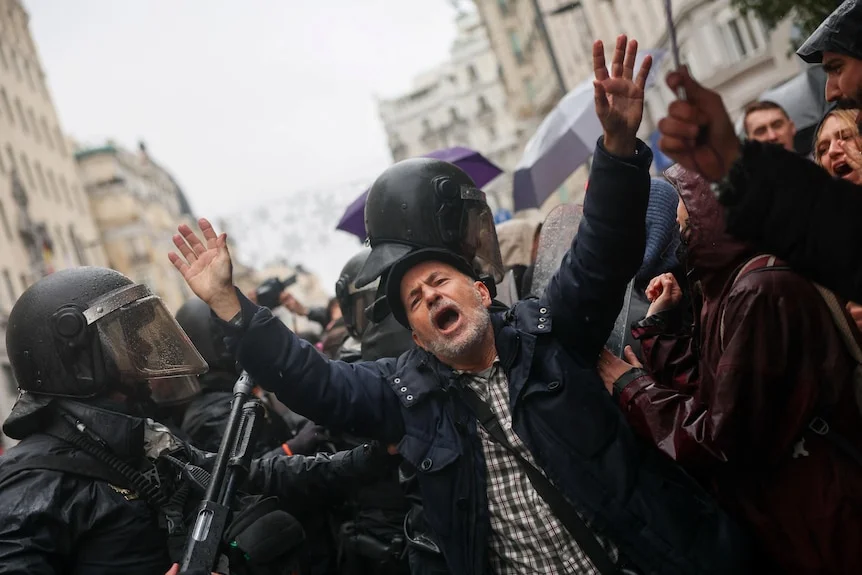
Spain’s housing crunch has moved from a cost-of-living concern to a national labor issue. Unions said four million workers joined Wednesday’s 24-hour general strike, less than three weeks before the November 29 snap election. The tenants’ union expected participation to reach five million of the country’s 23 million workers by day’s end.
The action, backed by Spain’s largest unions, UGT and CCOO, brought together workers and tenants’ associations protesting rising rents and evictions. It was the country’s first general strike since 2012, when workers protested austerity measures during the eurozone debt crisis.
Housing pressure reaches workplaces
The scale of the housing shortage helps explain why the dispute has spread beyond tenants. Spain has a deficit of about 750,000 homes, which the central bank expects to exceed one million by 2028. As buying a home has become less accessible, demand for rentals has climbed and prices have followed.
The average rent, €1,176 a month, equals about 98.7 per cent of a young person’s average monthly salary, according to the Youth Council of Spain. “I’m 36 years old and I still can’t move out on my own,” said Madrid resident Jesus Gonzalez, who works in a hospital IT department. “Rents just keep going up, house prices just keep going up, and it’s simply impossible.”
That squeeze has consequences for employers, too. Angela de Miguel, vice president of business lobby CEOE, argued the strike would hurt small businesses already struggling to recruit because workers can’t find affordable homes.
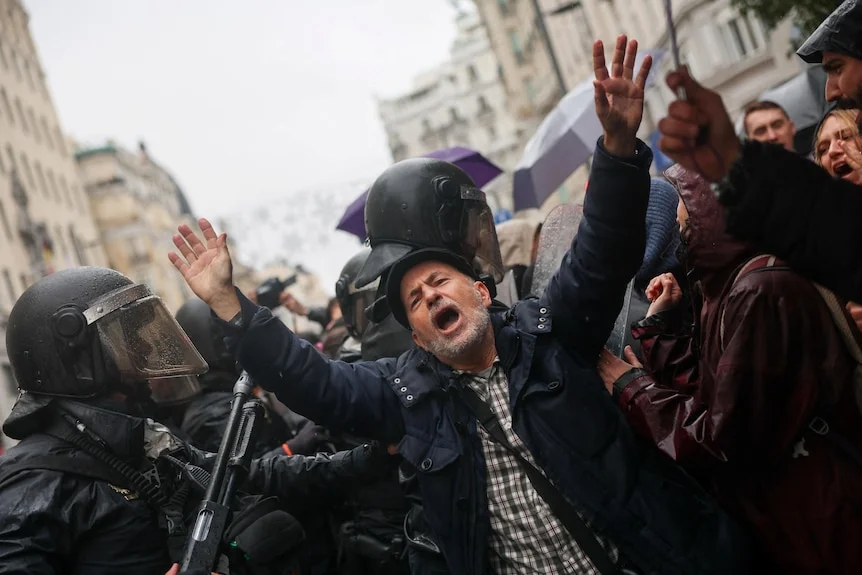
Police said they had arrested 40 people by midday as protesters took to the streets. (Reuters: Susana Vera)
Election pressure and visible disruption
Housing has become a live political test for Prime Minister Pedro Sanchez ahead of the vote. Recent demonstrations followed the eviction and subsequent death of an 87-year-old woman in Madrid. Parliament also rejected government decrees intended to curb evictions and ease rent pressures, events that preceded Sanchez’s call for an early election. His Socialist Party continues to trail in opinion polls.
In Madrid, protesters cheered as major retailers including Primark, H&M and Pull & Bear closed their doors on Gran Via, where riot police were present. Unions said participation reached 90 per cent in the automotive sector. Electricity demand fell by as much as 15.5 per cent between 10am and 11am, according to grid operator Red Electrica.
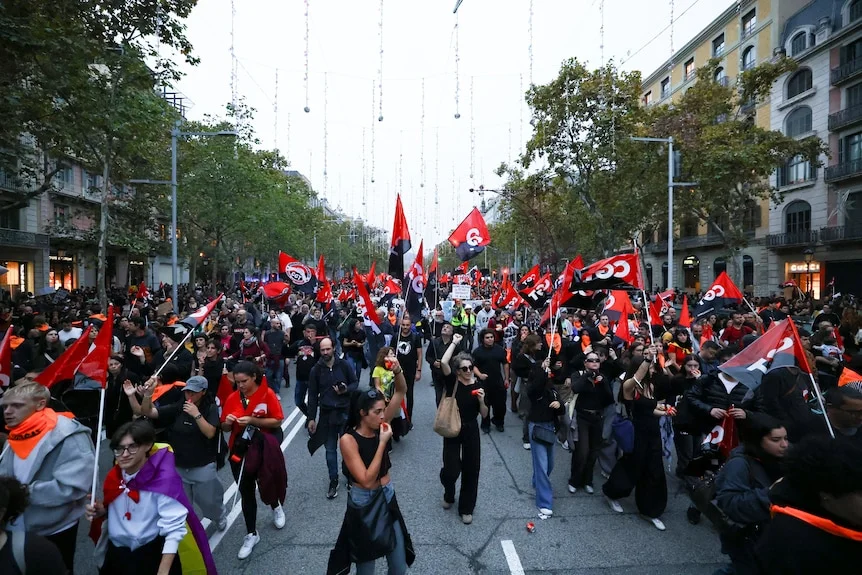
Strikers are demanding wages that make decent housing accessible. (Reuters: Albert Gea)
The effect on daily activity varied by city and sector. Barcelona’s metro planned to suspend service outside peak commuting hours, while Madrid’s metro reported peak-hour usage down 42 per cent compared with the same period a week earlier. Police said they had recorded 476 strike-related incidents by midday, including blockades at offices and industrial estates and burning rubbish containers. They reported 40 arrests. Unions said they would file a criminal complaint over what they called a “disproportionate” police response involving tear gas and batons; 20 protesters were injured.
A strike with limits
The shutdown’s economic reach may be tempered by the growth of remote work and services, where unions have less influence than in public services and industry. Spain’s hospitality and finance sectors are expanding but are less unionised. Miguel Cardoso, chief economist at BBVA Research, estimated the strike could reduce annual GDP by 0.1 to 0.2 per cent.
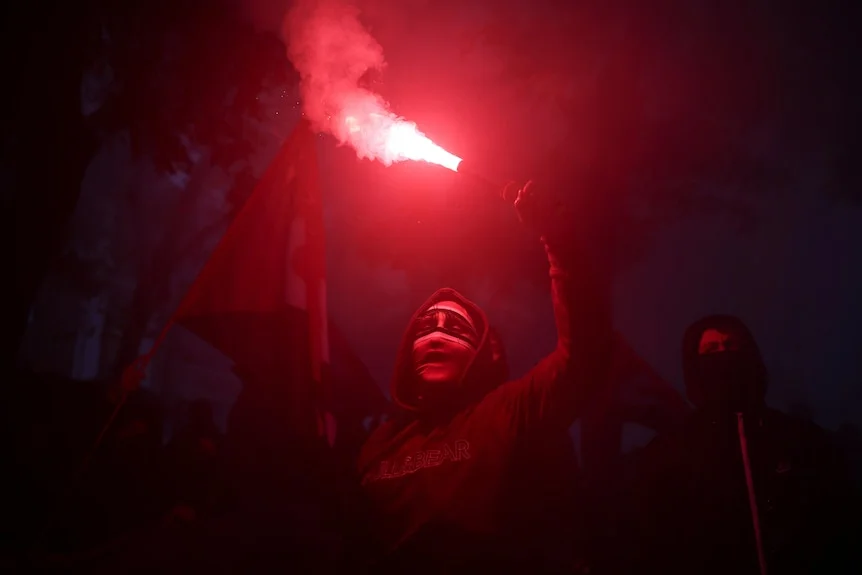
Demonstrations are taking place across Spain ahead of the election. (Reuters: Alejandro Martinez Velez)
The strike’s reach will be measured in more than lost output. With unions linking wages and access to housing, the November 29 election will test whether that connection can reshape the campaign debate.
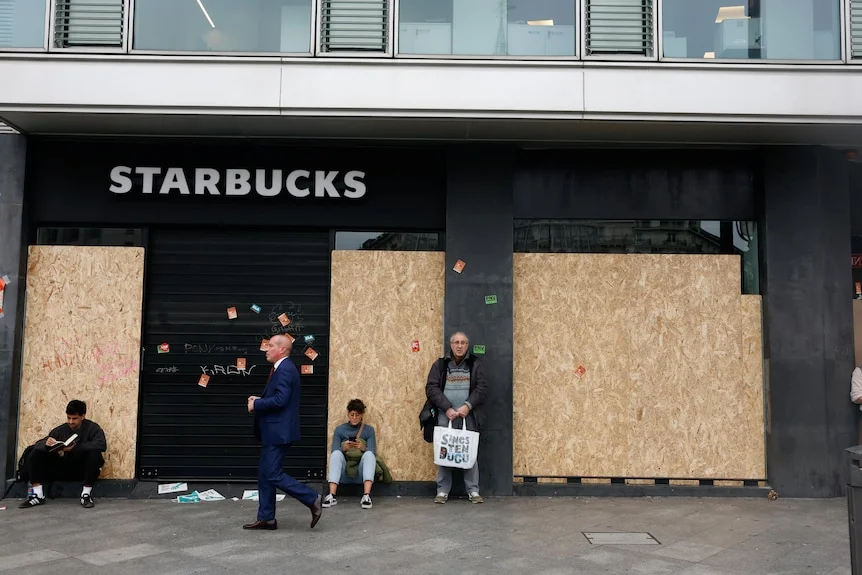
Many shops took precautionary steps amid fears of clashes. (Reuters: Vincent West)
Discussion
Sign in to join the discussion.