A magnitude 5.7 quake struck Shizuoka, damaging shops and injuring at least 22. Japan’s weather agency warned of possible strong aftershocks.
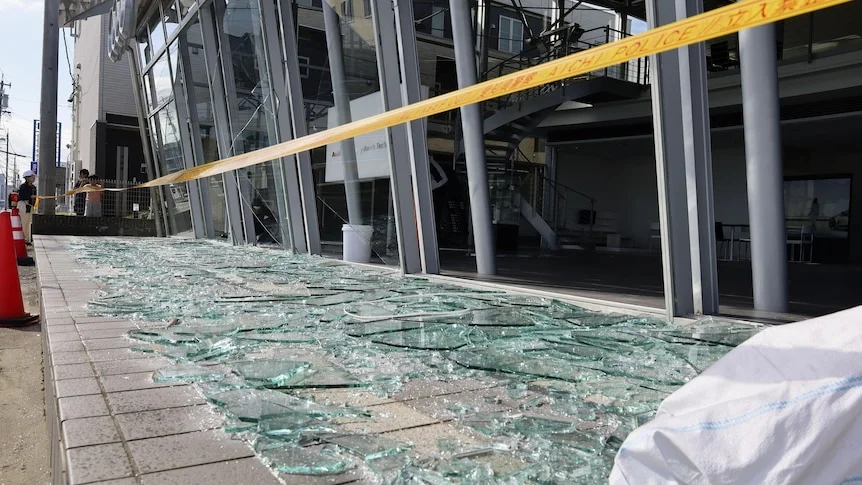
The main concern after Sunday’s magnitude 5.7 earthquake in central Japan is the risk of further strong shaking over the next few days. Japan’s Meteorological Agency urged residents to stay alert, particularly during the next two to three days, after the quake damaged shops and injured at least 22 people, local media reported. That warning is a reminder that the initial shock is only one part of an earthquake’s immediate impact: aftershocks can unsettle damaged buildings, disrupt movement and create new hazards even when they’re smaller than the first tremor.
There’s a limit to what can be inferred from the reported damage so far. The available account describes injuries and broken shopfronts, but it doesn’t establish the full extent of structural damage or how many communities may face continuing disruption. For residents, that uncertainty makes practical caution more useful than trying to read too much into the magnitude alone.
Damage spread across several prefectures
The quake struck at 1:04am local time, about 40 kilometres beneath Shizuoka Prefecture. The agency measured it at magnitude 5.7; the US Geological Survey put it at 5.5. Smaller aftershocks followed. Differences between agencies’ magnitude estimates can arise from their measurement methods and data, so the two figures shouldn’t be treated as evidence that one account is necessarily wrong. Either way, the reported shaking was strong enough to damage storefronts and cause injuries.
Shaking was reported across a broad area, including Aichi, Shizuoka, Gifu and Yamanashi prefectures, as well as Hamamatsu, Kyoto and Nara. Tokyo was far enough away that the quake was not felt there. The range of places reporting shaking illustrates how an earthquake’s effects can extend well beyond its point of origin; local conditions and distance both shape what people experience. A wide felt area, by itself, doesn’t describe the severity of damage in each location.
Television footage showed shattered shop windows and glass strewn across streets. In one bookstore, books had spilled from shelves across the floor. Some people were injured after falling on stairs as they fled buildings. The images offer a narrow but useful view of how ordinary indoor spaces can become dangerous during sudden shaking: unsecured stock can fall, glass can break, and hurried movement can lead to injuries. The injuries reported here came in part from people trying to get out quickly.
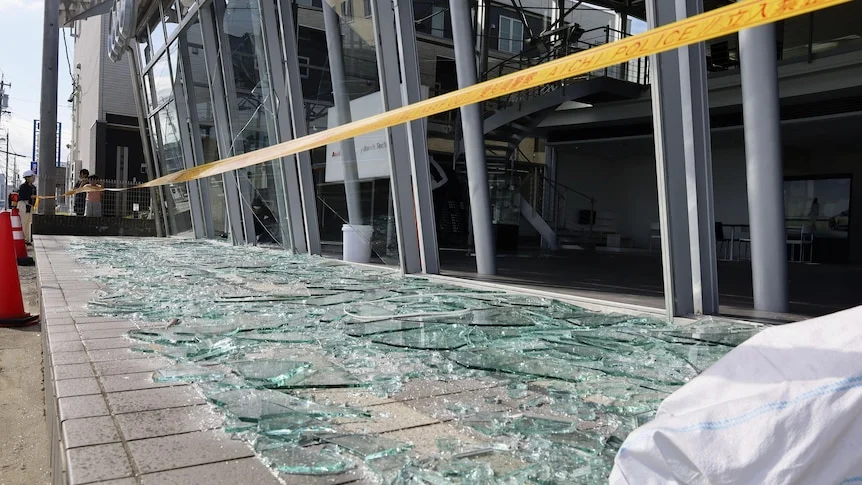
The shattered windows of a car dealership in Toyohashi, Aichi Prefecture. (AP: Kyodo News)
Transport slows as officials urge caution
Shinkansen bullet trains ran at reduced speeds in affected areas as a precaution, given the possibility that earthquakes could damage railway lines. That kind of response can slow journeys even when no damage to a particular line has been reported: operators have to account for the possibility of hazards along the route. The source doesn’t say how long the restrictions lasted or whether any infrastructure was found to be damaged.
The agency also advised residents to watch for mudslides, falling rocks and hazards linked to rainfall. This broadens the concern beyond buildings and transport. Shaking can leave slopes or loose material unstable, while rain can add to the danger in places already vulnerable to slope movement. The warning points to conditions residents should monitor locally, rather than suggesting that every area faces the same level of risk.
Agency official Ayataka Ebita said there was no apparent change to the Nankai Trough plate, where scientists say a megaquake could occur. That statement addresses a specific concern about the plate; it doesn’t remove the immediate risks from aftershocks, damaged property or unstable ground. The immediate focus remains on aftershocks and local ground conditions.
That distinction matters. The mention of the Nankai Trough supplies context, but the reported assessment was that no apparent change had occurred there. It would be misleading to turn that into either a prediction of a larger event or a guarantee that none could happen. The concrete advice in the account is narrower: remain alert during the period identified by the agency and heed local warnings about hazards.
What the next few days mean for residents
For residents, the agency’s warning makes the next several days the period to monitor closely, as central Japan continues to assess the quake’s effects. If you’re in an affected area, the reported concerns are practical ones: further shaking, debris, slope hazards and transport changes. Here’s the thing: a lower magnitude aftershock can still matter if it affects a damaged building or an already unsettled slope.
This is more significant than it looks. The quake’s reported injuries and visible damage are limited details, but they show why officials focus on what may happen after the first shock as well as on the event itself. And this is the part most people overlook: a precautionary rail slowdown can signal uncertainty about conditions, not confirmed damage. For now, vigilance. The coming days will show how much disruption remains, while residents and officials continue to assess local effects.
Discussion
Sign in to join the discussion.