Business groups argue an inquiry into Australia’s declining business dynamism misses key tax and workplace issues as trust and capital gains changes face scrutiny.
Australia’s debate over business dynamism has turned on a question the Productivity Commission was told to leave aside: whether tax and workplace rules are part of the reason businesses start, expand, restructure or close. Business groups say that omission limits the value of the commission’s interim report, even as it identifies practical changes to insolvency processes and regulatory information.
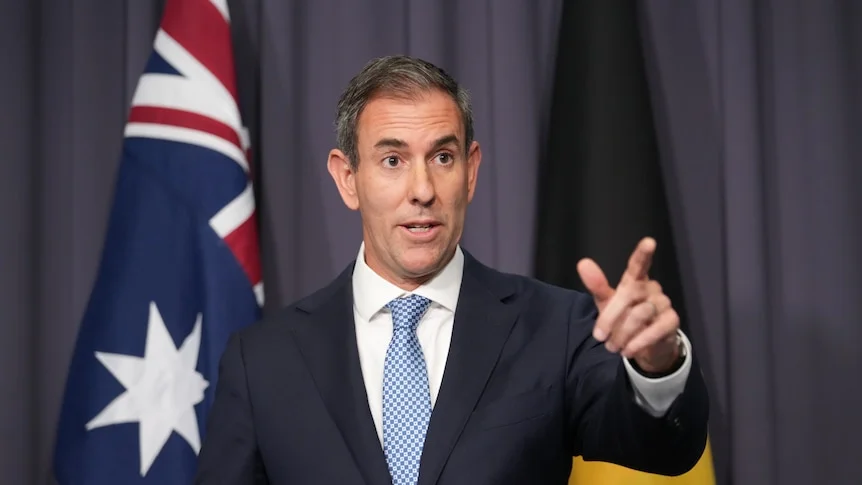
The dispute is unfolding alongside scrutiny of two proposed tax changes: a minimum tax on discretionary trusts and a revised capital gains tax approach, including a carve-out for some start-ups. The commission’s inquiry was directed by Treasurer Jim Chalmers to exclude tax, industrial relations and business merger laws. That scope has drawn criticism from the Australian Chamber of Commerce and Industry (ACCI) and the Business Council, whose leaders argue that policy settings affecting investment and hiring belong in any serious examination of business performance.
Andrew McKellar, ACCI’s chief executive, said the inquiry’s remit prevented it from assessing major influences on business decisions. He compared the limits to a doctor being unable to examine a patient’s heart or lungs: symptoms might be addressed, he said, while the underlying cause remains unexamined. Business Council chief executive Bran Black similarly described tax and industrial relations as “the elephant in the room”, arguing that productivity cannot be addressed while those issues are excluded.
What the commission examined
The interim report points to a decline in business dynamism, reflected in fewer business entries and exits and lower job mobility than in the past. The commission describes renewal through new businesses, growth, restructuring and closures as a driver of productivity. It also says government policy can shape the conditions for that renewal, even though governments don’t create entrepreneurs or businesses directly.
Within its restricted remit, the commission focused on regulatory complexity, gaps in insolvency arrangements and barriers to venture capital for start-ups. Its interim recommendations include a “tell us once” system, under which businesses would provide information to regulators once rather than repeatedly, and appointing an official liquidator as a last resort when a company cannot afford to fund its own.
McKellar said those are worthwhile areas for reform, but argued that the inquiry can’t give a complete account of what holds businesses back without examining tax and workplace relations. That criticism gives the report a difficult position: it offers concrete proposals, while leaving out policy areas that business representatives say shape the choices the inquiry is meant to understand.
Trust tax debate reaches its final hearings
The timing is significant. Hearings on the government’s proposed 30 per cent minimum tax on discretionary trusts are due to conclude on Friday, ahead of the government’s plan to pass the measure in the final parliamentary sitting period of the year, in mid-November. The package also includes a capital gains tax carve-out for start-ups. Business groups oppose both measures, though their concerns differ.
Trusts give users flexibility in distributing wealth and can be used to reduce tax. ACCI and the Council of Small Business Organisations Australia (COSBOA) argue that trusts are important to small businesses and should not face a 30 per cent rate. The proposal contains exemptions, and a trust can avoid the minimum tax by giving up some discretion over how it distributes money—the flexibility that can also enable tax minimisation.
Business and accounting groups say the proposed route out of the minimum tax is too narrow. At Thursday’s hearing, representatives of Chartered Accountants Australia and New Zealand called for more flexibility in how businesses could qualify. They also argued that the rules should allow discretion in circumstances such as family breakdowns.
Friday’s witnesses include the Australian Council of Trade Unions, welfare group ACOSS and tax law academics Sonali Walpola, Kathryn James and Dale Boccabella. Their views may matter in the Senate, where the Greens’ votes will be decisive. The Greens broadly support the proposal’s aims, while retaining concerns. Boccabella previously argued against adding exemptions where they could create loopholes, warning that “a small minority of downtown lawyers and accountants” could exploit gaps.
Start-up carve-out draws criticism over its reach
The proposed capital gains tax relief is intended to address concerns from founders after the May budget. Under the plan, people classified as investors in “innovative start-ups” could choose to keep the existing 50 per cent capital gains tax discount instead of using the new inflation-based discount. The latter adjusts an asset’s starting value for inflation so that tax applies to real gains.
Founders have argued that this approach could leave them with little or no discount when selling a business built from scratch, because its initial value may be close to zero. Independent MP Allegra Spender supports a carve-out in principle, but says the proposed test is complicated and covers too few businesses.
Spender said business owners shouldn’t have to work out whether their company fits a government definition of “innovative”. She is concerned that larger technology firms with broad potential reach could fall outside the eligibility criteria, despite being the kind of businesses the carve-out is meant to retain. Her alternative is a flat 40 per cent discount for all “active” assets, a category already used in tax law for assets involved in running a business.

Allegra Spender wants the capital gains tax carve-out for start-ups to be broadened. (ABC News: Fletcher Yeung)
The government has defended its approach by pointing to Treasury analysis that finds the inflation-based discount is not always less favourable than a flat 50 per cent discount. It also says allowing eligible start-ups to choose between the two arrangements is more generous than the current rules. Some founders may qualify for a separate 50 per cent capital gains tax concession available to small businesses when they sell.
Treasury Secretary Jenny Wilkinson has cited an OECD finding that capital gains tax rates are not a major factor in a country’s level of innovation. That evidence informs the policy case, but it does not resolve the narrower argument over whether the proposed start-up test is workable or broad enough.
The wider test for business policy
The commission’s findings and the tax debate now run in parallel. Its report identifies weaker business entry, exit and job movement, then recommends changes within the boundaries set for the inquiry. Business groups are asking whether those recommendations can address declining dynamism when tax and workplace rules were excluded from the analysis.
That question will remain live as parliament considers the trust tax and start-up capital gains provisions. For businesses, the practical stakes lie in how the final rules handle flexibility, eligibility and the cost of restructuring or selling. The commission’s next steps may improve insolvency and regulatory processes, but the larger test of its work is whether policymakers can connect those fixes to the conditions that influence business formation, investment and change.
Discussion
Sign in to join the discussion.