Russell Brand denied seven charges in a London court and said allegations aired in a documentary had damaged his relationships. The trial continues.
The defence case in Russell Brand’s London trial is testing two questions at once: his account of alleged encounters with six women, and the impact he says later allegations had on his personal relationships. Brand has denied all seven charges and told jurors he could not persuade friends or relatives to appear for him.
The 51-year-old actor and comedian is charged with three counts of rape, three of sexual assault and one of attempted indecent assault. Prosecutors allege the offences took place in the United Kingdom between 1999 and 2009. Brand has pleaded not guilty, saying he did not engage in sexual activity without consent.
Prosecutors have said the six women did not know one another and came forward independently after seeing allegations about Brand in a documentary and news reports.
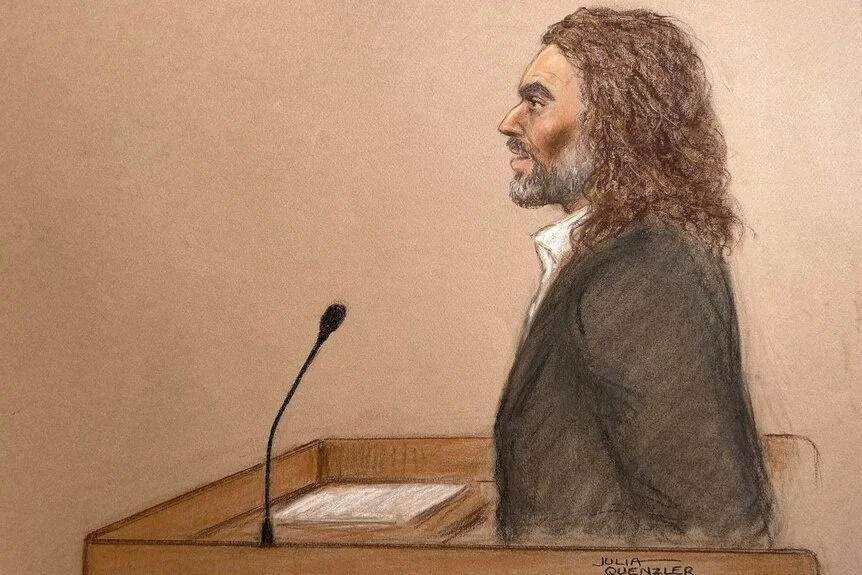
Russell Brand gave evidence in his trial at London's Southwark Crown Court, after telling the jury he had not been able to convince any friends or acquaintances to defend him. (Reuters: Julia Quenzler)
Brand says allegations strained friendships
Taking the stand as his defence began, Brand said a documentary had had a “devastating” effect on his life and relationships. He described it in court as a “TV show,” rather than a documentary, and said no friends or acquaintances would testify on his behalf.
His lawyer, Ian Winter KC, asked whether his friends would “touch you with a bargepole”. Brand answered: “No.”
Brand also addressed an allegation of rape at a political conference in 1999. A woman has told the court that he raped her there. Brand said she had consented, arguing that he spoke to her during sex to “elicit approval,” a practice he said he generally followed.
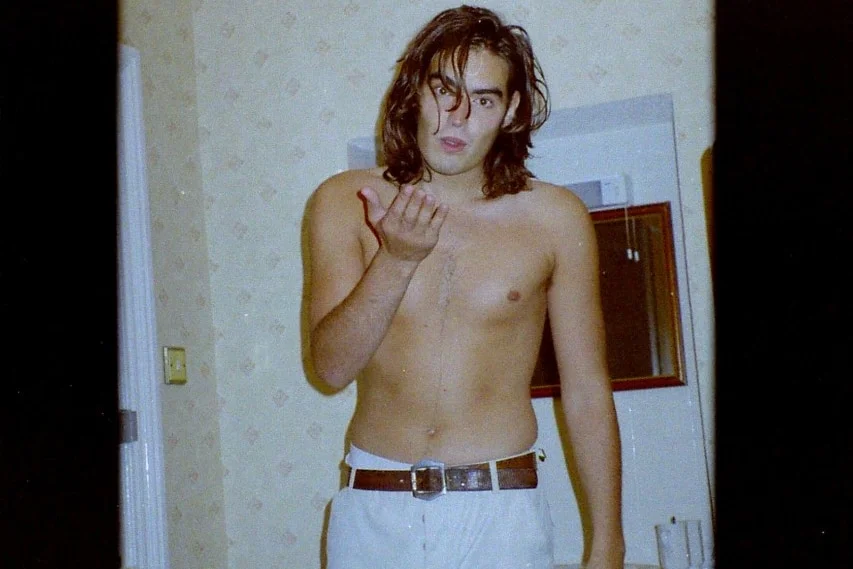
One of the images of Russell Brand from 1999 tendered as evidence on Thursday. (Supplied: Metropolitan Police)
“Consent is fundamental, essential, necessary and indeed in many ways more important than sex itself,” Brand told the jury.
He also denied an allegation that he grabbed a woman’s breasts, dragged her into a bar toilet and raped her. Brand said he had invited her to the lavatory “to fool around” and that she had been willing to go. He called the alleged conduct “disgusting behaviour” and said it would be criminal.
Brand told jurors he was not famous during the period covered by the allegations, saying his “staggering fame” came after he married Katy Perry in 2010.
Cross-examination focuses on his sexual history
Brand described himself as “extremely promiscuous” when he was younger and during the years in question. He rejected a witness’s earlier claim that he had set himself a target of sleeping with 5,000 women.
Prosecutor Riel Karmy-Jones KC challenged him over whether he had been unwilling to leave an encounter without a “conquest.” Brand said that description was “so nefarious, unpleasant and ugly” that it was difficult to answer sincerely.
He said he had initially recalled little about the alleged events. After reviewing new disclosures, watching video interviews with the complainants and visiting some locations, he said he could now remember parts of what happened.
“My entire life has been consumed by these events, these allegations, these accusations, the impact of these allegations and accusations,” he told the court. He added: “I have devoted myself to these matters.”
Brand stood for several hours while giving evidence, with his hands clasped behind his back. The judge praised him for speaking clearly and encouraged him to describe sexual encounters without hesitation.
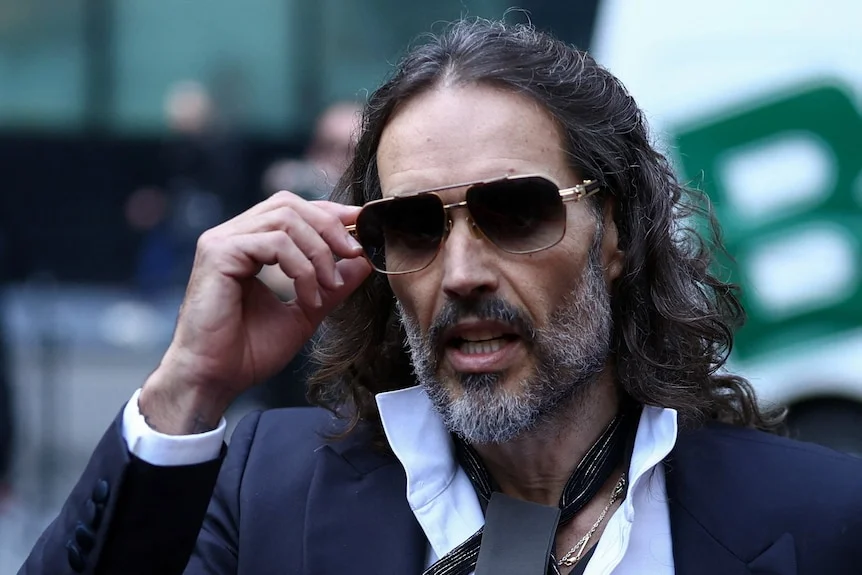
Outside court, Russell Brand told reporters it would be a day of "truth and justice" as his defence case began. (Reuters: Toby Shepheard)
Before entering Southwark Crown Court, Brand told reporters it would be inappropriate to say much about the case. He said he was grateful the day had arrived for “truth and justice” and that the legal system could accommodate such proceedings.
The trial continues.
Discussion
Sign in to join the discussion.