Emmanuel Macron called foreign leaders’ claims about immigration and France’s unrest “unacceptable” and “stupid,” accusing them of exploiting the crisis.
Emmanuel Macron’s rebuke of Donald Trump turns France’s unrest into a test of how quickly domestic turmoil can be recast as a political talking point abroad. Macron called claims linking the riots to immigration “unacceptable” and “stupid,” and said foreign leaders were using France to advance their own campaigns. His objection was not simply to outside commentary: he argued that claims about the unrest were being presented as fact despite, in his account, lacking a basis. That distinction matters when images and political messages cross borders faster than officials can respond.
Macron challenges claims about immigration
Trump had blamed immigration for the violence and urged Macron to “close your borders and take control before it is too late.” Macron said those claims were baseless. Asked whether he meant Trump when referring to foreign leaders, he replied: “Among others.” The exchange shows how a domestic crisis can become material for an international political argument, with France’s unrest used to support a broader claim about immigration and public order.
Macron’s response was direct, but it doesn’t settle the underlying dispute over what caused the violence. The source describes protests over the rising cost of living, looting and arrests; it doesn’t establish that immigration caused the unrest. That gap between a visible crisis and a confident political explanation is where misinformation can gain traction. Here’s the thing: a forceful claim can travel farther than the evidence needed to assess it.
Speaking in Qatar at the end of a tour of energy suppliers, Macron also said AI-generated images circulating online showed scenes that “never actually happened in France.” He rejected claims that France had been “invaded by hordes of migrants and Islamists,” calling them “completely false.” Synthetic images can complicate public understanding because they may look like documentary evidence while depicting events that did not occur. In this case, Macron’s remarks put the authenticity of the images alongside the accuracy of the claims they were being used to support.
And this is the part most people overlook: correcting a false image doesn’t automatically correct the narrative built around it. A public figure can dismiss a specific image, but that response may not reach everyone who has already seen or shared it. The dispute is therefore about both the content circulating online and who gets to define what the unrest means.
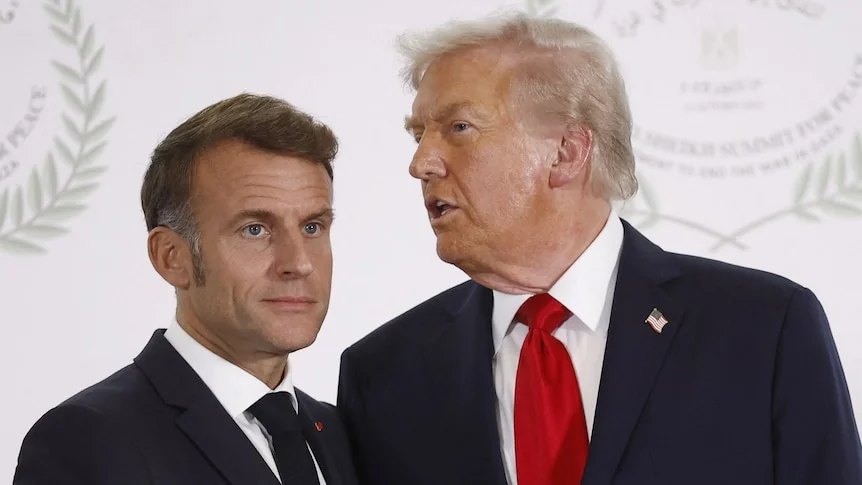
French President Emmanuel Macron and US President Donald Trump used to enjoy a good relationship. (Yoan Valat/Pool via Reuters)
Unrest and online misinformation
Protests over the rising cost of living had continued for more than a week, with widespread looting and thousands of arrests. Macron said foreign manipulation of information had followed the looting, helping fuel claims about what was happening in France. That sequence is significant: the unrest provided real events to report, while misleading material could attach itself to those events and blur the line between documentation and fabrication.
Still, the source offers no detail about who created or spread the images, or how widely they circulated. That limits what can be concluded about the scale or coordination of the alleged manipulation. The distinction between false material and organized foreign activity also matters: Macron alleged manipulation, but the available account doesn’t identify its operators or provide evidence about their methods.
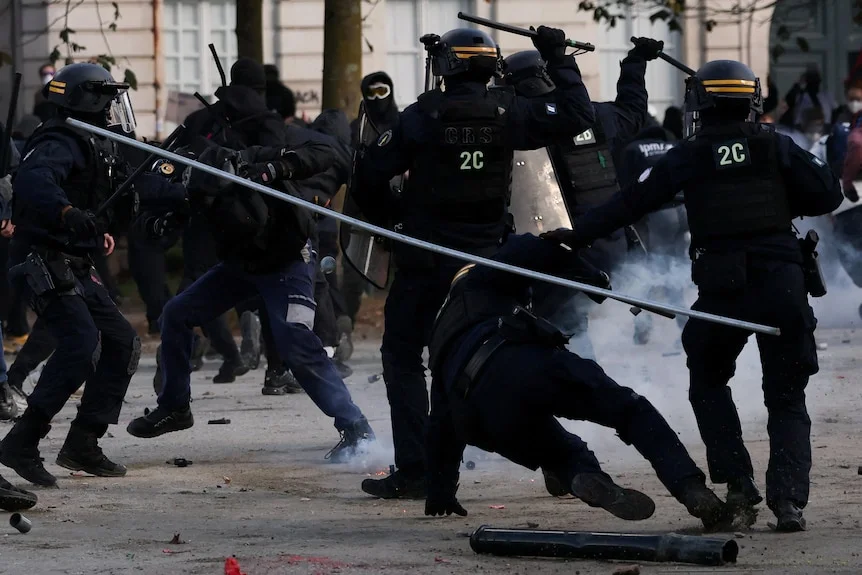
Thousands of people have been arrested in France as protests over the soaring cost of living has led to widespread looting. (Reuters: Stephane Mahe)
“When I see leaders who are in the middle of election campaigns, whether in the region or on the other side of the Atlantic ... they’re using our country for their own political campaigns,” Macron said. “And we don’t need that.” The phrasing makes his complaint broader than Trump alone. Macron was arguing that leaders with domestic political audiences can turn another country’s crisis into a convenient example for their own arguments.
That tactic carries a cost. When outside politicians frame unrest through a single cause, they can crowd out the more complicated realities behind protests, including the economic pressure identified in this account. The numbers here are underwhelming as an explanation: thousands of arrests establish the scale of enforcement, but they don’t tell readers why the protests began or whether any one claim about them is accurate.
A second front in the crisis
French Foreign Minister Jean-Noel Barrot said his office could offer the countries concerned clarification, to help prevent them from spreading or amplifying false information and making baseless claims on social media. The offer points to a diplomatic response built around correcting information and challenging claims. It also places a practical burden on officials: they have to explain what is false clearly enough to compete with material that may already have been shared widely.
Macron’s response places the focus on a second front in the unrest: the contest over how events inside France are represented abroad. If you’re working in this space, the episode shows why crisis communication now has to address both events on the ground and the stories attached to them online. This is more significant than it looks, because distorted accounts can shape foreign perceptions even while the underlying unrest remains unresolved.
That said, the public record described here leaves important questions open. Macron rejected the claims and cited fabricated images, while Barrot offered clarification; neither statement, as reported, supplies a detailed account of the images’ origin or reach. For now, the clearest point is narrower: France’s domestic unrest has become part of an international political argument, and the fight over its portrayal is unfolding alongside the events themselves.
Discussion
Sign in to join the discussion.