Monosporascus cannonballus was detected on two NT properties, raising concerns about crop losses and higher management costs for growers.
First detections raise questions for growers
The discovery of a persistent root-rot fungus in Northern Territory cucurbit crops puts growers’ disease management under pressure. Once infection takes hold, affected plants can be difficult to save, leaving farmers with a problem that may continue to affect production even after visible damage appears. Authorities have confirmed Australia’s first detections of Monosporascus cannonballus on two properties.
The fungus was found in a cucumber plant in the Darwin region and in honeydew and rockmelon crops near Katherine, about 300 kilometres south. The detections followed reports from two farmers who noticed crop problems; the pathogen was identified in August. Those reports show why early observation matters: farmers may be the first to spot unusual crop symptoms, while identifying the cause requires further examination.
The confirmed locations establish that the fungus has been found in more than one part of the Territory’s growing area. They don’t, by themselves, show how far it has spread or whether other farms are affected. That uncertainty is now central to the response.
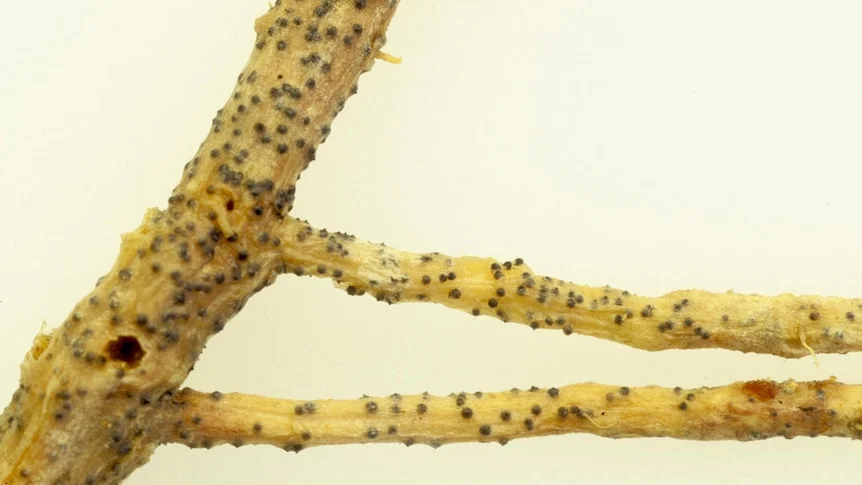
A rockmelon root heavily infected with Monosporascus cannonballus. (Supplied: Gerald Holmes, California Polytechnic State University)
A difficult disease to contain
Monosporascus cannonballus is a soil-borne fungus that damages plant roots, putting it in a category of crop disease that can be hard to address once it is established in a field. Northern Territory Chief Plant Health Officer Sally Heaton said it has affected cucurbits—including pumpkins, squash, melons, cucumbers and gourds—in countries such as the United States, India, Taiwan and Japan, as well as parts of Europe and the Middle East. Its presence overseas offers evidence that the disease can affect a wide range of crops, though it doesn’t establish what its longer-term effects will be in the NT.
In unmanaged outbreaks, mature crops can die suddenly. Heaton said the fungus had been detected in fine roots, and described the root damage as resembling “cannonballs” erupting from the plants. The visible decline may therefore come after damage has already developed below ground, limiting the time growers have to respond. And this is the part most people overlook: a plant’s appearance may not reveal how much its roots have been affected.
Once a crop is infected, Heaton said, growers have little ability to save it. The pathogen cannot be eradicated, and authorities don’t know how it reached the NT or how long it may have been present. Those gaps matter because a response depends partly on knowing whether the detections are isolated and what conditions may have allowed the fungus to arrive or persist.
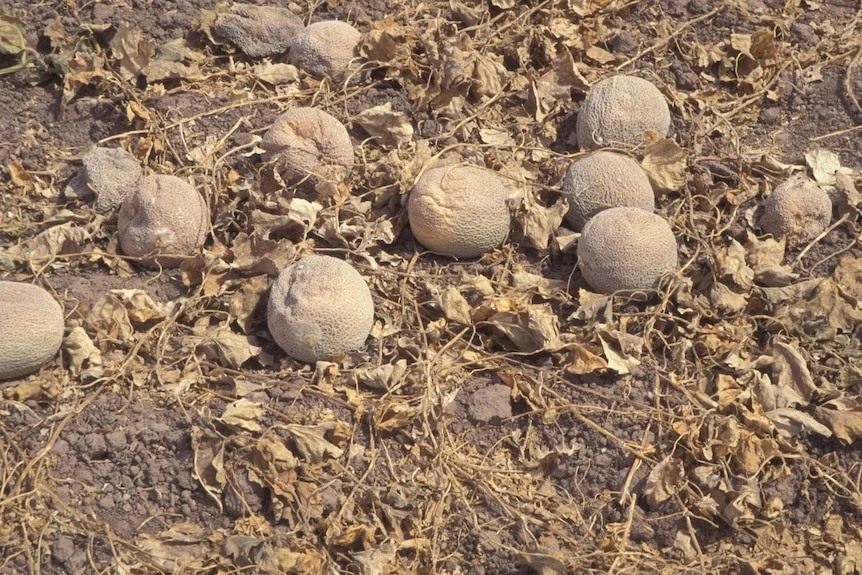
A rockmelon crop that has been severely damaged by the disease. (Supplied: Gerald Holmes, California Polytechnic State University)
Growers face added costs
Melons Australia chief executive Johnathon Davey said the detections were causing significant losses for affected NT growers. He called for work with producers to map the fungus’s spread and develop ways to manage it. Mapping could help farmers and industry groups understand where to focus attention, but it won’t make already infected crops recover.
Growers are already dealing with other pressures, including varroa mite, Davey said, and managing the fungus is likely to increase production costs. The specific costs and the scale of any wider effect aren’t established in the information available so far. Still, disease management can add demands on farms through changes to routine practices and closer attention to crop health.
Davey warned that supplying fresh melons to Australian consumers could become harder, and said the effect on prices should be part of a broader discussion. That’s a concern about the possible consequences of added pressure on growers, rather than a prediction of a particular price change. If you’re working in this space, the immediate question is how much of the crop is affected and what practical steps can limit further losses.
Varroa mite is among the challenges facing growers as they respond to the new disease. The comparison underscores that producers are managing more than one source of pressure at once, although the two problems affect agriculture in different ways.
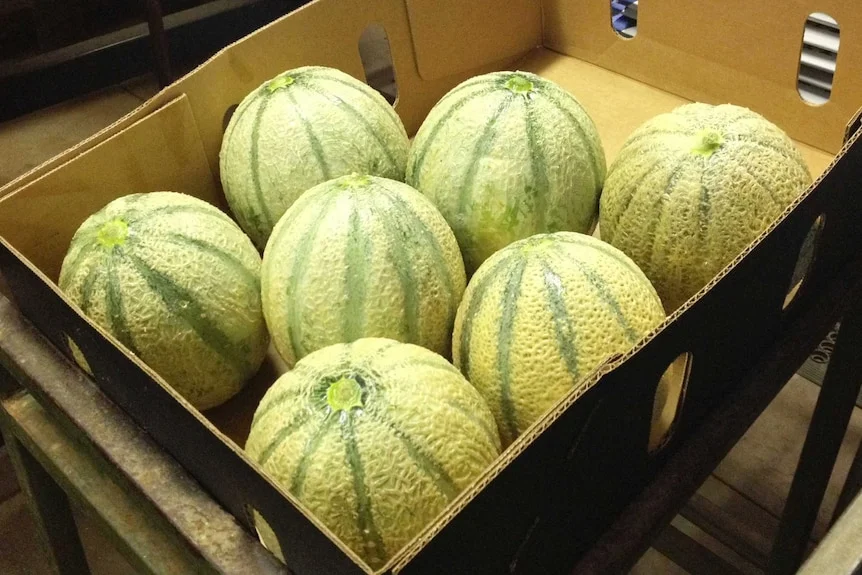
Melons are grown in the NT near Darwin, as well in the Katherine and Mataranka areas. (ABC Rural: Lucie Bell)
Industry and authorities turn to farm practices
The NT Department of Agriculture and Fisheries does not plan to impose biosecurity restrictions in response to the detections. Heaton said the department would work with industry groups and help growers adapt practices they already use to manage plant disease. That approach makes farm-level monitoring and cooperation important parts of the response, especially while the fungus’s distribution remains unclear.
Existing disease-management practices may give growers a starting point, but the presence of a fungus that cannot be eradicated puts a limit on what those measures can achieve. The task is to understand the risks on affected farms and reduce further damage where possible. A workable plan will depend on information gathered from producers and authorities as they assess the spread.
What the next steps could clarify
For now, the priority is to establish how widely the fungus has spread and help affected farms limit further damage. Davey said a clearer understanding of its arrival pathway could prompt a substantial investigation. Until that information is available, the scale of the problem and the best longer-term response remain open questions.
This is more significant than it looks. The detections concern two properties, but the fungus’s persistence and the difficulty of saving infected plants make the unanswered questions relevant to the wider growing industry. Finding out where it is present will help frame the response; understanding how it arrived may help explain what further investigation is needed.
And yet, even a clearer picture of its spread won’t erase the immediate losses described by affected growers. The challenge ahead is practical: identify the extent of infection, share useful guidance, and adapt farm practices to a disease authorities say cannot be eradicated. A hard problem, with no quick fix.
Discussion
Sign in to join the discussion.