Prosecutors have dropped a blackmail charge against former CFMEU delegate Joel Leavitt, who received a fine for illegal debt collection practices.
In a significant turn of events, prosecutors have decided to withdraw a serious blackmail charge against Joel Leavitt, a former delegate of the Construction, Forestry, Maritime, Mining and Energy Union (CFMEU) and alleged associate of criminal bikie gangs. Leavitt faced accusations of attempting to extort a business owner for $663,000 earlier this year, but instead, he has been fined $2,000 for unrelated offenses.
Legal Troubles and Withdrawn Charges
Leavitt was apprehended as part of a larger investigation by Taskforce Hawk, which targets corruption within the Victorian building industry. Taskforce Hawk is particularly focused on uncovering ties between construction unions and organized crime, which raises concerns about the integrity of the industry as a whole. His legal challenges didn't end with the dropped blackmail charges; during a recent court appearance, he acknowledged guilt for two lesser offenses: failing to provide police with the PIN to his phone and for being a prohibited person engaged in debt collection.
The proceedings saw Leavitt leave court with a penalty that, while not insignificant, pales in comparison to the initial blackmail allegations that could have carried a sentence of up to 15 years in prison. Other individuals similarly charged with blackmail, including Thomas Sheehan, Emin Mehmedovic, Napoleon Brown, and Jared Davis, also had their accusations dropped, raising questions about the strength of the prosecution's case and how these decisions reflect a broader pattern of leniency for certain offenders.
A Contentious Background
Leavitt's background is as contentious as his current legal woes—police have identified him as a patched member of the Bandidos motorcycle club. His reputation is compounded by a previous assault conviction from 2023, which effectively barred him from working in the debt collection field. Associations like his contribute to a public perception that the CFMEU, and perhaps unions more broadly, are tainted by violence and intimidation. If you're working in this space, you might reconsider the associations that come with such ties—legal or not.
Details of the Allegations
During court proceedings, Magistrate Donna Bakos imposed the fine, noting the charges had merit, albeit on a lesser scale than the felonies originally filed. The prosecution formally withdrew the blackmail allegation, deciding that the evidence might not support the severity of the charge beyond a reasonable doubt. This raises a critical question about how often cases like these might be reliant on the nuances of evidence and the subjective interpretation of fear in interactions like Leavitt's with business owners.
The encounters that led to the original accusations involved recorded meetings with Jason Hopp, CEO of Cedar Meats, where Leavitt appeared to push for payment of debts owed to Sheehan's earthmoving business. Prosecutors allege that during these meetings, Leavitt expressed urgency regarding debts and implied a need for resolution, which prompted concerns from Hopp about his safety, stating that he felt threatened and even relocated his family. (and this is the part most people overlook) The psychological burden on individuals like Hopp, navigating an environment where violent retribution is a possibility, cannot be understated.
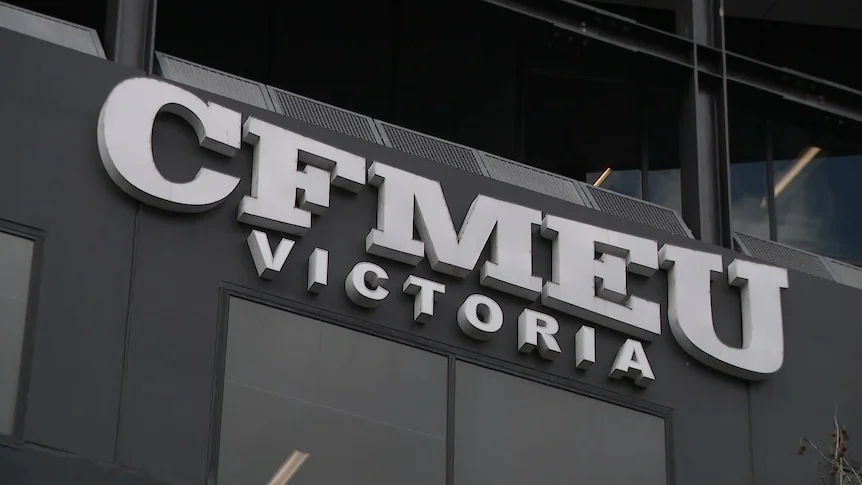
Victorian prosecutors have dropped a blackmail charge against a former CFMEU delegate with links to criminal bikie gangs. (ABC News)
Contrasting Accounts in Court
Defending Leavitt, his lawyer argued that his client conducted himself with professionalism during the meetings, characterizing his demeanor as polite rather than threatening. However, the prosecution painted a different picture, claiming Mr. Hopp's subsequent actions demonstrated a palpable fear stemming from Leavitt's advances. This lack of consensus reflects a fractious relationship between business interests and union representatives, with both sides maintaining drastically different narratives regarding the same events.
Implications for the CFMEU and Industry Dynamics
Joel Leavitt's case exposes deeper issues within the CFMEU, reinforced by a report by Geoffrey Watson SC, which labeled him as a "violent" and "brutal" offender. His financial dealings and affiliations have raised questions about the union's culture and governance in dealing with corruption and misconduct. This isn't just about one man's legal troubles; it’s a symptom of a broader malaise affecting the construction industry, where unions wield significant power yet face increasing scrutiny over their conduct.
The damning report also pointed toward systemic issues, suggesting that the Victorian government ignored evidence of CFMEU corruption for the benefits of its Big Build projects. The implications are profound: as allegations surface and investigations unfold, the future of union legitimacy and regulatory oversight in the construction sector hangs in the balance. Will the industry reform, or will it continue to allow such issues to fester? What this means for you in the sector is a need for vigilance—both in operations and governance, as the stakes continue to escalate with every headline that draws public attention to misconduct.
Discussion
Sign in to join the discussion.