Andrew and Tristan Tate have been denied bail pending their extradition to the UK, as a US judge deems them a flight risk due to ongoing charges.
Social media influencers Andrew and Tristan Tate will remain incarcerated in Miami as they contend with extradition requests from UK authorities. The brothers face serious allegations including rape and human trafficking, prompting a US judge's recent refusal to grant bail.
Flight Risk Assessment
Judge Lauren Louis characterized the Tate brothers as "quintessential flight risks" during a bail hearing, emphasizing their wealth and history of international travel. Such a designation isn't made lightly and suggests the court's serious apprehensions about the potential for the brothers to disappear amid their legal troubles. Their extensive connections across borders only amplify these concerns.
“While [the brothers] may not in fact possess what extravagant holdings they portray themselves as possessing online, the record reflects that they possess an exceptional capacity to flee the jurisdiction,” Judge Louis stated.
Ongoing Legal Challenges
Both Tates hold dual citizenship in the US and UK and were arrested on July 18, 2026, at the request of British authorities who claim they are wanted for multiple crimes. The brothers face a tangled web of allegations that spans across continents, complicating their legal situation. Their legal representatives insist they are innocent and intend to engage fully with legal processes across both jurisdictions, invoking the presumption of innocence that’s foundational to legal systems in both countries.
Commenting on their public persona, the brothers' lawyers argued that their substantial online visibility would deter any attempts to evade justice, referring to social media portrayals of their luxurious lifestyles as “theatrical” rather than factual. This argument rests on the idea that the brothers' extensive online following could, paradoxically, serve as a form of self-policing. However, skepticism abounds regarding whether their social media presence is a true deterrent, given the serious nature of the allegations they face.
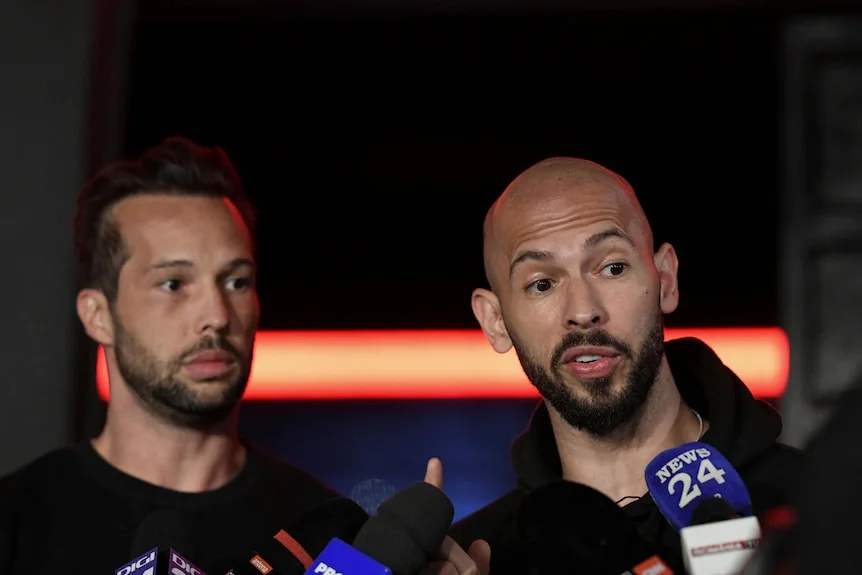
The Tate brothers face charges across multiple jurisdictions. (Reuters: Inquam Photos/Eduard Vinatoru)
Serious Allegations and Implications
The gravity of the charges against both brothers extends beyond the current US allegations. Ongoing investigations into claims of human trafficking in Romania add another layer of complexity to their legal battles. Prosecutors allege that the Tates have been accused of strangling victims during assaults, a claim that, if proven, represents not only a legal but a moral failing. The distinct severity of these claims played a role in the court’s decision to deny bail.
Notably, Andrew Tate has made a series of controversial remarks in past videos concerning women, a topic that continues to haunt his public image. During a recent hearing, prosecutors presented a video in which he made offensive comments about sexual violence, further complicating the Tates' defense. The public's response to these past remarks has been overwhelmingly negative, with many arguing that his online persona reveals a troubling attitude toward women. This kind of rhetoric can heavily influence perceptions in court, where sympathy for the defendant may already be waning.
Extradition Timeline and Legal Process
The legal proceedings related to the Tates’ extradition are expected to take some time. Obstacles like these are often indicative of deeper systemic issues within the justice system, where bureaucracy can delay even the most pressing matters. Britain has until September 16 to submit its comprehensive extradition request to the relevant US authorities. This case involves new charges regarding events that allegedly occurred from 2010 to 2017 involving multiple victims. The length of time that has passed since these alleged crimes will likely complicate the prosecution’s approach, and defense strategies may hinge on casting doubt on the reliability of older evidence.
The Tates previously faced serious allegations dating back to 2024, when a British judge issued a warrant for their arrest. Both have yet to appear in court in the UK to respond to these charges, raising significant implications about their legal futures. If you’re working in this space, the upcoming legal maneuverings could open doors to new interpretations of jurisdictional law, especially as it pertains to how online behavior translates into physical legal consequences.
In light of these complex legal challenges and their ongoing detention in Miami, the path ahead for Andrew and Tristan Tate remains fraught with uncertainty. Whether they can mount a successful defense against these allegations will be crucial as they navigate extradition procedures and the judicial process in both the United States and the UK. The implications of this case stretch beyond the Tates themselves—what happens here could impact how social media influencers are viewed in legal contexts going forward. Justice, after all, isn’t just about the cases at hand; it sets precedents for what can come next.
Future Outlook and Significance
The unfolding case against the Tate brothers is significant for multiple reasons. For one, it shines a light on the intersection of social media influence and legal accountability, raising questions about how online personas can shield—or expose—individuals to criminal investigations. As the judicial process continues, the media frenzy around the Tates will likely grow, impacting public opinion and perhaps even the outcomes of their cases. Are we witnessing a shift in how influencers are perceived in the eyes of the law? Only time will tell, but the implications of this case could resonate throughout the influencer landscape for years to come. The focus now is on justice, but the ramifications could extend into the heart of social media culture itself.
Discussion
Sign in to join the discussion.