A recent study unveils the distinctive biting methods of the thylacine, redefining its ecological role and uniqueness among marsupials.
Rediscovering the Thylacine
A new investigation from researchers at Flinders University and the University of Melbourne has provided fresh insights into the thylacine's predatory behavior and dietary habits. This study challenges outdated beliefs tying the animal's extinction to its role as a sheep predator. While many people see the thylacine as an iconic symbol of extinction in Australia, the truth about its lifestyle and ecological role is more nuanced than previously thought.
Unpacking the Thylacine's Anatomy
By examining the skull structure of the thylacine, also known as the Tasmanian tiger, experts have identified its specialized anatomical features. The oversized skull, elongated upper jaw, and unique mace-like snout contribute to a biting mechanism not seen in any other extant carnivorous mammals. This adaptation enables the thylacine to employ high-impact snapping techniques to capture small- to medium-sized prey, such as bandicoots, rather than larger livestock.
It's fascinating how the thylacine's physical characteristics MIGHT have been designed for a different ecological niche than what the initial narratives suggest. This contrasts sharply with the perceptions that framed it solely as a sheep predator, driving a wedge between its actual behaviors and the misconceptions that fueled its extirpation.
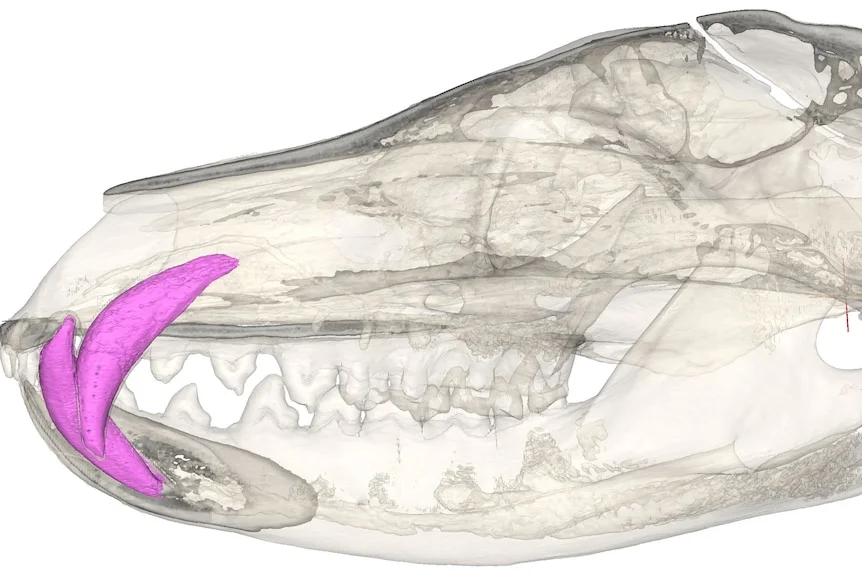
A digital reconstruction of a CT-scanned thylacine skull from the study, featuring canine teeth highlighted in pink. (Supplied: Vera Weisbecker)
Reassessing Historical Conclusions
According to Professor Vera Weisbecker, the findings emphasize the thylacine's distinctive nature. "You can't compare the thylacine to any of the animals that it's been compared to before; it's a very unique thing," she stated. This perspective offers a vital reassessment of how we classify and understand not just the thylacine, but also other species that might bear superficial resemblances. Challenging long-held assumptions often uncovers new layers of understanding that can reshape the biological narrative.
The thylacine existed in Tasmania until the early 20th century but faced severe persecution from farmers who blamed it for sheep predation. The ensuing government-sanctioned hunting schemes precipitated its decline and eventual extinction. This reflects a broader theme in wildlife management where misidentification of threats leads to disastrous decisions. It's a stark reminder of how easily misplaced fears can obliterate a species, especially when economic interests are involved.
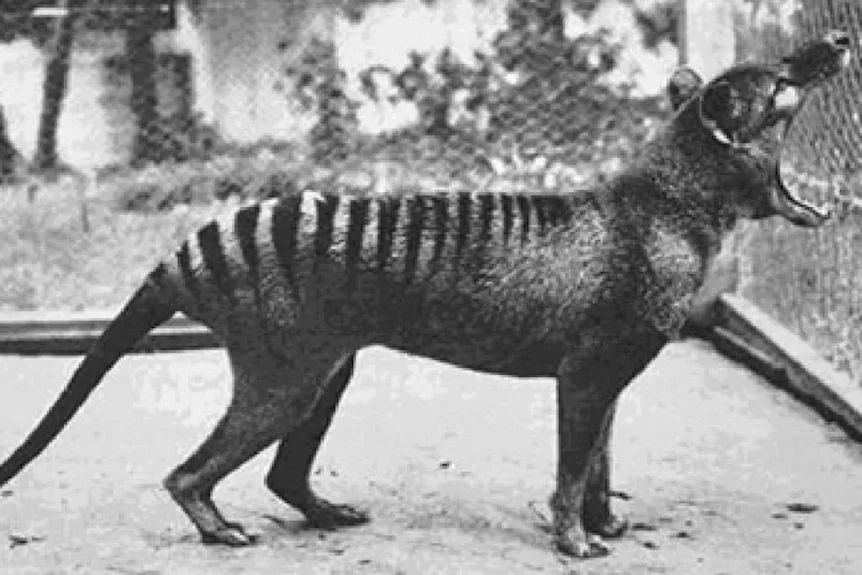
The last captive thylacine at Beaumaris Zoo in Hobart in 1933. (Supplied: David Fleay)
This recent research contrasts with findings from a 2011 study that suggested the thylacine had weak jaws, making it unlikely to hunt sheep. Dr. Weisbecker argues that it was indeed a capable predator, though its hunting methods were distinct from any living mammals. This highlights the fluidity of scientific understanding; new evidence can challenge established wisdom, forcing experts to reconsider old theories. The evolution of research methodologies, particularly in paleontology and ecology, often leads to significant paradigm shifts.
As Dr. Weisbecker poignantly remarked, "When the thylacine went extinct, we lost an animal that really was unique to the entire planet." This statement emphasizes the ethical and emotional dimensions often brushed aside in discussions of extinction. Each loss isn't merely biological; it signifies the erasure of a rich tapestry of evolutionary history and ecological contribution.
Understanding the Taxonomy
Taxonomically, the thylacine is classified as Thylacinus cynocephalus, implying a "dog head," but significantly, it shares closer familial ties with kangaroos and the Tasmanian devil rather than canines. This classification not only helps in understanding its evolutionary lineage but also sheds light on the diverse array of adaptations across different species within Australia. Many people might assume that such a similar appearance to dogs would mean similar behavior and ecology, but this research underscores the importance of digging deeper into evolutionary relationships.
Implications and Future Outlook
This research highlights the importance of understanding the thylacine's ecology and the misconceptions that contributed to its decline, marking a notable step toward recognizing the specific role it played in its environment. The ramifications of these findings are expansive: they not only reshape our understanding of the thylacine itself but also compel us to reconsider how we conserve other endangered species today.
If you're working in this space, the implications extend far beyond the thylacine; they touch on conservation policies and how we frame the narratives surrounding at-risk species. The call for more nuanced approaches, acknowledging species' complex roles, is more pressing than ever. The world could always benefit from a deeper insight into how interrelated ecosystems function, especially when certain species become scarce or extinct. Misguided approaches based on outdated perceptions won't help in preserving what's left.
(And this is the part most people overlook) — understanding extinction is about more than numbers or facts; it's about the narrative we create around the natural world and how that influences our actions. The future of wildlife conservation may depend on our ability to learn from these histories rather than repeat them.
Discussion
Sign in to join the discussion.