A US military strike on Larak Island reportedly killed two Iranians, escalating tensions amid ongoing conflicts in the region.
The recent US military strike on Larak Island in the Strait of Hormuz resulted in two deaths and several injuries, as reported by Iranian state media. This incident unfolds amidst a backdrop of heightened hostility between Iran and the US, with ongoing tensions impacting the geopolitical landscape of the region.
According to the official IRNA news agency, citing Hossein Amir Teymouri, the governor of Qeshm Island, the airstrikes occurred late Sunday night. The report noted that while the injured were receiving medical attention, the identities of the casualties—whether military personnel or civilians—were not disclosed.
On social media, Donald Trump initially stirred controversy by threatening to obliterate Iran’s Kharg Island and posted a provocative video of missile strikes. His vice president, JD Vance, framed the tweet as a strategic message aimed at Tehran. Following the strikes, US defense officials clarified that Kharg Island was not a target during the military action.
UAE Intercepts Iranian Drone
Amid these developments, the United Arab Emirates reported that it intercepted an Iranian drone over its territorial waters, calling this a dangerous escalation and an infringement on its sovereignty. The UAE's defense ministry stated that they had dealt with the drone, ensuring there were no reports of damage.
This incident aligns with earlier exchanges of fire between the US and Iran, marking the first significant military interaction in a month. This escalation follows weeks of rising military clashes and a renewed economic offensive by the US to induce negotiations with Iran.
US Military Claims Strike Was 'Limited'
US Central Command characterized the strikes as precise and limited, intended specifically against Iranian Revolutionary Guard Corps forces preparing to lay sea mines in the strategic strait. Military spokespersons emphasized that these actions were not aggressive but rather defensive, aiming to secure maritime safety in a region vital to global oil supplies.
As the conflict escalates, global oil prices have surged amidst fears of potential supply disruptions. Brent crude briefly surpassed $90 a barrel, a significant rise since the eruption of hostilities. This uptick in prices could pose electoral challenges for Trump as the midterms approach.
Iran's Stance on Defense
In a statement from the Iranian Foreign Ministry, officials declared that Tehran maintains the right to self-defense, vowing to respond decisively to any form of military aggression. President Masoud Pezeshkian, attending the Shanghai Cooperation Organization summit shortly after the strikes, reiterated Iran's unwillingness to seek war yet emphasized their readiness to confront aggressors.
As tensions continue to mount, the feasibility of diplomatic resolutions appears increasingly precarious. The ongoing military actions and political posturing are likely to prolong instability, complicating efforts to navigate a peaceful end to the conflict.
Escalation Amid Economic Pressure
In an effort to tighten the economic noose around Iran, US Treasury Secretary Scott Bessent held discussions with Group of 20 finance ministers about further isolating Tehran financially. The UAE recently halted trade with Iran after accusing it of missile assaults targeting shipping operations. The situation underscores a broader strategy by the US to enlist international allies in the economic confrontation against Iran.
While Iran has weathered decades of sanctions, recent appointments in its security leadership indicate a resolute stance against external pressures. As the region grapples with military threats and economic challenges, the trajectory of US-Iran relations remains uncertain, with potential for further conflict looming large.
This series of incidents and responses illustrates the increasingly volatile environment surrounding the Strait of Hormuz, a critical chokepoint in global oil transportation. With both military escalations and economic sanctions at play, the complexities of the Iranian crisis will undoubtedly continue to evolve.
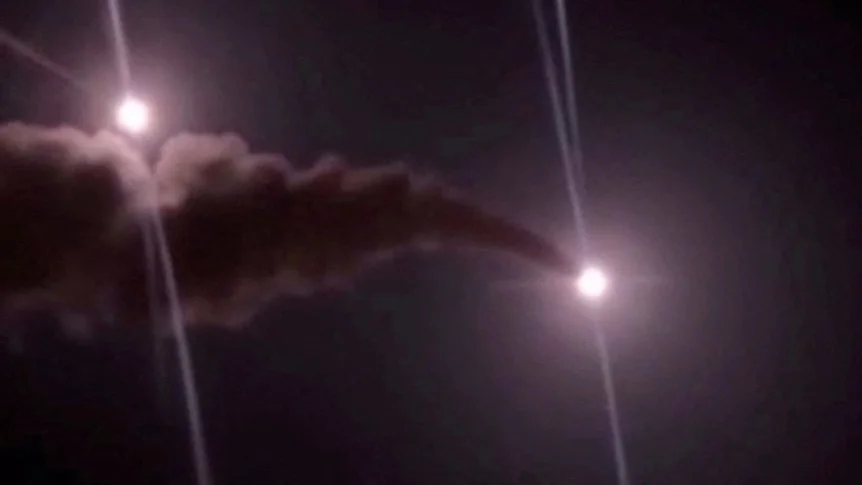
Missiles launched at US military targets, as shown in footage released by Iranian authorities. (Reuters: Wana News Agency)
Discussion
Sign in to join the discussion.