China's Chang’e-7 mission seeks to uncover the secrets of lunar water ice in permanently shadowed regions, using innovative approaches to exploration.
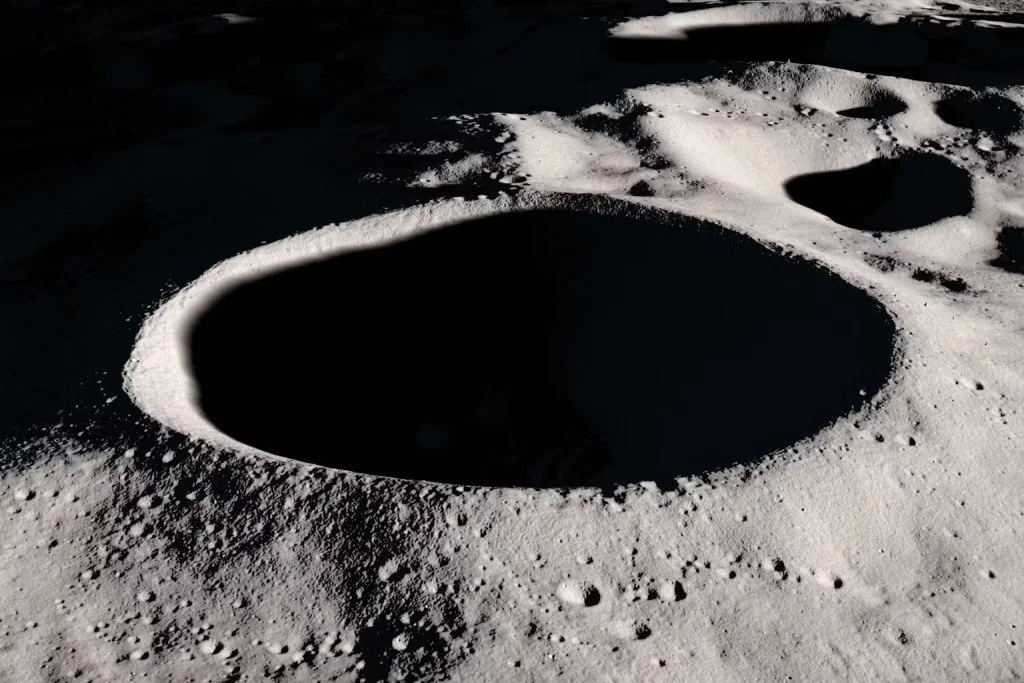
When venturing into regions untouched by sunlight, the challenges become exponentially more complex. Yet, this is precisely where China’s upcoming lunar exploration mission aims to shine a light.
China’s Chang’e-7 mission, set to launch later this month, will tackle one of the Moon's greatest mysteries: the distribution and accessibility of water ice within its permanently shadowed craters. While evidence suggests some form of water has existed on the Moon for nearly 20 years, crucial questions linger about the quantity, depth, and state of this frozen resource.
The presence of water in these extreme environments is significant, creating interest around utilitarian prospects for lunar exploration. However, these craters, with their steep walls and temperatures plummeting below -200°C, pose substantial challenges in exploration.
Chang’e-7 Mission Objectives
The mission will deploy multiple spacecraft elements—a lander, a rover, an orbiter, and a unique hopper—to explore these enigmatic areas. The hopper’s design will enable it to leap across rugged terrain and access regions that a traditional rover may find impossible.
Communication will be bolstered by the already operational Queqiao-2 relay satellite, launched in March 2024, which facilitates data transfer between Earth and the lunar surface.
While specific landing coordinates remain undecided, a location near the Shackleton crater in the Moon's South Pole is a primary target. This area is of immense interest due to its potential abundance of water ice.
Importantly, the mission's objective extends beyond confirming water's existence; it seeks to assess water’s form and concentration and to evaluate its accessibility for future lunar missions. This marks a pivotal shift in lunar exploration—a move towards understanding how to tap into lunar resources.

Comparing with NASA's Approach
Other countries share a keen interest in lunar resource exploration, including the United States. NASA has its own agenda focused on sustained lunar operations, which presents a different challenge but overlaps substantially with Chang’e-7's goals.
NASA's approach aims at fostering a lunar marketplace through its Commercial Lunar Payload Services (CLPS) program, a stark contrast to the state-coordinated mission of Chang’e-7. Through CLPS, NASA is purchasing services from private companies that are developing their own technology for lunar exploration.
Currently, NASA has contracted over 17 lunar missions that carry a diverse array of scientific instruments, reflecting its strategy of collaboration with private entities. For example, the Intuitive Machines’ IM-2 mission attempted some parallel objectives but faced challenges when the lander fell shortly after arrival.
The distinct strategies underscore how the nature of the mission’s destination informs the solutions different space programs choose to pursue. Both approaches shed light on how resources might be utilized, leading to a greater understanding of lunar capabilities.
Future Prospects of Lunar Exploration
While the Chang’e-7 mission aims to map out resource distribution, its findings will lay the groundwork for subsequent missions, such as Chang’e-8, planned for 2028. This latter mission will further explore the practical applications of lunar resources.
Looking ahead, human missions will likely build on insights gained from these robotic explorations, eventually leading to the establishment of permanent research outposts, like the International Lunar Research Station led by China and Russia.
On the other side of the Atlantic, NASA’s CLPS initiative plans to enhance the U.S.-led Artemis program, which is focused on long-term lunar exploration and understanding sustainable living on the Moon.
Regardless of the approach or country of origin, explorers venturing into the Moon's shadowy craters will face common challenges: darkness, frigid temperatures, and rugged landscapes. Addressing these issues will be crucial, as the quest for human habitation and resource utilization on the Moon enters a critical phase.
The Moon is akin to a technological frontier that invites nations to innovate and collaborate. As we continue to explore, perhaps lessons learned from the Moon will shape a new era of living and working in space, presenting significant challenges and opportunities for decades to come.
Discussion
Sign in to join the discussion.