Recent insights from the Hubble Telescope uncover the Milky Way’s early galactic mergers, tracing its formation back 11.8 billion years.
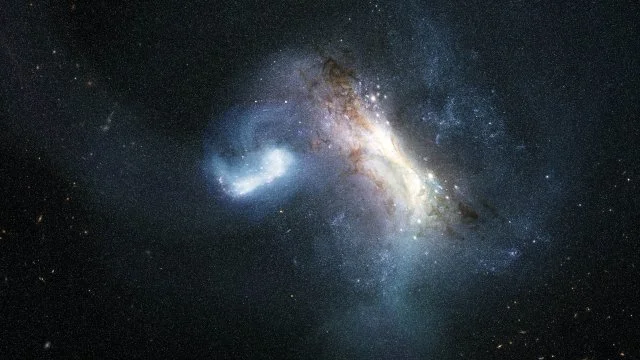
The Milky Way is a colossal structure sprawling over 100,000 light-years and hosting around 400 billion stars along with 150 globular clusters. Recent observations from the Hubble Telescope have provided new insights into the galaxy's formative years, revealing significant mergers that contributed to its growth and complexity.
Galactic Growth and Formation History
The Milky Way's growth wasn't just a result of gravitational accretion, where matter slowly aggregates over billions of years. It also involved an aggressive approach—an almost predatory behavior in which it consumed smaller galaxies. This phenomenon, often described as 'galactic cannibalism,' wasn't merely a strategy for growth; it was crucial in shaping the intricate structure we observe today. Every time the Milky Way absorbed a smaller galaxy, it added new globular clusters and initiated waves of star formation, which changed its very fabric.
To grasp the scale of this interaction, imagine the Milky Way as a large predator in a cosmic ecosystem. While it accumulated gas, dust, and stars, it also had to contend with the gravitational influence of its satellite galaxies. These mergers didn't simply add mass; they introduced new stellar populations and enriched the galaxy with diverse chemical elements, further complicating what had once been a more straightforward stellar landscape.
Evidence of Mergers and Their Impact
Research into the Milky Way's structure has illuminated how mergers with smaller galaxies have left their traces, still visible to modern astronomers. The streams of stars encircling the Milky Way serve as vivid reminders of these interactions. The Sagittarius Dwarf Galaxy, for instance, stands as a striking example of how such dwarf galaxies interact and contribute to the larger galactic structure. These streams intertwine with the Milky Way's own star population, weaving a complex tapestry that reveals ancient cosmic events.
Beyond the Sagittarius Dwarf Galaxy, astronomers have uncovered evidence of earlier, more significant mergers. Stars with distinct properties serve as markers of their extragalactic origins, helping scientists distinguish them from local Milky Way stars. This discovery opens a window into a history that encompassed both merger and destruction, with globular clusters acting as time capsules that hint at moments of chaotic formation across billions of years.
Deciphering Ancient Progenitors
In an ambitious analysis, researchers examined 17 centrally located globular clusters using the Hubble Telescope's powerful capabilities. They managed to link a substantial portion of these clusters to a singular event of formation, revealing the timing and nature of past mergers. This isn't just academic curiosity—understanding these clusters can alter our perception of the Milky Way's evolution.
One of the standout findings involves an ancient galaxy dubbed "Low-energy-Kraken-Heracles." This galaxy was consumed about 11.8 billion years ago, just two billion years after the Big Bang. Such a timeline is remarkable; it highlights that the Milky Way began forming its present structure relatively early in the universe's history. Absorptions like this one have affected both the physical structure and the chemical makeup of our galaxy, confirming that its past is intricately woven into the broader narrative of cosmic evolution.
Insights from Hubble's Observations
The observations garnered from Hubble have significantly influenced our understanding of earlier mergers. Notably, Hubble has captured the aftermath of significant merger events like the Gaia-Sausage-Enceladus galaxy merger. Such findings indicate not just random occurrences of galactic interactions, but a sequential pattern that points to a historically rich and violent past underlying the Milky Way’s current massive structure. These aren't just harmless curiosities; they imply a level of complexity in galactic evolution that we are still trying to fully understand.
While globular clusters are typically good at preserving their original stellar populations, cross-contamination can occur over time. Star interactions within these clusters can complicate definitive analyses, leading to potential misinterpretations of their origins. Yet, despite these challenges, the stars housed in these ancient clusters retain vast amounts of information—each star is like a witness to the fiery events that shaped the galaxy so many billions of years ago. (And this is the part most people overlook.)
The Relevance of Globular Clusters
Globular clusters can be likened to fossilized records that tell stories about the Milky Way's construction. Their ages and metallicities mirror the cosmic conditions that prevailed at their formation. For instance, the Milky Way's globular clusters, such as Messier 69, exhibit intriguing characteristics like high metallic content while being incredibly old—around 13 billion years. This duality adds layers to our understanding of galactic history and evolution, providing detailed data that fuels ongoing discussions about our galaxy's past and formation.
Linking Ancient Events to Current Observations
As technological advances push the boundaries of our observational capabilities, future research will likely yield even deeper understandings of these ancient galactic mergers. Notably, telescopes like the James Webb Space Telescope and the forthcoming Euclid mission are poised to contribute significantly to this field. Each globular cluster presents a unique insight that could illuminate how present cosmic structures have been sculpted by earlier, high-energy events. What this means for you, if you're working in this space, is that the narrative of our galaxy is still being written.
Hubble's comprehensive assessments offer an essential viewpoint into the Milky Way's formative years, revealing a timeline packed with significant galactic interactions. As technologies advance, our understanding of these complex interstellar dynamics is set for continuous evolution, reshaping our cosmic narrative with each new discovery.
Learn more about Hubble's findings through this comprehensive study.
Discussion
Sign in to join the discussion.