A new study indicates students retain more math knowledge when AI tutors guide them through mistakes, emphasizing mastery and repetition.
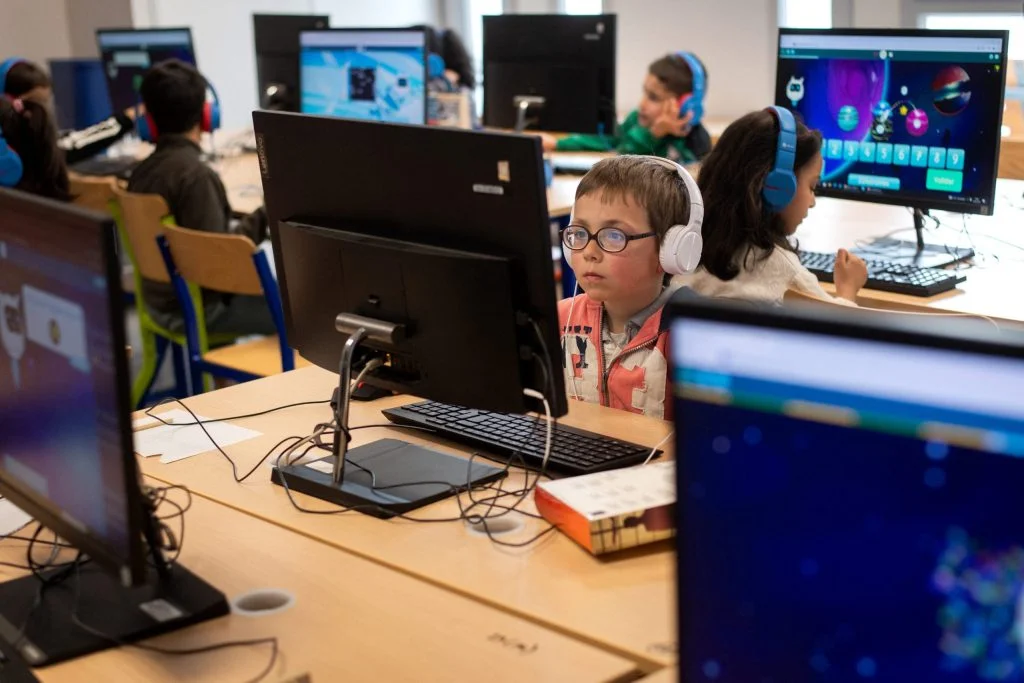
Artificial intelligence enhances efficiency in many areas, yet recent research highlights that a more deliberate approach may yield better educational outcomes. In a study involving over 6,000 middle school students in Tennessee, those who received AI tutoring demonstrated improved math retention when tasked with mastering mistakes through repetition.
The researchers evaluated four instructional methods for teaching fractions, comparing traditional computer-based learning with AI-assisted instruction. Participants who encountered mistakes were required to correctly answer practice questions covering the same skill three consecutive times before progressing, effectively reinforcing their understanding.
Students engaged with specialized software designed by researchers, akin to Khan Academy’s resources, during a 50-minute math session. Following the instruction, they completed a 15-minute assessment to gauge their retention. Results indicated that the combination of AI guidance and repetitive practice outperformed standard instruction, with the AI-enhanced mastery learning group scoring approximately three percentage points higher than their peers.
Philip Oreopoulos, the study’s lead author and an economist at the University of Toronto, approached the findings with caution. He noted, “I don't want to jump out and say we’ve demonstrated that AI is going to be transformational. But it might be the first hint of its positive impact compared to no AI at all.” This insight is particularly significant considering ongoing discussions around AI's potential to undermine learning by providing quick answers, ultimately stunting students' cognitive growth.
Understanding the AI Learning Strategy
The key reason AI seemed effective in this study relates to its ability to provide detailed guidance through errors, rather than merely presenting solutions post-factum. Typically, students can skim through a solution process without internalizing their misunderstandings. In contrast, the AI tutor actively engaged them in correcting their mistakes.
How Numi, the AI Tutor, Supports Learning
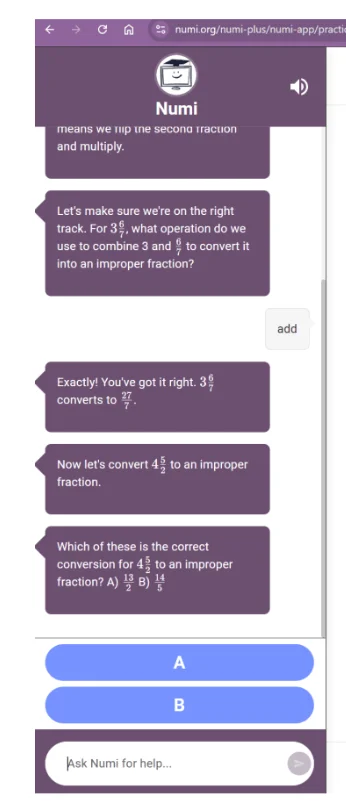
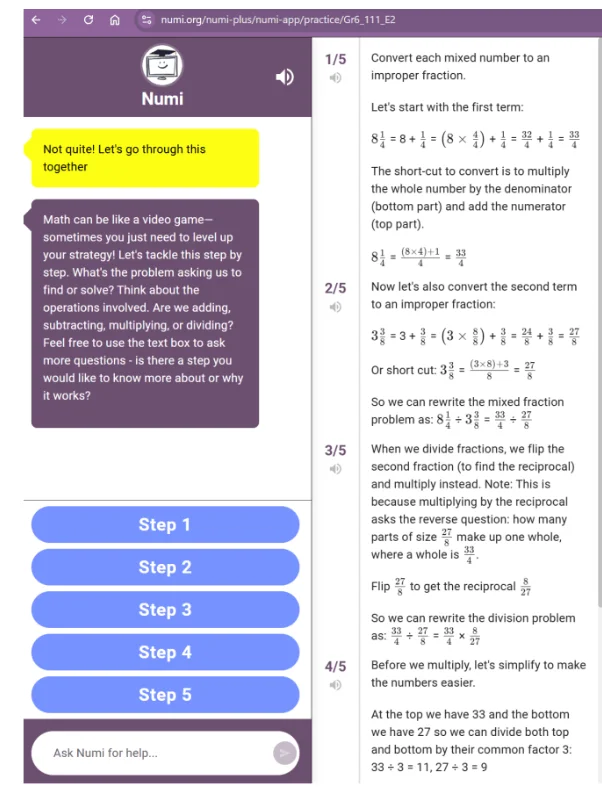
Source: Appendix of Oreopoulos et al., “Making AI Tutoring Productive: Evidence from a Mastery-Based Math Practice Experiment.”
Students utilizing AI with a mastery-focused method spent more time contemplating each question than those in other instructional formats, indicating deeper engagement. Success in answering the next question after making a mistake was notably higher among these learners.
It’s relevant to note that the common practice of requiring three correct answers in a row doesn’t necessarily guarantee mastery. Students might achieve that threshold through guessing or familiarity rather than a real grasp of the concept.
Nonetheless, findings showed that the advantages of AI assistance primarily favored simpler fraction problems—the same type they practiced. The study didn’t conclude that AI fostered a more profound or transferable knowledge of fractions. Given that the intervention lasted only 50 minutes, the longer-term impact of integrating AI and mastery learning on student comprehension remains uncertain.
Oreopoulos warned against jumping to the conclusion that a mastery approach is the optimal use of AI in math education. The study focused on just four combinations of teaching methods; there could be more effective strategies for leveraging technology in educational settings. His broader ambition involves continuous experimentation with different educational features to fine-tune the software.
For now, the main takeaway appears to be that AI could slightly benefit learning and deserves further exploration. The promising aspect may lie not in accelerating learning but in encouraging a more methodical approach, guiding students to absorb lessons at a measured pace.
Kristin Fasiang, a graduate student in computer science and learning sciences at Northwestern University, contributed to this report along with Jill Barshay of The Hechinger Report.
For further inquiries, you may contact staff writer Jill Barshay at 212-678-3595.
This report discussing AI and mastery learning was produced by The Hechinger Report, a nonprofit organization dedicated to covering education. Subscribe for Proof Points and other newsletters.
Discussion
Sign in to join the discussion.