The final Garage Sale Trail brings 12,000 households together after 16 years and more than seven million items rehomed.
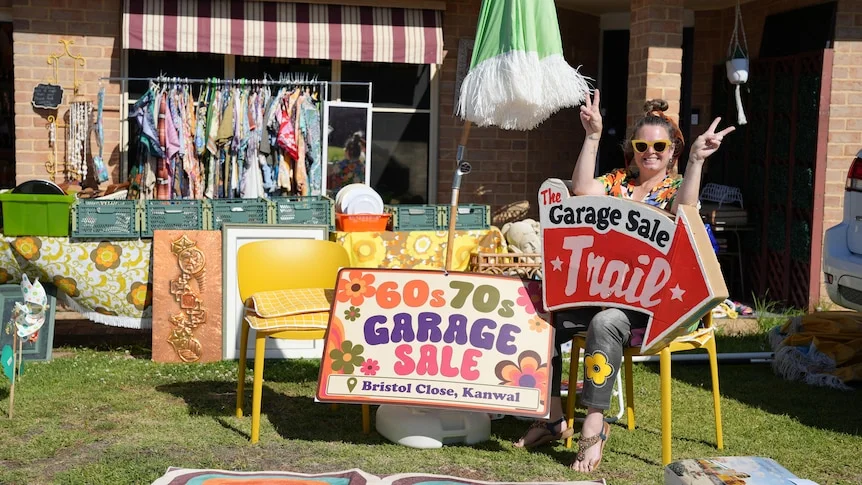
A small callout grows into a national event
Australia’s Garage Sale Trail is ending after 16 years, with its final event drawing about 12,000 participating households across the country. Since its launch in 2010, the initiative has helped sell more than seven million second-hand items and generated $52 million for sellers. Those figures give the event a sizable record, but they also point to its basic appeal: people could clear out things they no longer needed while giving someone else a chance to use them.
That scale grew from a modest community callout in Sydney’s Eastern Suburbs. Co-founders Darryl Nichols and Andrew Valder invited residents to hold garage sales in Bondi; 130 people signed up. Nichols remembers the early effort as a “smell of an oily rag production”. The description captures the initiative’s small beginnings, and the practical challenge of turning a familiar household activity into an organised event that could reach communities across the country.
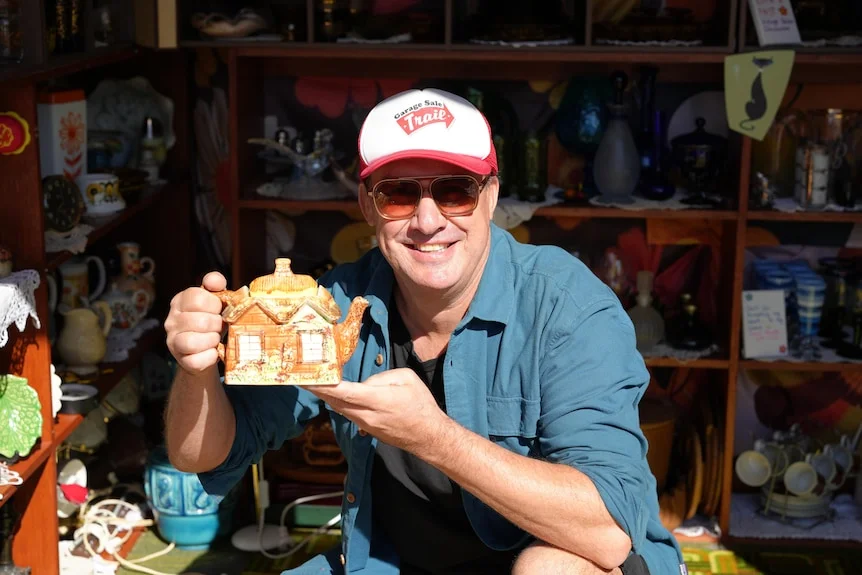
Darryl Nichols co-founded the Garage Sale Trail in 2010. (ABC Central Coast: Sarah Forster)
A community event built around reuse
The Trail’s lasting contribution is both practical and social: it gave unwanted goods another owner while turning front yards into places for neighbours to meet. Nichols calls garage sales “a quintessential part of Australian culture”, and says the annual event helped people who had considered hosting one finally get started. That organising role matters. A sale can be easy to imagine and harder to arrange; a shared event gives potential hosts a prompt and a sense that others nearby are taking part too.
Online marketplaces had already changed how people bought and sold second-hand goods by the time the Trail began. But a local sale offers something a digital listing can’t: a reason to talk face to face. Nichols says participants make an average of 30 new neighbourly connections during the day. The number is an estimate, but it underlines a distinction between a transaction and an occasion: buyers can inspect an item in person, ask about it, and meet the person selling it.
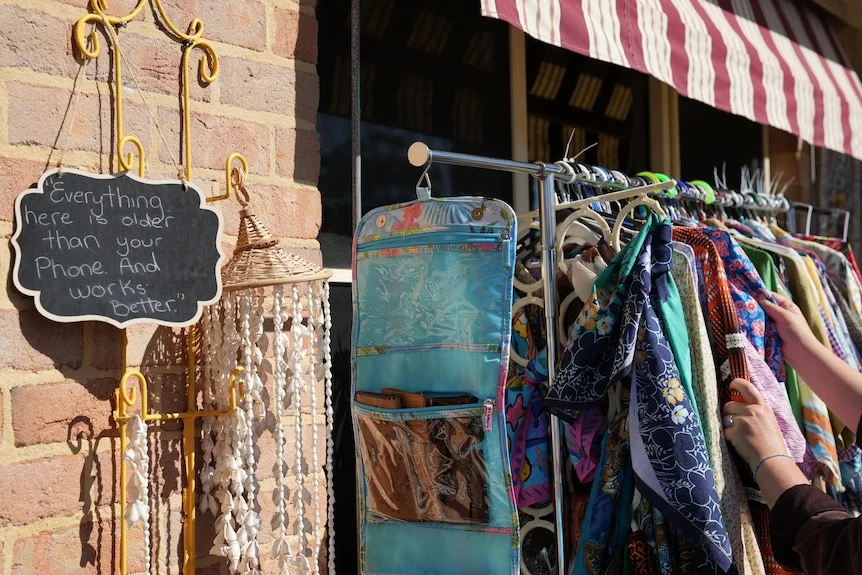
More than 7.2 million second-hand items have been sold through the Garage Sale Trail since 2010. (ABC Central Coast: Sarah Forster)
For Bill Mallie, who visited a sale hosted by Kalie Chaney in Kanwal on the NSW Central Coast, that social value was reason enough to stop by. “It brings neighbours together … it's a community thing,” he said. He also described the exchange as a way for residents to clear out belongings and keep them from ending up in the dump. The benefits sit side by side: sellers make room, buyers find items, and goods remain in use for longer.
Chaney, who collects items from the 1960s and 70s, sees reuse as a matter of common sense. Furniture, Tupperware and dinner plates from that period can still be useful, she said, and selling them gives those goods a chance to avoid landfill. Her examples make the idea concrete: an object’s age doesn’t settle whether it has value; its condition and whether someone wants it matter too.
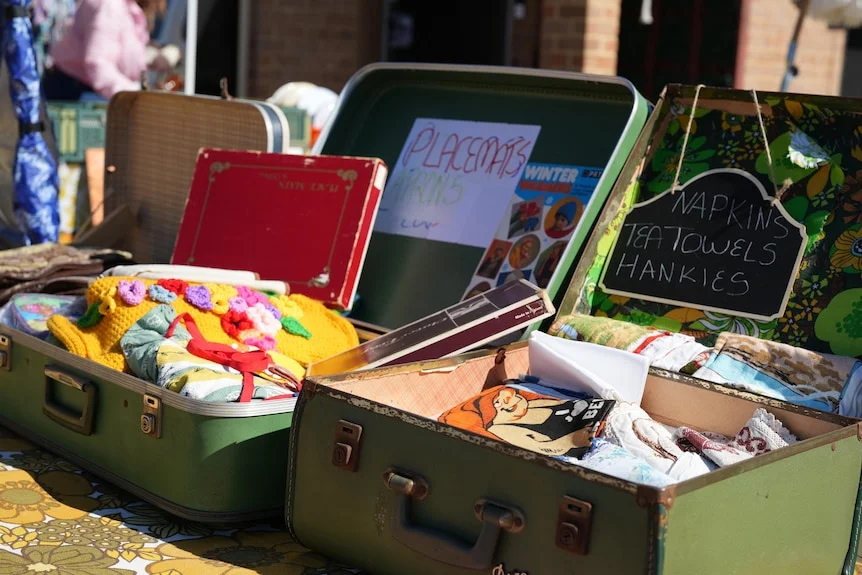
The NSW Environment Protection Authority says the Garage Sale Trail helped divert waste from landfill and reduce illegal dumping. (ABC Central Coast: Shauna Foley)
The final weekend, and what follows
The last Garage Sale Trail runs over two weekends, concluding Sunday, November 15. Nichols says he and Valder feel they’ve made a meaningful contribution to reuse and circularity in Australia, and are ready for their next chapter. He said someone else might take on stewardship of the event, though no successor was identified. That leaves a practical question for participants and communities: whether the network and habits built around the Trail can continue without its organisers.
The NSW Environment Protection Authority has credited the Trail with helping divert waste from landfill and reduce illegal dumping. Greater Sydney is projected to run short of landfill space by 2030 unless waste reduction improves, according to the EPA. That context gives reuse a public dimension beyond household decluttering, while the available account doesn’t quantify how much waste the event diverted or establish how much difference it made to the region’s capacity problem.
What the ending means for local reuse
The official event may be ending, but the underlying practice doesn’t depend on it. Nichols encouraged people to keep selling or repurposing unwanted goods. If you're working in this space, the Trail’s history offers a clear lesson: a practical activity can draw broader interest when it also gives people a reason to meet and participate together. Here's the thing: that community element is harder to replace with a listing site or a one-off sale, even when those options make buying and selling convenient.
This is more significant than it looks. The Trail’s record suggests that a simple local sale can do two jobs at once: put usable items back into circulation and give neighbours a reason to connect. And this is the part most people overlook: those outcomes depend on ordinary choices repeated across many households, not on a single event making reuse effortless. A useful object changing hands. That’s a modest mechanism, but the event’s reach shows why it can matter.
Whether another organiser takes up stewardship remains uncertain. That said, the Trail has helped make garage sales visible as a shared community activity, and its closing weekend offers a moment to consider what participants want to carry on. The initiative’s organisers are stepping away; the goods, neighbours and local decisions that gave it meaning are still there.
Discussion
Sign in to join the discussion.