Fourteen Eastern Goldfields teams faced simulated fires, flooded tunnels and casualty rescues, testing the training volunteers rely on in real emergencies.
Mine rescue is tested in chaos, not on paper
Fourteen teams from mines across Western Australia’s Eastern Goldfields gathered near Kalgoorlie for the state’s annual underground mine rescue competition. That’s the largest field in a decade. The scale matters, but so does the event’s purpose: emergency response teams practise what they’d need to do when a real incident leaves little room for hesitation. The competition took place at the Gordon Sirdar gold mine, north-east of Kalgoorlie-Boulder and about 630 kilometres from Perth. Run by the Chamber of Minerals and Energy of Western Australia, it puts teams through simulated emergencies, including underground fires and flooded tunnels. Judges award points across several categories, but the practical test is whether teams can apply their training under pressure.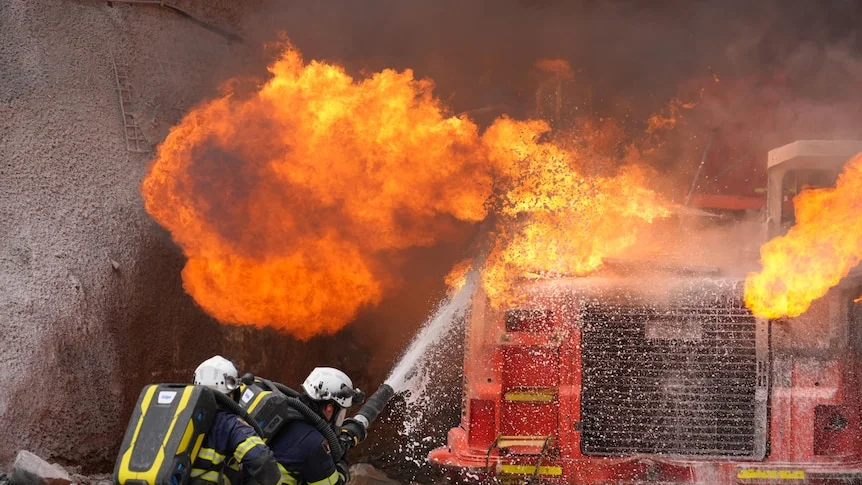
Teams from 14 mine sites across the Eastern Goldfields competed over the weekend in a series of simulated emergencies. (ABC Goldfields: Nicholas R Ward)
The work draws on more than a century of mine emergency response tradition in Western Australia, dating to the state’s early gold rushes. The equipment has changed; the volunteer commitment has endured. Mine emergency response teams train in firefighting, underwater rescue and first aid.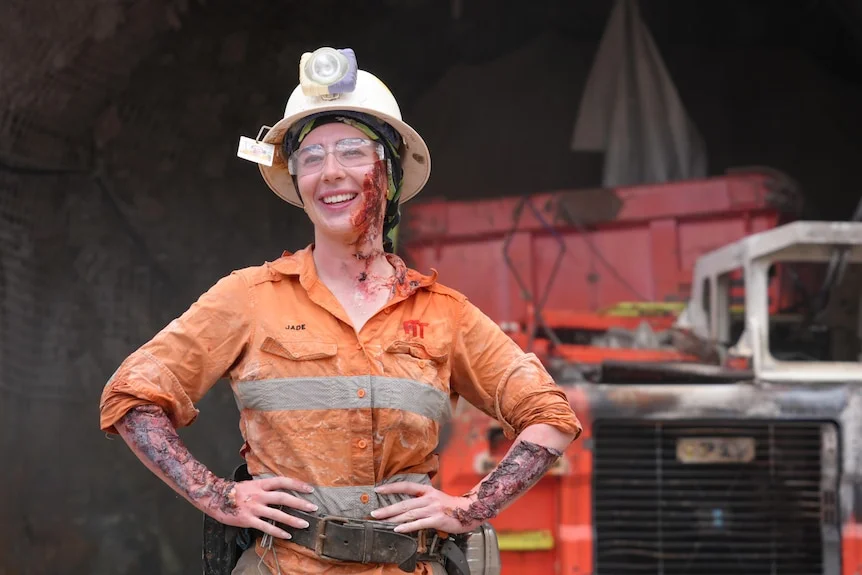
Fire casualty Jade Doyle is an emergency response team volunteer. She couldn’t compete this year but wanted to take part in the event. (ABC Goldfields: Nicholas R Ward)
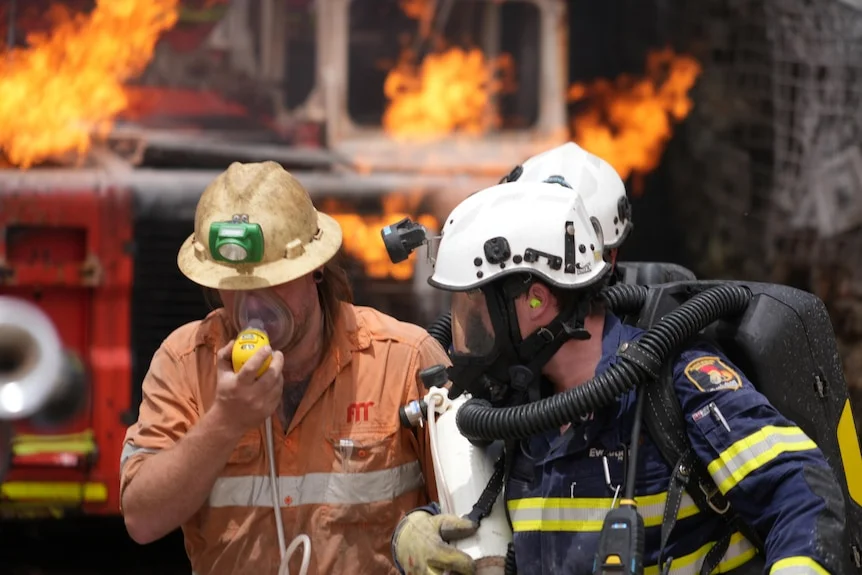
Firefighting was among the competition events for emergency response teams. (ABC Goldfields: Nicholas R Ward)
The scenarios are built to unsettle. Volunteers play casualties, often in convincing makeup, while rescuers face conditions designed to test whether training holds when the situation gets confusing and urgent.A newcomer joins a long tradition
Liontown Resources entered a team for the first time, a sign of the lithium miner’s more recent arrival in the Goldfields. Team captain Meghan Page, a mining engineer, joined to get hands-on experience and soon found herself drawn to rope work. “I definitely love ropes the most,” she said. “I am actually slightly afraid of heights, but when I'm on ropes, that all goes away.”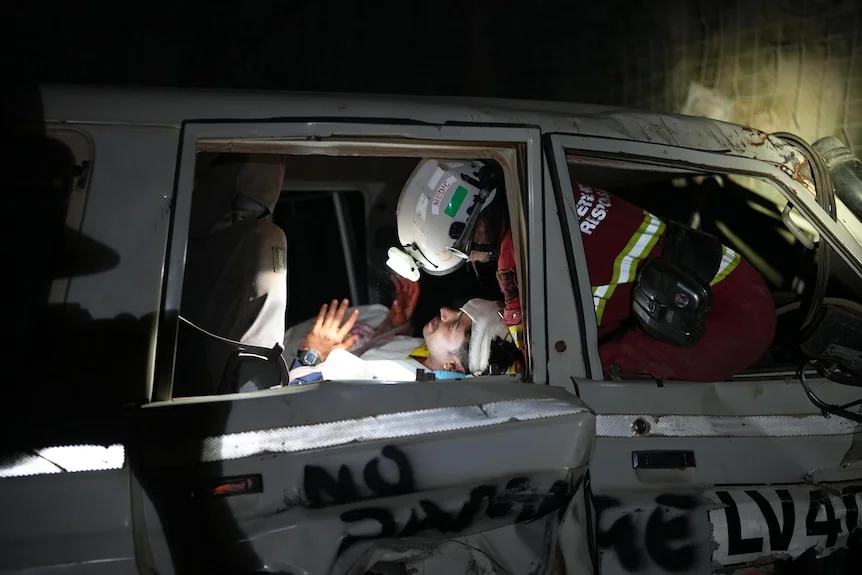
Volunteers wear elaborate makeup and follow scripts designed to push rescuers to their limits and test whether they can recall their training amid confusion. (ABC Goldfields: Nicholas R Ward)
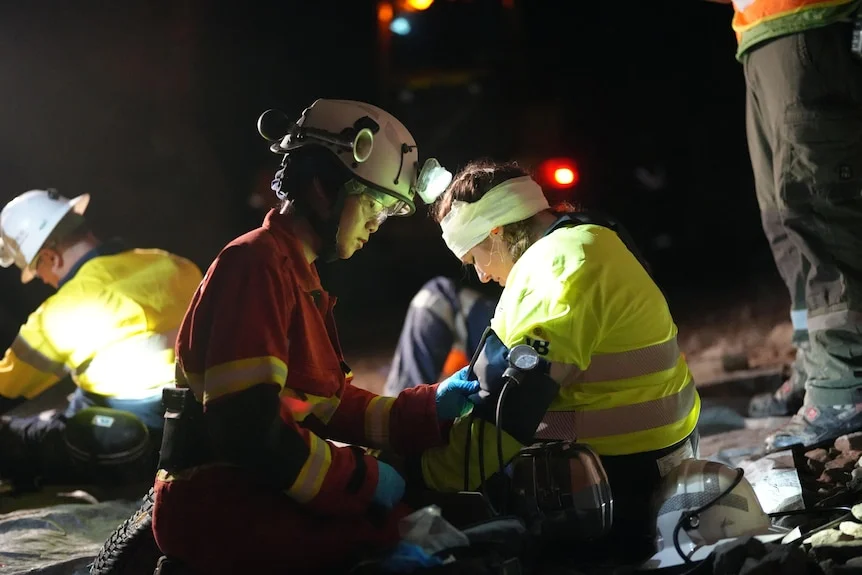
Volunteers act out casualty scenarios to make the exercises feel like real incidents. (ABC Goldfields: Nicholas R Ward)
For Page, the point goes beyond competition or technical skills. She said she joined because she wanted to know that people on site would look out for one another.“If I had family or a partner on site, I'd want to know that there were people like me and my team training and there if things went wrong,”
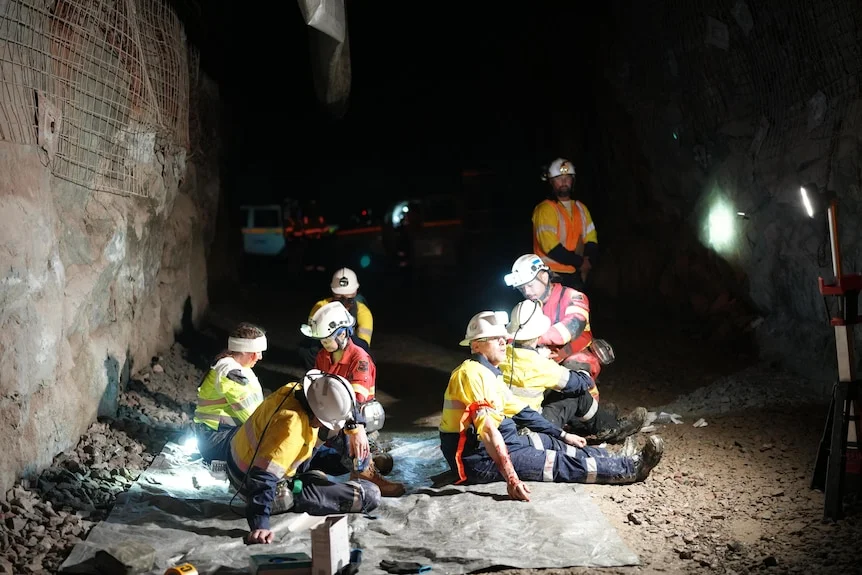
Hundreds of volunteers took part in the event. (ABC Goldfields: Nicholas R Ward)
Scenarios built for the real thing
Mine Rescue Committee chair Daniel Goss, who has worked in the industry for 20 years, said organisers spend months preparing the exercises. The scenarios can involve real fire and flooded tunnels, and the casualty role-players help make the pressure feel credible.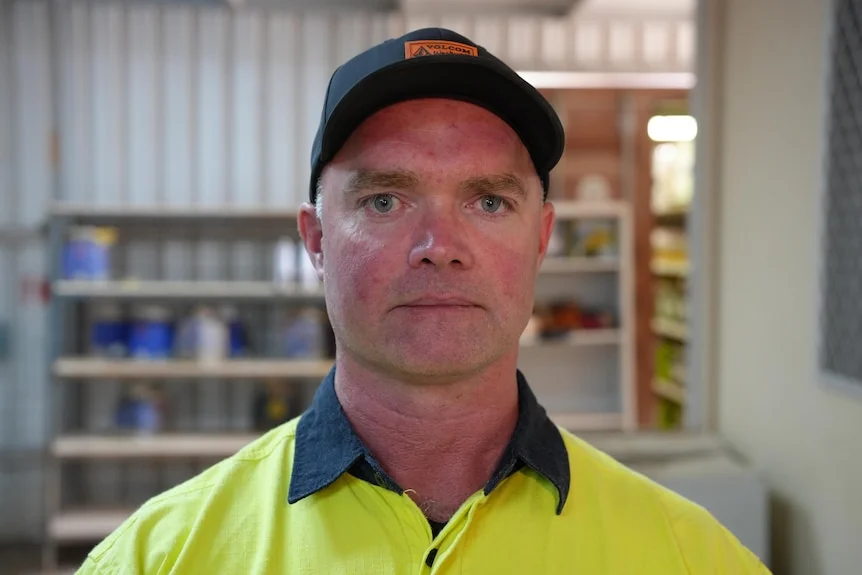
Daniel Goss has spent 20 years in mine rescue. He says it’s difficult to estimate how many hundreds or thousands of hours go into setting up these events. (ABC Goldfields: Nicholas R Ward)
“What we do … is create a really realistic, dynamic environment, put the teams under pressure,” Goss said. “[We] put them through fairly intense and developed scenarios to really look at how those skills play out in an actual scenario.” The winner is determined by scores across multiple categories. The deeper value is harder to measure: whether repeated practice helps teams respond when an underground emergency is no longer simulated.The technology used in mine rescues has changed dramatically since 1907. The danger hasn’t. That’s what gives these competitions their weight: teams practise against difficult scenarios so they’re better prepared when a real emergency leaves little room for error.
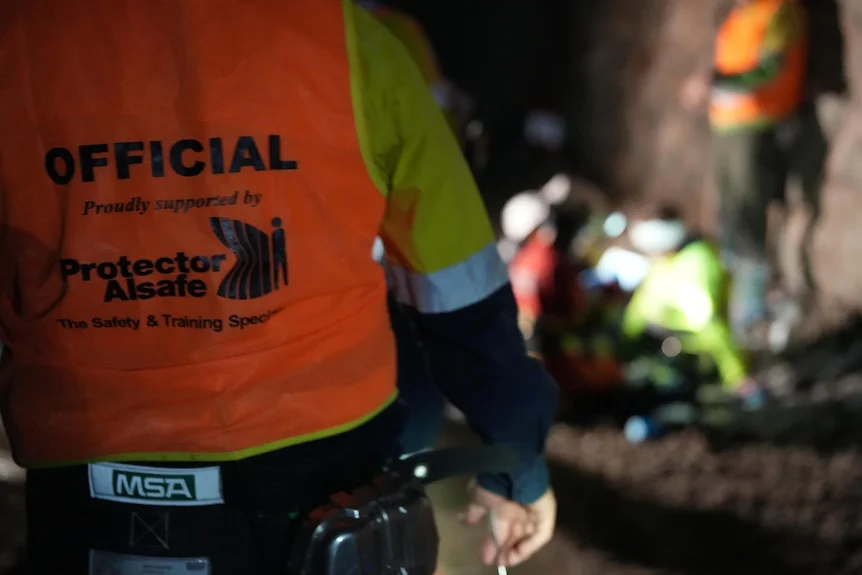
Officials carefully shadow teams noting what they do right and wrong to help them prepare. (ABC Goldfields: Nicholas R Ward)
The Varischetti rescue remains the stark historical example. In March 1907, a sudden storm sent floodwater into the tunnels of the Bonnievale gold mine in Western Australia’s remote Goldfields, trapping Modesto “Charlie” Varischetti underground.
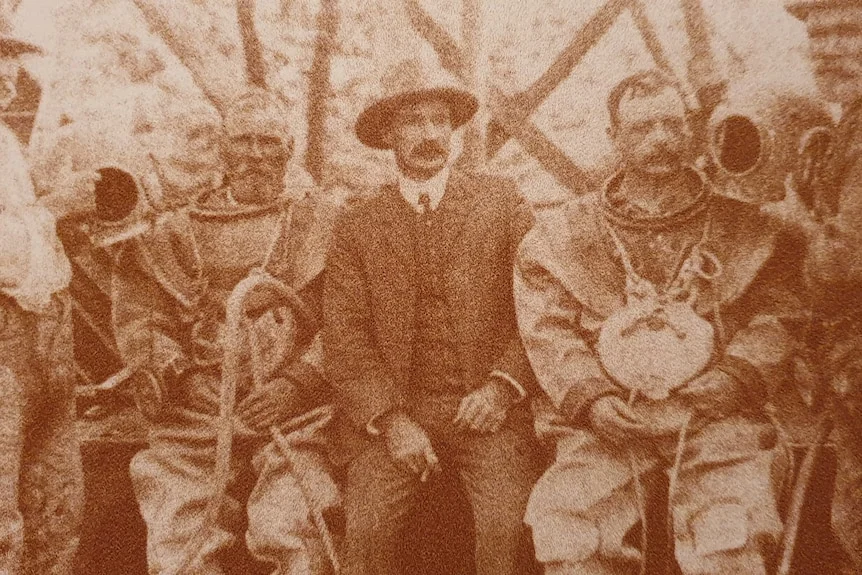
Modesto Varischetti was 300 metres underground when floodwater trapped him in an air pocket for nine days. (Supplied: Coolgardie Visitor Centre & Museum)
Varischetti was about 300 metres below ground, surviving in an air pocket for nine days while four volunteer divers worked to reach him with the equipment available at the time. It was a remarkable rescue. The present-day event draws on more recent lessons, too: this year’s underwater obstacles were designed to echo conditions from the 2018 Thai cave rescue, with advanced equipment available to the teams.
A family tradition
For Northern Star Resources rescue coordinator Maritza Potgieter, emergency response is part of a family history in mining. She has spent seven years on the mine rescue team.
“Our family have always been part of working in mining and always been part of the emergency response teams,” she said.
"My dad … was a little bit apprehensive of me joining, but as the time went on, I think he was pretty proud."
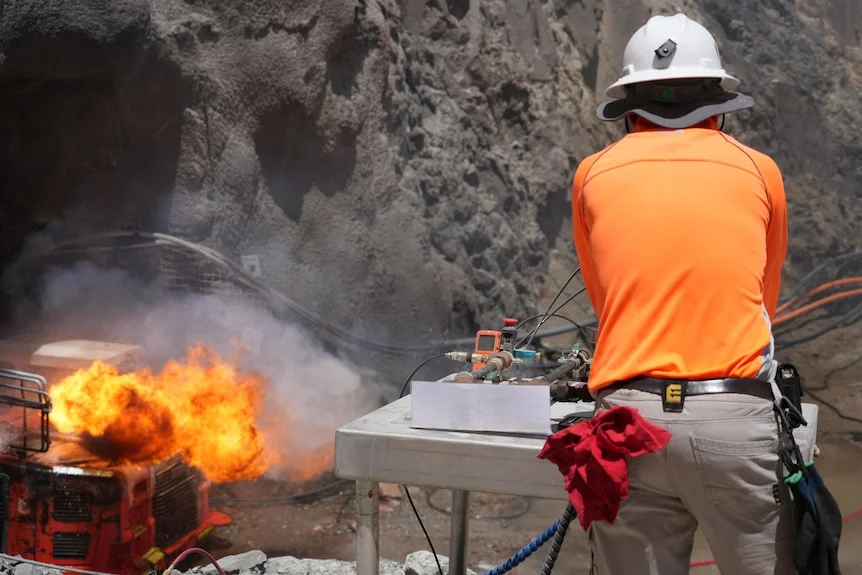
Organisers work to make the annual mine rescue competitions as realistic as possible. (ABC Goldfields: Nicholas R Ward)
She liked the work enough to make it her job. Potgieter now coordinates miners’ rescue efforts, and says the bonds among emergency response team members are what keep her committed. She expects to continue for the rest of her life.
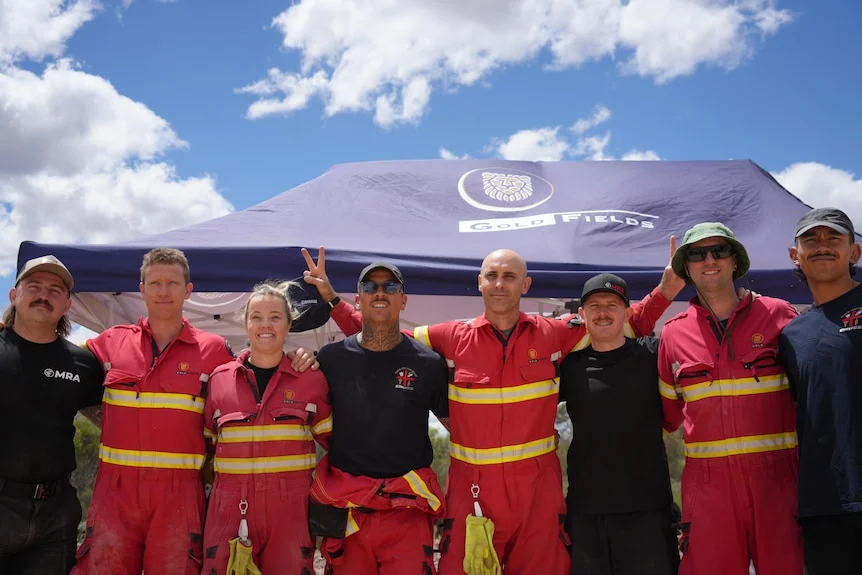
Teams from across the Eastern Goldfields attended the competition on Sunday, representing some of the largest miners in the state. (ABC Goldfields: Nicholas R Ward)
Lessons learned
Annika Messervy, a medic with Evolution Mining, joined her emergency response team 18 months ago. The work scared her, which was precisely why she wanted to try it. At her first underground competition, she said the experience had made her more confident and brought her into a supportive community.
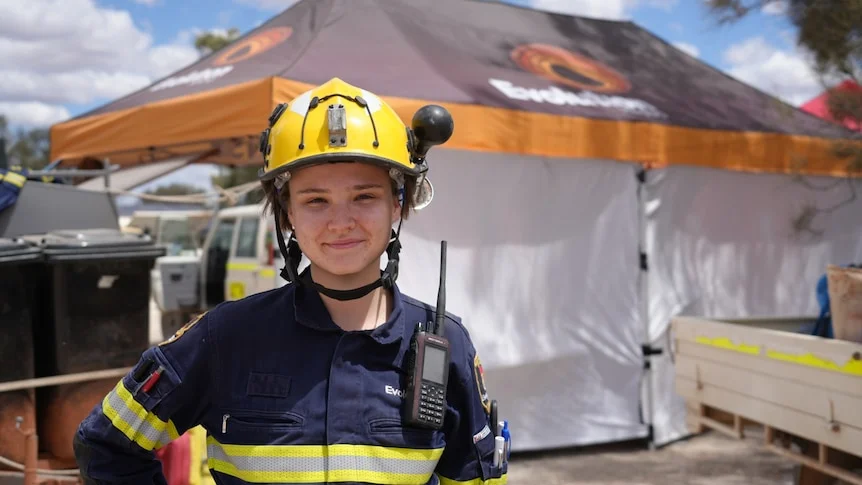
Annika Messervy became an ERT because it was something that frightened her and says it makes her stronger every day. (ABC Goldfields: Nicholas R Ward)
“I think I've become a much more confident person with it; everyone I've met through it is so wonderful,” she said. “It's been so much fun … it's a fantastic community.”
When Sunday’s competition ends, the teams gather for an awards ceremony, then head home to apply what they’ve learned. That practical return is the point: a rescue exercise matters most when its lessons hold up underground.
Discussion
Sign in to join the discussion.