Street 2 Home’s three-person team supports people sleeping rough in southern Tasmania after funding cuts ended its northern outreach. Demand continues to grow.
One outreach team now covers southern Tasmania, as demand for help with rough sleeping grows and funding cuts have ended the service’s work in the north and north-west. The Salvation Army’s Street 2 Home says more people are sleeping rough than moving into housing. Its three-person team is the only homelessness outreach program in the south that goes looking for people and connects them with essential services.
On a chilly Tuesday morning, with the temperature at eight degrees, the team drives down a dirt track into bushland to find Effie*, who lives in a tent with her German shepherd, Gus.
Annie searches bushland for camps where people are living. (ABC News: Owain Stia James)
A service stretched thin
Street 2 Home once operated across Tasmania. It has since shut its northern and north-western operations because it lacked funding. The team says more money could let it return statewide, but the fragment doesn’t say how much funding would be needed or when that expansion might happen.
That gap matters: a small outreach team can connect people with support, but its reach is limited by where it can operate and how many people it can find. Street 2 Home is seeking more funding as it reports a growing number of Tasmanians sleeping rough.
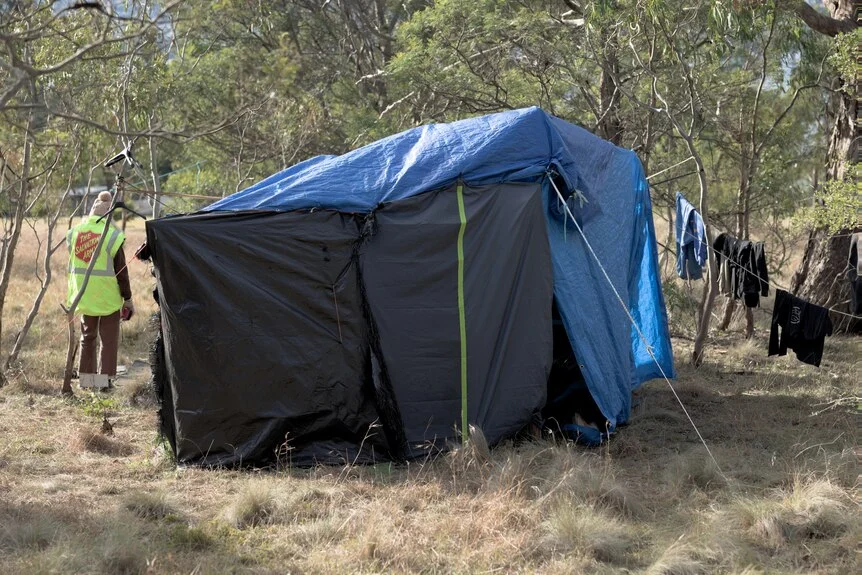
Tasmania recorded a 45 per cent rise in homelessness from 2016 to 2021. (ABC News: Owain Stia James)
Repeated rental refusals left Effie without a home
The scale of Tasmania’s housing crisis is visible in one stark figure: homelessness rose 45 per cent between 2016 and 2021. For Effie*, years of renting had left her confident she would find another place after an eviction. That confidence didn’t survive the application process.
She was turned down everywhere she tried. Effie searched across Tasmania, from the east coast to Queenstown and the north, but each rejection narrowed her options and increased her concern.
“I applied all up the east coast, Queenstown, up north, and then I started to a get a little bit worried.”
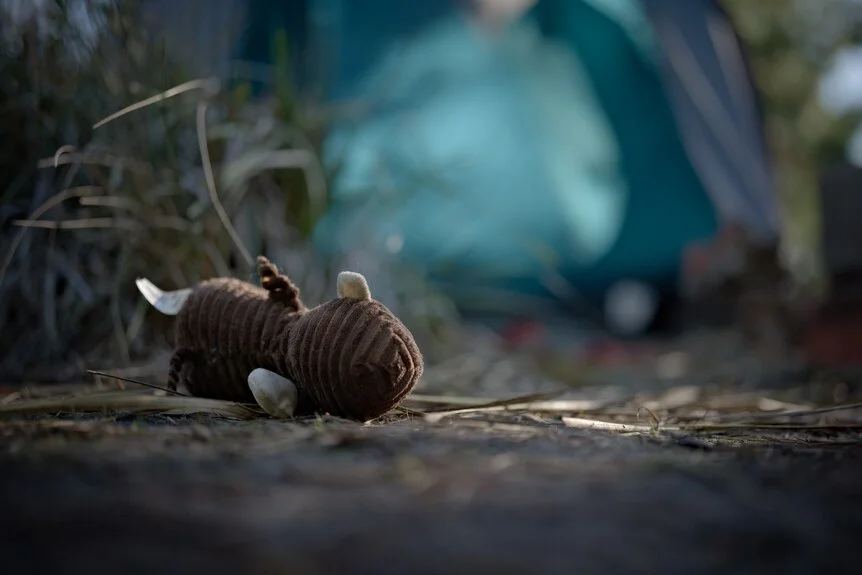
Street 2 Home says it is struggling to meet demand for its services. (ABC News: Owain Stia James)
Having her dog with her also made it hard to secure emergency shelter. With nowhere suitable to go, Effie pitched a tent. A passer-by spotted her there and alerted Street 2 Home, whose staff have visited regularly since.
That support includes practical help against the cold. Effie said a friend from The Salvation Army brings her hand and body warmers.
“My dog keeps my feet warm because he lays across my legs and it's not really that bad.”

Outreach can’t keep pace with the need
In a region where about 2,500 people are experiencing homelessness, Street 2 Home has only three staff. The team is already stretched to capacity. That gap matters: a service can exist on paper and still be out of reach for the person who needs it.
Program lead and outreach worker Chris Allen says many homelessness services rely on people finding them online. For someone sleeping rough, that can mean having to navigate a system without reliable internet or even a usable phone. “Most of them won't know how to use a phone, or they don't have internet,” he said. “They don't know how to look up those services and find them.”
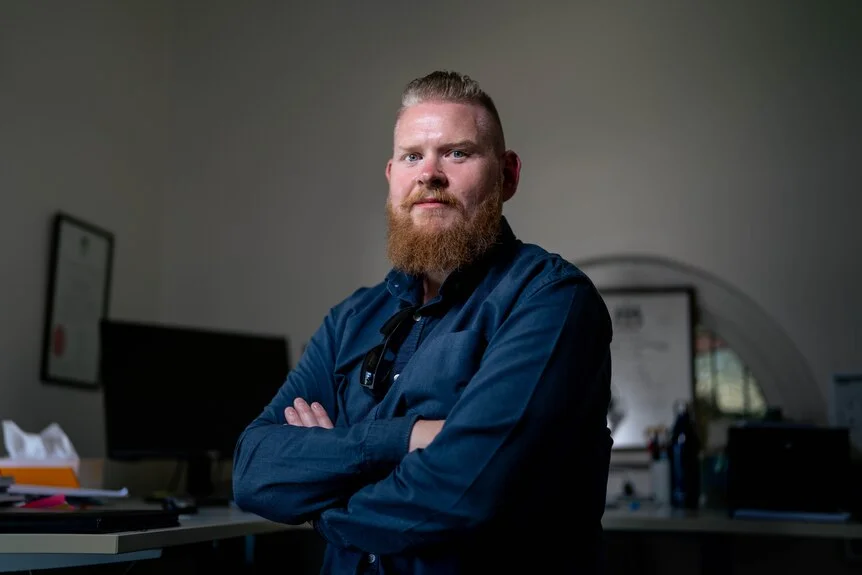
Allen said people sleeping rough may not have heard of programs set up to help them. “They might not have heard about a lot of the programs and a lot of the services that are designed to actually help them,” he said.
Here’s the problem: when access depends on searching online, the burden falls on people least equipped to do that search. With a three-person team serving a population of this scale, direct outreach has limited capacity too. The fragment doesn’t explain what additional support might be available, but it leaves a clear question for the region: how do people find help when both the online route and the outreach team are hard to reach?
Discussion
Sign in to join the discussion.