Nakar Property says its proposed 16MW gas plant would give a Moss Vale data centre firm power until the grid can meet demand.
Power before the grid
The dispute over a proposed gas plant in Moss Vale turns on a practical question: how the planned data centre would secure dependable power while waiting for the grid to catch up. Nakar Property says the 16-megawatt plant and battery system could be mothballed once a reliable grid connection can supply the site. That promise makes the timing and terms of any future connection central to the case: the plant is presented as a bridge, but the court must consider what happens if the bridge stays in place longer than expected.
The NSW Land and Environment Court is hearing Nakar’s appeal after Wingecarribee Shire Council rejected its development application. The $23 million project is one of three planned power stations for a data centre campus on site proposed by Sydney company Cloud Carrier. The appeal therefore concerns more than one piece of generation equipment: it sits within a larger proposal whose ability to operate depends on power being available at the right scale and with enough reliability for customers.
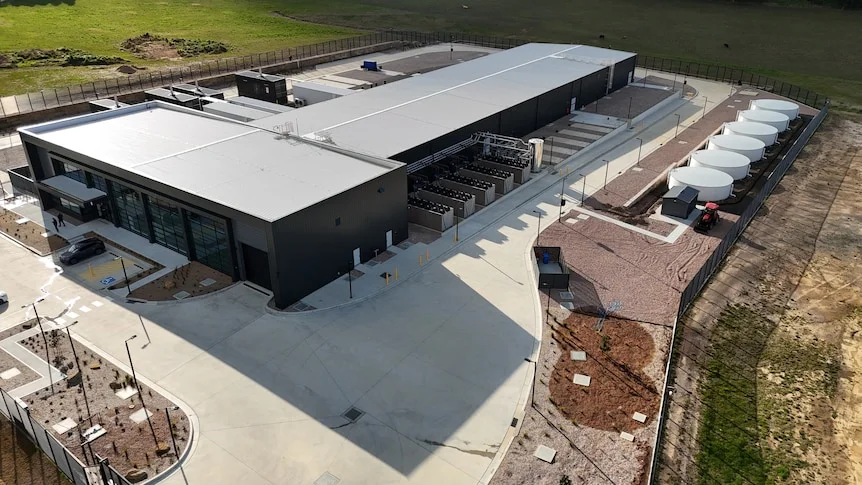
An artist's impression of one of three data centres planned for the Moss Vale site. (Supplied: Cloud Carrier)
Why Nakar says the plant is needed
For Nakar, the plant is needed to provide firm power to customers running equipment at the centre. Barrister James Smith told the court Cloud Carrier’s computer investment was about $1 billion, and argued the company couldn’t sell its services without a dependable supply. That argument frames electricity as an operating requirement, rather than a detail that can be settled after construction: customers need confidence that the computing capacity they’re buying will be available when required.
Smith said grid power would save the project about $14 million a year once it became available. He argued that the financial incentive to switch was clear, but that current supply is insufficient. Nakar’s case, he said, is that the gas plant would be a temporary source. The projected saving gives the company a reason to seek a grid connection, but it doesn’t answer the timing question on its own. A lower-cost source only helps if it can provide the supply the campus needs.
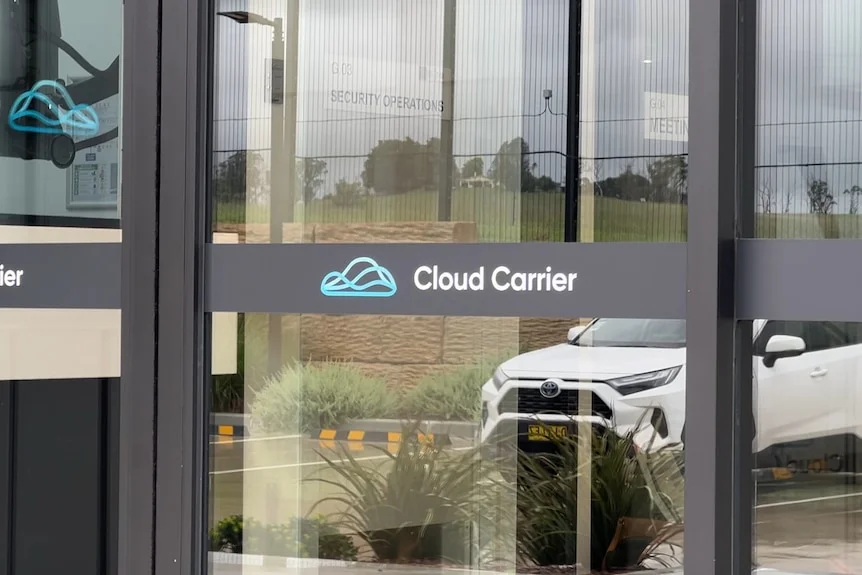
The proposed gas-fired power plant would be used to run Cloud Carrier's data centre campus. (ABC Illawarra: Penny Burfitt)
Smith also cited expert reports indicating the plant could produce fewer greenhouse emissions than grid power until about 2029. That claim sits alongside the central uncertainty in the case: when the grid will be able to provide enough reliable power for the campus. The emissions comparison is tied to that period and those reports; it doesn’t establish what the balance would be after the grid changes, or how long the proposed plant would actually run.
Council challenges the grid case
Wingecarribee Shire Council’s barrister, Michael Staunton, argued that the developers hadn’t properly investigated grid supply before presenting it as the long-term answer. The council submitted draft consent conditions during the hearing, including a requirement to plant canopy trees across about 40 per cent of the site. Those conditions show the council is asking the court to consider the project’s broader site impacts as well as its power source, while its challenge to the grid case focuses on whether the proposed transition has been adequately examined.
Staunton also questioned whether the data centre could run at full server capacity before a nearby Endeavour Energy substation upgrade is completed, which he said would take two years. He argued that this period could be used to negotiate a permanent grid connection, while the project would lack firm supply in the meantime. The distinction matters: a substation upgrade and a connection for this particular site aren’t automatically the same thing. The hearing is testing whether the developers have shown how the campus would move from its interim arrangement to dependable grid supply.
The second hearing day followed the court’s visit to the Moss Vale site. Expert witnesses in air quality, electrical systems and engineering were questioned about their reports before Commissioner Nicola Targett. Cross-examination is due to continue on Thursday, the hearing’s third day. For the court, the expert evidence gives shape to the competing claims: what the plant could do, what the grid could supply, and what the site’s effects may be.
What the decision could turn on
Here’s the thing: calling a power plant temporary doesn’t settle how temporary it’ll be. The proposal’s rationale depends on a future grid connection becoming both available and sufficient, while the council’s case questions whether that outcome has been properly established. The hearing’s practical test is whether the evidence supports the proposed arrangement across both stages: the period when the gas plant would provide power, and the point when Nakar says it could be mothballed.
This is more significant than it looks. Data centres depend on continuous electricity, so a gap between planned capacity and firm supply can affect whether a campus can serve customers as intended. If you’re working in this space, the Moss Vale case is a reminder that interim power plans can become a central planning issue when a project’s operating needs arrive before the grid can meet them. And yet, the court’s decision will turn on the evidence and proposals before it, not on a general argument about data centres.
(And this is the part most people overlook.) A stated intention to switch to grid power carries less weight if the timing and pathway remain unclear. The numbers here are underwhelming as a measure of certainty: the projected annual saving describes the incentive, while the two-year substation timeframe cited by the council describes a claimed milestone. Neither, by itself, answers when the campus can count on adequate supply. A bridge, with its end point still in dispute.
Discussion
Sign in to join the discussion.