Chalmers and Frydenberg face significant challenges in pursuing tax reform, reflecting broader tensions within their parties and the political landscape.
Jim Chalmers and Josh Frydenberg, though often seen as rivals, have more parallels in their political journeys than they would care to acknowledge.
Both are dynamic figures in media, possessing a blend of ambition and energy that has shaped their respective careers. However, their political aspirations have also been characterized by turbulent relationships with their leaders, a dynamic that frequently shapes their ability to effect change. Chalmers, the current Treasurer, and Frydenberg, a former one, represent distinct conservative and progressive ideologies, but their experiences underscore a common truth: navigating Australian politics is fraught with alliances and betrayals, where even close allies may swiftly become obstacles.
Reforming Australia’s Tax System
This week has underscored the uphill battle they face in advocating for meaningful reform. Frydenberg's recent proposal to reconsider the Goods and Services Tax (GST) as part of a broader tax overhaul highlights the complexity of political reform in Australia. The GST, initially implemented in 2000, has been a contentious point in Australian taxation discussions, especially as the economy faces pressures from inflation and global market fluctuations. Frydenberg's push for change is not merely about numbers—it taps into a larger conversation about taxation equity and economic sustainability in an era of high living costs.
In his memoir, "A Grateful Son," Frydenberg emphasizes the necessity of a robust national dialogue regarding the GST—suggesting not just an increase, but a reduction in income tax funded by additional GST revenue. While this idea isn't new—having been championed by political figures like John Howard and Peter Costello—the proposal's implementation remains contentious. Many economists and scholars have pointed to the GST as a regressive tax that disproportionately affects lower-income Australians, which complicates Frydenberg's bid for wider acceptance. Hence, the question isn’t just whether to amend the GST, but how to balance fiscal responsibility with social equity.
In response to Frydenberg’s call, Opposition Leader Angus Taylor swiftly dismissed the notion, asserting, "We will not be raising the GST in the middle of a cost-of-living crisis." His declaration suggests that the Coalition aims to prioritize spending cuts over any tax reforms, further complicating Frydenberg’s ambitions. The emphasis on spending cuts could divert attention from the systemic reforms needed to modernize Australia’s tax framework. Enforcing austerity in a high-inflation environment poses real risks, potentially aggravating public discontent.
Yet, Frydenberg remains undeterred. Despite the sharp reactions from some Liberal MPs, his public efforts to reignite discussion around crucial reforms indicate a determination to influence future policy directions. This tenacity may resonate with a section of the public that feels overlooked, especially those burdened by rising costs and stagnant wages. Yet, navigating these waters will require more than mere persistence; Frydenberg must align his vision with both public sentiment and the political realities that govern his party's decisions.
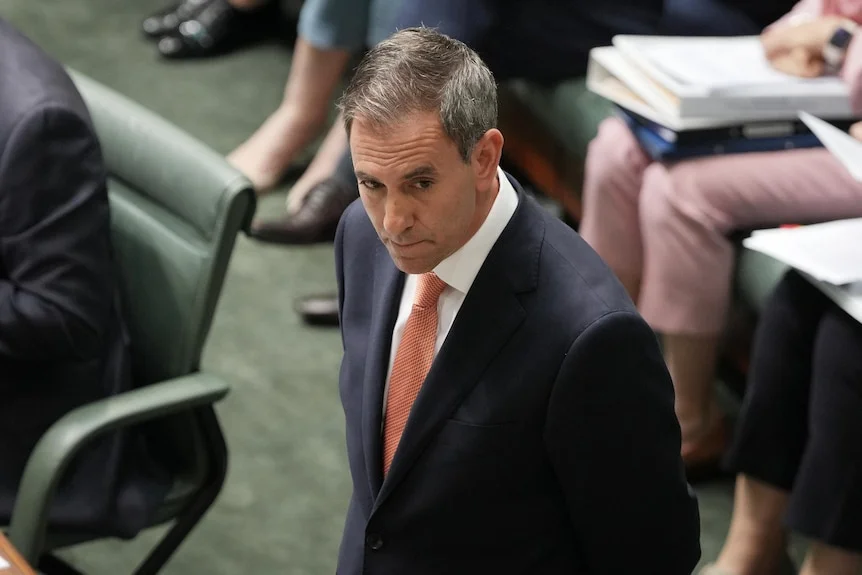
Jim Chalmers has been under scrutiny in parliament this week. (ABC News: Matt Roberts)
Chalmers's Recent Challenges
For Chalmers, this week has offered a stark reminder of the difficulties inherent in pursuing reform. Following backlash over changes to negative gearing and capital gains taxes that weren't included in the election agenda, his focus has shifted to discretionary trusts. His approach to reform is clouded by rising political tensions within Labor and opposition from external entities like business groups and the Coalition.
Labor is optimistic about securing the Greens’ support to enact a 30% minimum tax on these trusts. However, the political landscape suggests this initiative might encounter even greater resistance, particularly given the current discontent among small business leaders over recent Tax Office policies. (And this is the part most people overlook.) Small business leaders have been vocal about their struggles amid changing tax regulations and rising costs, making Chalmers's journey even more precarious.
The situation escalated for Chalmers when Prime Minister Albanese appeared to suggest he was sidelined from a recent decision regarding the Tax Office’s handling of credit card payments. While addressing Labor’s caucus, Albanese seemed to take credit in front of business leaders, leading to perceptions that Chalmers had been overruled. This public display of discord not only weakens Chalmers's authority but also complicates the narrative around Labor's unity in executing its fiscal agenda.
To counter the impression, Chalmers quickly clarified that the decision was made jointly with Albanese, reiterating the collaborative nature of their approach prior to the PM’s comments. This defense may lessen the immediate fallout, but it raises questions about their internal cooperation. Maintaining a facade of unity is paramount, particularly when both leaders are tasked with navigating a complex economic landscape laden with public expectations.
Labor's Internal Discord
The tension between Chalmers and Albanese highlights a familiar dynamic; public disputes between a prime minister and treasurer can signal instability, a lesson Frydenberg is all too familiar with. The opposition seized on this friction, amplifying it during parliamentary sessions as Labor MPs exhibited varied reactions. Some members felt Chalmers should have anticipated the Tax Office issues, while others criticized Albanese’s post about the credit card surcharge removal as overly optimistic. This internal discord not only hampers their efforts but also risks creating a narrative of dysfunction that could linger into the next election cycle.
Despite these internal divisions, both leaders acknowledge that bipartisan cooperation is necessary for navigating upcoming challenges. Public sentiment indicates that Australians are fatigued by partisan stalemates, and the leaders’ acknowledgment of the importance of collaboration may resonate well with voters looking for solution-oriented politics. They remain aligned on the significant reforms mapped out in last year's budget, yet the obstacles they face only seem to increase as each contentious issue arises.
Moreover, the recent collaboration between the Coalition and the Greens to obstruct Labor's plans to revise private health insurance subsidies adds an extra layer of complexity. With another substantial cost-saving measure now in jeopardy, Chalmers and Frydenberg likely recognize that the road to fiscal reform isn’t straightforward. If you're working in this space, the interplay between these political factions will undoubtedly influence policy outcomes for years to come. As the public increasingly calls for accountability and change, both Chalmers and Frydenberg will need to navigate a political climate that grows ever more challenging. Their efforts to implement a transformative fiscal strategy will require broad support and a deft balancing act amid ever-shifting alliances. The political waters are turbulent, and the future remains uncertain. Will they find a way to rally both sides? Or will the mounting pressures lead to further discord? The clock is ticking.
Discussion
Sign in to join the discussion.