The opening of the first road bridge between North Korea and Russia marks a significant expansion in their ties, raising concerns in Ukraine about potential military use.
North Korea and Russia have officially inaugurated their first road bridge over the Tumen River, illustrating a noteworthy strengthening of their bilateral relationships amid ongoing tensions due to the Ukraine conflict.
A New Corridor of Connectivity
The bridge is designed to facilitate increased freight and passenger movement, projecting to handle up to 300 vehicles daily, as highlighted by Russian officials. This milestone was marked by a virtual address from Russian Prime Minister Mikhail Mishustin and North Korean Premier Pak Thae Song, who both celebrated the event as a unifying step for their nations. While this may appear as a simple infrastructure project on the surface, its broader implications cannot be ignored.
For both countries, this bridge represents more than just connectivity; it serves as a symbol of deeper diplomatic ties forged in response to global pressures. And yet, while trade links already exist through rail and air, a dedicated road route could significantly enhance logistical efficiency, particularly given the often sporadic nature of air transport and the vulnerability of rail systems to geopolitical disputes. Increased road traffic could translate to accelerated delivery of goods, from basic supplies to military equipment.
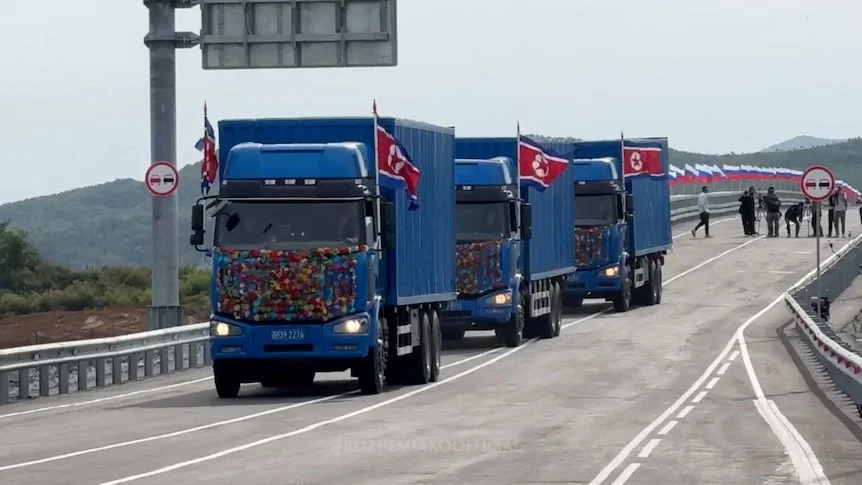
The first road bridge between Russia and North Korea across the Tumen River has officially opened. (Oleg Kozhemyako via Telegram)
Mishustin emphasized this new conduit would "further strengthen the connection between our friendly countries," asserting it will propel growth in trade, economic collaboration, and cultural exchanges. In the context of their historically contentious relationship with the West, this bridge could help both nations circumvent sanctions aimed at stifling their economic activities.
Background on the Bridge's Construction
Significantly, while Moscow and Pyongyang maintain existing rail and air transport links, the road connection has been a topic of discussion for several years. Construction commenced in April 2025, following discussions during a visit by Russian President Vladimir Putin to North Korea. This planning phase reveals a mutual recognition of the strategic importance of this bridge, not just as a transport route but as an essential element of military logistics and supply lines. The growing connection comes at a time when both nations face international scrutiny and economic pressure, particularly in light of Russia's invasion of Ukraine and North Korea's ongoing isolation.
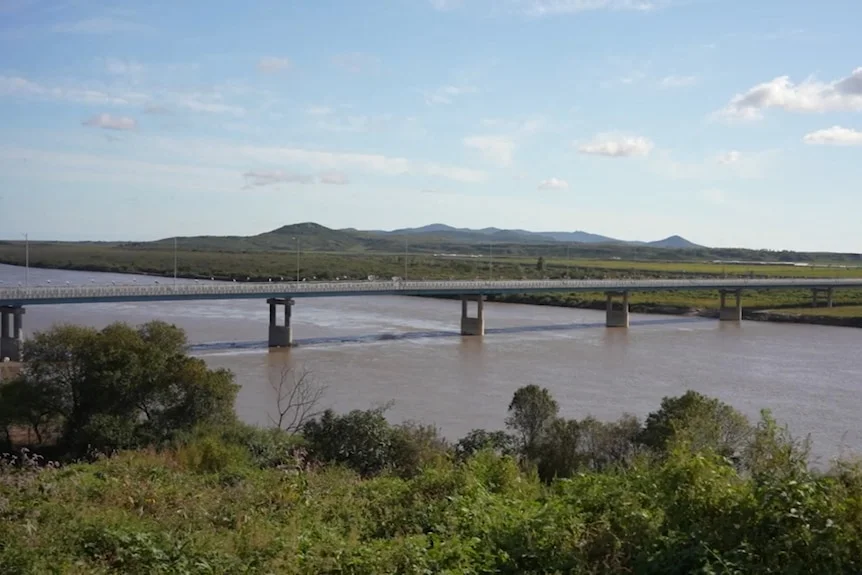
The road bridge connects Russia and North Korea across the Tumen River. (Russia Government via Reuters)
Military Support and Strategic Ties
The partnership has intensified, especially since Russia’s military engagement in Ukraine, with increased North Korean military support to Moscow reported. Reports suggest that North Korea has dispatched numerous troops, aimed at countering Ukrainian efforts near its border. This precarious alliance raises troubling prospects not only for regional stability but also for international security. As the bridge functions as a potential military logistics conduit, its implications stretch far beyond mere transportation.
Concerns are mounting within Ukraine regarding the bridge's dual-purpose capabilities. Ukrainian President Volodymyr Zelenskyy recently expressed fears that the bridge could facilitate the transfer of military supplies, including missiles, from North Korea to Russia. The notion of a reinforced military corridor has raised alarms among observers familiar with the region's geopolitical tensions. Human rights advocates in Ukraine have pointed to the bridge as a possible military logistics route, warning that it could be used for transporting a variety of military personnel as well as military equipment.
"This could enable North Korean personnel to move directly into Russian territory, while also supporting the flow of necessary materials from Russia into North Korea," remarked a representative from the Ukrainian human rights group Truth Hounds. The underlying military dimensions of this new infrastructure are alarming, with the potential to significantly alter the ongoing conflict's dynamics.
Broader Implications
Both nations signed a defense agreement in 2024, pledging mutual assistance in the event of an attack, underscoring the military implications underlying this new infrastructure. Trucks have already begun to cross, with passenger access expected to commence within the year. The strategic significance here can't be understated; it shows a realignment in global partnerships that could embolden both Moscow and Pyongyang. If you're working in this space, these developments are critical to observe.
Although North Korea remains one of the most isolated countries globally, with stringent travel restrictions for its citizens, there has been a noted uptick in Russian tourists visiting. However, border closures can occur abruptly at Pyongyang's discretion, keeping the flow of cross-border movement erratic. Contingent on geopolitical factors, this bridge could either enhance or restrict travel in the future.
Future Outlook
The opening of this bridge signifies more than just new infrastructure; it represents a potential shift in alliances during uncomfortable times for both Russia and North Korea. As these nations deepen their ties, the implications will likely ripple through the region and beyond, leading to increased scrutiny from international actors. The question remains: how will the West respond to these emerging partnerships? The world is watching.
Sources: AFP/Reuters
Discussion
Sign in to join the discussion.