Trump warns voters against opposing data center development, suggesting it hampers economic growth and benefits China as tensions rise ahead of the midterms.
President Donald Trump has recently taken aim at critics of data centers, which are essential to the burgeoning artificial intelligence (AI) sector. He declared that rival China “could not be happier” with the growing opposition to these facilities. As the midterm elections approach, this issue has unexpectedly gained traction, stirring discontent among voters across both political parties.
Data Centers and Political Backlash
This political storm revolves around the energy-intensive nature of data centers. Critics argue that these facilities drive up electricity costs and disrupt local communities. Trump's remarks, delivered on his social media platform Truth Social, were sharp, contending that communities resisting data centers are choosing to stay “backwards and poor.” This stance highlights a dynamic often overlooked in local politics: economic development can clash with community interests.
The tension surrounding data centers encapsulates broader concerns about sustainability and energy consumption. These facilities often require substantial power, raising questions about their environmental impact and the sustainability of local energy supplies. The criticism is not unwarranted; as small towns face rising electricity bills, the pushback against these facilities might also signal a deeper call for a reevaluation of how energy is consumed and managed at the local level.
“If they want to be successful and rich, with far lower taxes and jobs all over the place, let Data Reign,” Trump emphasized.
Data Centers as Campaign Issues
Data centers have transformed into significant talking points during this election season, making appearances in campaign ads for candidates in 18 states. The bipartisan scrutiny surrounding these facilities underscores the potential economic ramifications linked to this sector. Candidates are grappling with the need to balance local concerns and the push for technological advancement. The political implications of failing to address community anxieties could sour the prospects of candidates across the board.
By framing data centers as vital to economic progress, Trump aims to solidify a narrative that sees opposition as self-defeating. He stated, “If we kill the Golden Goose, you will only have yourselves to blame,” connecting local resistance to national competitiveness, particularly in the face of global rivals like China. This rhetoric is strategic, appealing to voters’ fears about losing ground in the tech race while emphasizing the potential for prosperity through technological investment.
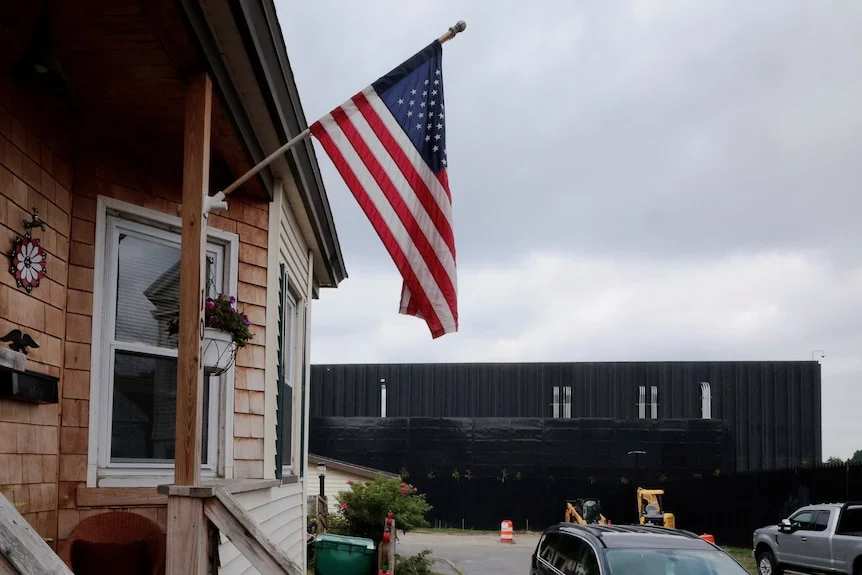
Data centres, like this one seen in Massachusetts, are becoming a hot-button issue for voters ahead of the US midterms. (Reuters: Brian Snyder)
Global Competition and Local Resistance
There's a growing theory that China's government might be subtly fanning the flames of local opposition to U.S. data centers. In response, a congressional committee has called for investigations into potential foreign interference. While Trump stopped short of directly blaming China, he acknowledged the potential for anti-data center sentiment to benefit Chinese interests. This adds a layer of complexity to the resistance, suggesting that local concerns may intersect with international strategic maneuvering. If you're working in this space, you might want to consider how geopolitics can complicate local business interests.
China’s commitment to nearly doubling its data center capacity within five years heightens the stakes in this competition. As the U.S. grapples with local pushback, China's rapid expansion suggests that they are not only looking to enhance their AI infrastructure but also to position themselves as global leaders in technology. This rapidly shifting landscape presents a serious challenge for the American tech sector, especially as resistance to data centers becomes a widespread issue.
The implications aren’t confined to U.S. borders. Resistance to data center development is generating similar debates in other nations. Just last week, Australia's National Cabinet revised protocols, empowering local states to manage energy sources for data center operations. This move follows backlash from regions like Queensland and the Northern Territory against renewable energy mandates. The pushback is a telling sign that critiques of data centers are resonating beyond the U.S.
Future Outlook and Significance
The ongoing debate surrounding data centers raises critical questions about the future of technology, energy consumption, and local economics. As politicians harness these sentiments, the outcome could significantly affect local policies and national competitiveness. If data centers are positioned as essential for economic growth, local governments may be pressured to adopt more favorable regulations, potentially at the expense of community concerns.
What this means for you, the reader, whether you're an industry stakeholder or just an interested observer, is that the developments in this arena can have substantial real-world impact. The rising cost of electricity, environmental repercussions, and global competitiveness are all intertwined in this discussion, challenging stakeholders to find a balance that addresses the diverse needs of communities and economies.
In this charged atmosphere, one thing is clear: the narrative surrounding data centers will continue to evolve, resonating well beyond mere campaign ads and into the heart of what technology means for contemporary society.
Discussion
Sign in to join the discussion.