Job Cuts Rise as Germany’s Auto Industry Faces Intense Competitive Pressure
Published
Jul 30, 2026
Desk
Finance
Views
889
Germany's auto giants are cutting jobs drastically, with BMW reducing 8,000 positions as fierce competition from China reshapes the market landscape.
The Job Cuts Deepen Across Germany's Auto Giants
The German automotive industry is facing an unprecedented shake-up, driven largely by fierce competition from Chinese manufacturers. BMW has now joined the ranks of other major players like Volkswagen, Porsche, and Mercedes-Benz by announcing significant job cuts as it grapples with decreasing market share. BMW's decision to eliminate up to 8,000 jobs globally—amounting to approximately 5% of its workforce—underscores the size of the challenges confronting even well-established brands.
What's striking is how rapidly the competitive environment has transformed. Just a few years ago, BMW was often viewed as a bulwark against the encroachment of foreign competitors, particularly those from China. This shift isn’t just a minor bump; it points to a larger systemic change within the automotive sector, where traditional powerhouses are now struggling to maintain their positions. Warnings from the Munich-based automaker underscore a stark downturn, with sales volumes coming under intense pressure from cheaper, faster-moving rivals in the electric vehicle (EV) market. Similar systems typically manage to adapt, but the incoming competition has proven relentless.
In fact, BMW's vehicle deliveries in China recently hit their lowest level since 2017, falling by 30% year-on-year in Q2. This downturn highlights a troubling story of lost influence in a key market that not only drives sales but also shapes trends in the global auto sector. If you're working in this space, the implications are vast—all of a sudden, the companies that once led the charge are now scrambling to catch up, which raises questions about their long-term viability.
US tariffs and geopolitical pressures have compounded these sales challenges. The fallout from President Trump's tariffs, combined with escalating energy prices due to global tensions, leaves BMW navigating a particularly treacherous economic environment. Shall we just say that BMW's attempt to pivot toward electric vehicles may have come a bit late? It seems that other automakers have outpaced them, and this delay could have lasting repercussions.
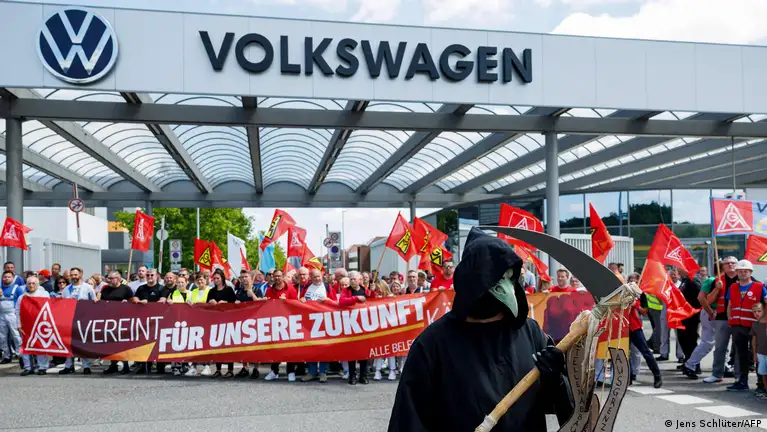
Auto industry job losses fuel frustration among workers. Image: Jens Schlüter/AFP
Porsche and Volkswagen Follow Suit
Two days ahead of BMW's announcement, Porsche unveiled its own grim plans, detailing a reduction of 5,000 jobs by 2035. This is especially significant for a brand that has prided itself on high performance, both in its vehicles and in its workforce. According to their restructuring program, approximately one in five workers at Porsche will be affected, focusing particularly on the main production plant in Stuttgart and its R&D center. This choice reveals how deeply interconnected production and research roles are—a move towards efficiency that could alter the very essence of the brand.
Meanwhile, Volkswagen is taking the most drastic measures of all, doubling its initial job cut estimates to a staggering 100,000. The company's decision to close four factories in Germany as part of this sweeping restructuring sets a stark precedent within the industry. This shift is emblematic of a broader trend where traditional auto manufacturers are forced to reconsider their reliance on human labor amidst rising automation and stiff global competition. The irony? These companies once thrived on their extensive human workforce, which provided them a competitive edge in the market. Now, it's becoming a heavy burden.
The Implications of This Shift
The ongoing situation raises serious questions about job security within an industry that once seemed invincible. For every announcement regarding cuts, the implications ripple through communities that are heavily reliant on these manufacturing jobs. This is more significant than it looks: entire towns can be upended by the loss of a major employer. If you're deeply ingrained in this sector, keeping a close eye on these developments isn’t just smart; it’s essential for understanding how the landscape might shift going forward.
And yet, the prospects for recovery seem increasingly uncertain. The industry's heavyweight players are now collaborating to combat significant challenges, and it remains whether these drastic cuts will truly secure their futures or merely kick the can down the road. As traditional players in the automotive sector are feeling the squeeze, one can't help but wonder about the social ramifications of such widespread job losses. Cities may find themselves grappling with unemployment spikes, and this could lead to a loss of skilled labor—a resource that takes years to cultivate.
What this means for you, the consumer, is likely an average decrease in vehicle quality alongside price hikes as companies skimp on R&D to save costs. The automotive industry's evolution has entered a new phase, and navigating this tumultuous environment could result in vehicles that are less innovative than previously expected. If significant changes aren’t made soon, the prospects for recovery could remain dim. As the dust settles, the path to reinvention will require not just strategic layoffs but visionary leadership—something that remains to be seen in such beleaguered times.
Discussion
Sign in to join the discussion.