Hunger stones emerge as poignant reminders of historical droughts in Europe, revealing past struggles and serving as warnings for future climatic challenges.
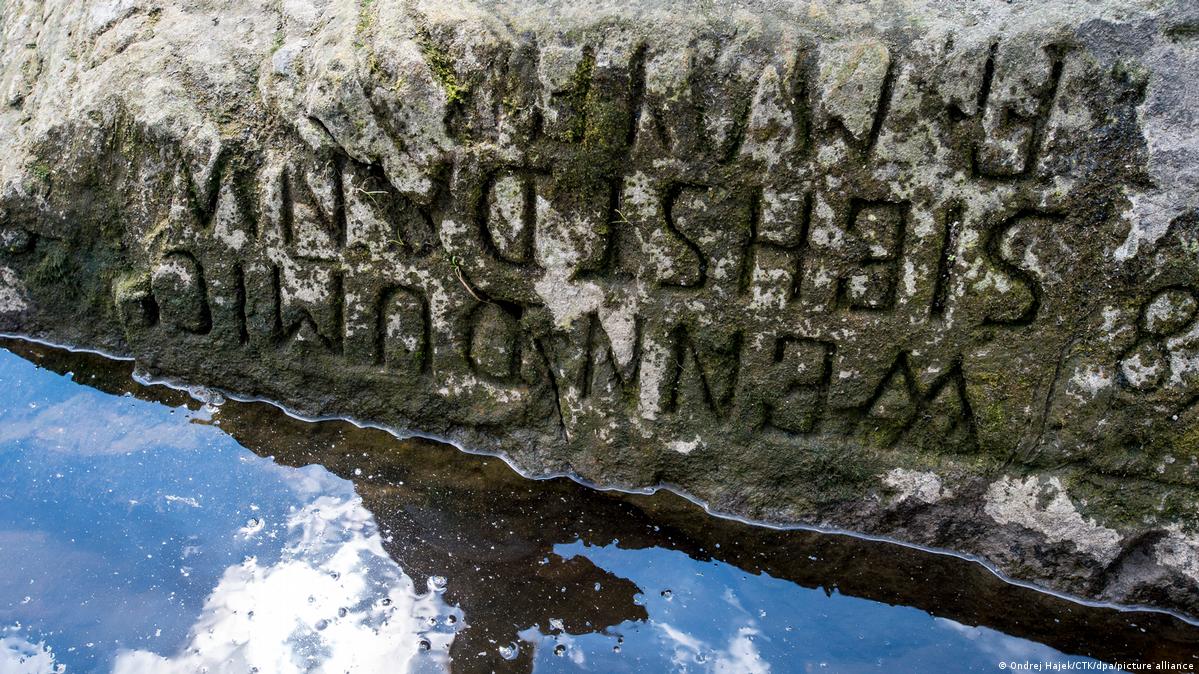
As drought conditions unfold in Europe, rivers that typically flow unnoticed are revealing unexpected remnants from history. Not only are these events unearthing Nazi-era shipwrecks and unexploded World War II munitions, but they’re also surfacing grim markers engraved in stone. One notable stone, famously inscribed with the words, "Wenn du mich siehst, dann weine" (translated as “If you see me, weep”), stands testament to the harsh realities faced by those living along the Elbe River near Decin.
The Origins of Hunger Stones
Hunger stones are boulders usually submerged in riverbeds but become exposed during low water periods, a phenomenon increasingly common due to climate change. They represent a stark contrast to high-water marks, capturing not the peaks, but the extreme lows that communities endured, often carving dates or messages into them during such dire times.
These stones emerge as crucial historical indicators, marking years like 1616, 1746, and 1842—specific years known for severe droughts that impacted agriculture and trade alike. As river levels plummeted, navigation became increasingly difficult, disrupting essential transport routes that were lifelines for local economies.
Understanding the 'Hunger' in Hunger Stones
This term reflects the dire repercussions of drought that led to crop failures and food scarcity. When rivers like the Elbe and Danube receded, they revealed how intimately connected communities were with their waterways; this dependence often translated into catastrophic economic downturns during dry spells.
In 2019, researchers delved into these historical accounts, revealing that the adverse effects of drought were relayed through local chronicles, underscoring the struggles of those reliant on agriculture and commerce. Struggles that left deep impressions on the landscape and records of the past, now being rediscovered with each drought.More than Memorials
The significance of hunger stones extends beyond mere commemoration. Recent studies suggest that the inscriptions serve a dual purpose—documenting the historical low water levels and functioning as warnings for future generations. A notable 2020 research in the *Climate of the Past* journal confirmed that many writings on these stones corresponded with known drought periods, emphasizing their role as vital records of climatic extremes.
As attention grows towards climate resilience, understanding the narratives inscribed on hunger stones becomes essential. They not only provide context about past climate conditions but also serve as poignant reminders of our vulnerability to environmental changes.
Cultural Impact and Modern Recognition
The weight of the phrase “If you see me, weep” carries more than a historic context; it evokes a contemporary urgency, especially given the recurrence of droughts across Europe in recent years. Media narratives have highlighted its ominous implications during significant dry spells in 2020 and 2022, framing it as a prophetic caution against underestimating climate fluctuations.
Engaging with this legacy prompts vital discussions about sustainable practices today. Each time a hunger stone is revealed, it invites reflection on how previous generations coped with environmental crises, and on what lessons we can glean for the future—as the frequency of these drought conditions is not just a relic of the past, but a present and growing crisis.Thus, the Decin hunger stone, far from just a relic, embodies a rich tapestry of human experience, resilience, and the lessons we must not forget in facing our future.
Discussion
Sign in to join the discussion.