Researchers have found immune "hubs" in mouse skull marrow, prompting a re-evaluation of the skull's role in brain defense and immunity.
Scientists discover new 'immune hubs' in skull bone marrow
August 24, 2026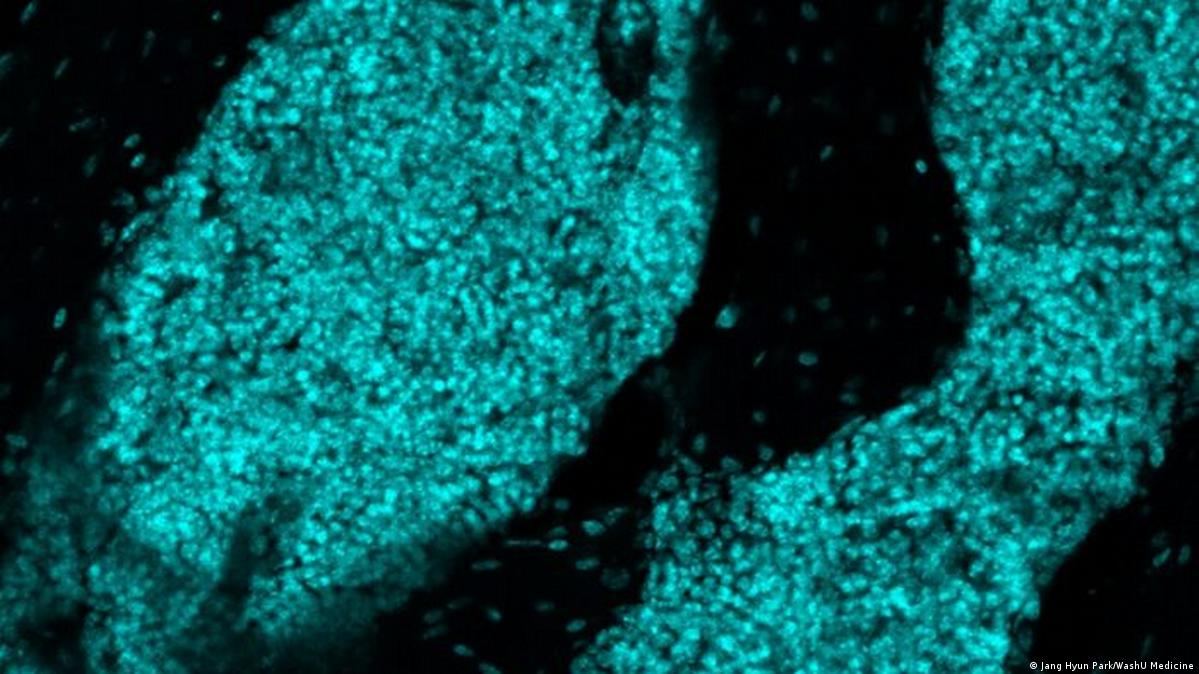
Traditionally, the skull has been viewed as a mere protective barrier for the brain. However, findings from researchers at Washington University School of Medicine in St. Louis hint that this view may be overly simplistic. They uncovered the presence of immune "hubs" within the bone marrow of mouse skulls that actively participate in defending the brain.
Key Findings from Mouse Studies
These immune hubs resemble lymph nodes and were observed responding to brain tumors significantly quicker than traditional lymph nodes located in the neck. When the researchers disrupted these structures in mice afflicted with glioblastoma, an aggressive type of brain cancer, the outcomes were dire: tumor progression accelerated, leading to reduced survival times for the mice.
"The perception of the skull solely as a protective shell for the brain needs a rethink," emphasized Jonathan Kipnis, the senior study author.
"It harbors unique immune systems capable of locally reacting to the brain's needs," he added.
The findings are detailed in the journal "Nature," but there's a critical caveat: The study's results are limited to mouse models, with implications for humans remaining hypothetical at this point.
Kipnis cautioned that the connection to humans is still under examination: "While we detected immune cells similar to those in mouse skulls within human bone marrow, we can't yet assert that these structures function similarly," he stated.
Shifting Perspectives on Brain Immunity
For decades, science categorized the brain as "immune privileged," suggesting it was largely insulated from immune responses, as inflammation could damage sensitive neural tissue. The existence of the blood-brain barrier lent credence to this idea, by tightly regulating the transfer of substances between the bloodstream and brain tissue.
However, this understanding is rapidly evolving.
Current research illustrates continual communication between the brain and the immune system, particularly through the membranes that encompass cerebral tissue.
Kipnis' lab has played a pivotal role in this paradigm shift, initially by revealing lymphatic vessels in the brain's protective layers and subsequently unveiling intricate channels linking these membranes to the skull's marrow.
"The earlier perception of immune privilege in the brain is undergoing significant transformation," remarked Kipnis. "Our findings indicate that specialized immune support exists within the skull bone marrow, closely adjacent to the brain."
Insights into the Organization of Skull Immune Hubs
Through their investigations, the researchers traced proteins migrating from the mouse brain, passing through microscopic channels in the skull and reaching the marrow.
There, clusters of B cells and T cells were identified, with T cells aiding B cells to produce antibodies that combat infections. Locating immune cells in the bone marrow isn't unprecedented, but the organized structure resembling lymph nodes is noteworthy. These hubs allow immune cells to collaborate effectively in response to threats.
Their proximity to the brain may enable a swifter, more precise immune response.
"Unlike lymph nodes in the neck which serve multiple tissues like the mouth and skin, these skull structures could offer the brain its own specialized lymphatic support," Kipnis noted.
The Significance of Skull Immune Hubs
"We've never observed such structured immune environments in healthy bone marrow before," noted Jang Hyun Park, a co-author of the study. "This discovery highlights that complex brain functions likely demand specialized immune responses."
Neuroimmunologist Marco Prinz, from the University of Freiburg and not involved in the study, hailed this as a "pivotal discovery." He emphasized that the unexpected organization of the immune cells is particularly striking.
"Finding these lymph node-like formations in the skull was a complete surprise," he shared.
However, he cautioned that confirming these structures function similarly in humans remains a pressing issue: "The true test will involve seeing them in human skulls and demonstrating their functionality," Prinz added, suggesting that such findings could enhance our understanding of the immune response in the central nervous system.
Impact of Immune Hubs on Brain Tumors
The research also explored the effects of these immune hubs on glioblastoma progression. When researchers disrupted these hubs, tumors exhibited accelerated growth. Conversely, stimulating the skull marrow with immune-enhancing proteins resulted in tumor rejection and improved survival in the treated mice.
This prompts intriguing possibilities for harnessing the skull's marrow to enhance brain immunity without invasive procedures directly targeting the brain itself.
However, translating these findings into human therapies is still a distant goal. "First, we need to confirm their organization and function in humans, analyze changes in various diseases, and find safe manipulation methods," Kipnis cautioned.
Broader Implications for Brain Diseases
The discoveries could significantly impact fields beyond oncology. Prinz pointed out a notable relevance in understanding brain tumors and infections, particularly when the blood-brain barrier becomes compromised. The implications for conditions like Alzheimer's and Parkinson's need to be thoroughly investigated, he added.
Kipnis believes that once similar structures are validated in humans, their role could extend across a wide array of brain diseases linked to immune dysregulation. "If I had to make a prediction, I'd wager these structures will play a key role in any brain disease with an immune aspect," he stated.
Edited by: Rosalie Delaney
Discussion
Sign in to join the discussion.